
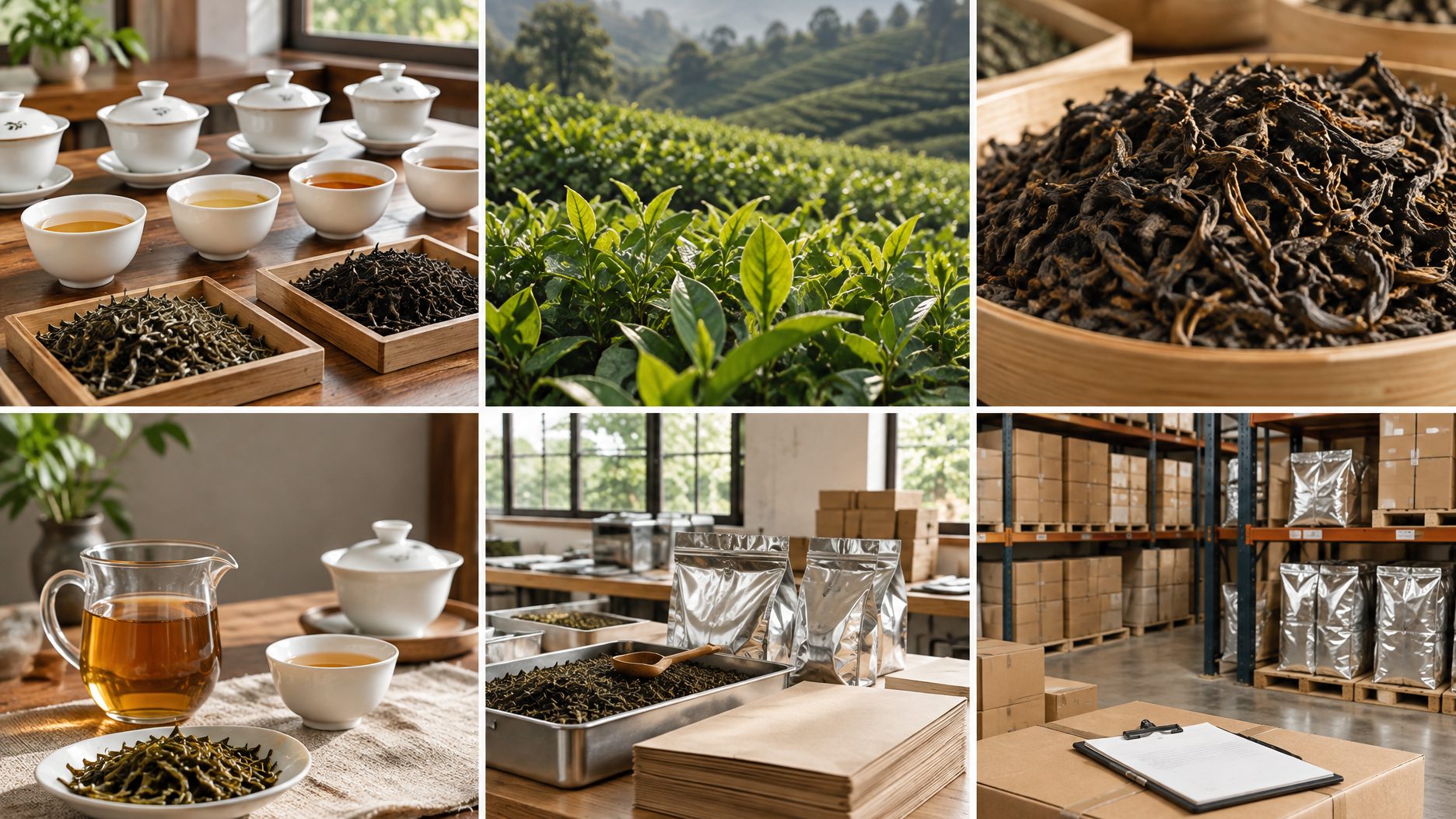
Breadth is an operations problem, not a menu problem
Ask importers why supplier lists metastasize and the answer is rarely taste: each new category dragged in a new supplier with new MOQ rules, new label standards, new sample policies and a lot record nobody cross-checks. The catalog here is 39 lines across seven categories - green, oolong, black, white, pu-erh, herbal, plus packing formats - held to one spec system: the same cupping sheet per line, the same lot record, the same document pack, one accountable desk per program. Breadth only pays if the paperwork scales with it, and that is the design constraint this program is built around.
The catalog, mapped to a shelf
| Shelf role | Lines to start with | Why they earn the slot |
|---|---|---|
| Everyday greens | Longjing, sencha, genmaicha | Repeat-driven; a freshness story the pack can tell |
| The black wall | Keemun, Dianhong, Ceylon | Recognizable names with distinct cup colors |
| Wellness and caffeine-free | Herbal blends, peppermint, rose, barley | No-caffeine shelf with year-round supply |
| Discovery and gifting | Dancong, Lapsang, chenpi pu-erh, Silver Needle | Margin and story lines for the curious shelf |
| Format SKUs | Pyramid bags, gift box, tea set | Pack formats that lift average transaction value |
The category hubs - green, oolong, black, white, pu-erh, herbal - compare the lines within each category so a wall plan can be built slot by slot. The desk will also say which lines not to start with: some categories are seasonal stories that punish a listing made without a calendar behind it, and a wall built on them fails quietly at reorder.
The document pack, market by market
Compliance is where import programs are won or stalled. Expect the following, evidenced per program: third-party lab panels per batch - pesticide residues, heavy metals, microbiology - issued in the buyer's name; EU MRL work against Regulation (EC) No 396/2005 as amended; US programs under FDA food facility registration; Japan-bound tea against the positive list framework; HS 0902 classification confirmed with your broker. Organic claims follow the certificate chain: USDA NOP, EU 2018/848 or JAS material is sourced with certificates verified per program, and conversion documents are available on request. Rainforest Alliance and Fairtrade material can be procured against orders where the claim is needed. The full map sits on certifications, and the document stack for imports walks it in the order customs actually asks for it.
Labels and packaging that pass inspection
Labels are made to the destination market's food labeling rules - ingredients, net weight, country of origin, nutrition panel where required - with artwork handled through the private label program and translation checked against the market's regulatory vocabulary. Packing runs from bulk foil-lined bags to retail pouches, tins and pyramid bags in food-grade PET nylon or PLA, with material statements on request and nitrogen flushing for aroma-critical lines. Sea-freight survival is a design input, not an afterthought: cartons, liners and pallet patterns are chosen against the lane, which runs a typical 15-25 days to US West Coast ports and 30-45 days to Europe by sea - reference ranges, confirmed per shipment. Format mechanics are on packaging options and logistics.
Quantity and calendar planning
Reference ranges: bulk loose leaf from 50-100 kg per line; private label packed from about 100-300 kg or 5,000-20,000 bags per line; pyramid filling at around 100,000-bag scale; mixed-line programs quoted as one written offer. Lead times: 10-15 working days for in-stock bulk, 20-35 days for standard private label, 35-60 days where new blends or new packaging tools are involved; samples 3-7 working days in stock and 7-15 for custom work. Spring greens compress the calendar - pre-Ming Longjing is picked before early April and the lots are committed within weeks - so listings built on spring harvest are planned backwards from the window, not forwards from the order. All figures are standing trade references; the binding numbers are the ones in the written offer, per MOQ and lead time.
From listing to landing
- Shelf plan first: name the slots, then request samples against the plan rather than browsing all 39 lines.
- Cup, document, decide: samples arrive with cupping sheets; shortlist against your market, not against the sample pack's order.
- Golden samples per line seal the specs; labels and artwork begin in parallel, not after bulk.
- Bulk with pre-packing inspection; documents issued in your name ahead of the vessel so clearance never waits on paper.
An illustrative case, generic by design: an importer consolidating nine suppliers onto one program keeps its tea wall identical, cuts the document chase from per-supplier emails to one desk, and plans the spring green listing against the harvest instead of against hope. Program names and figures stay private; what can be audited is the system - procurement process describes it, and the quote form starts it. For shelf arithmetic, planning a retail tea wall and bulk versus retail-packed tea cover the decisions that come before the first purchase order.