
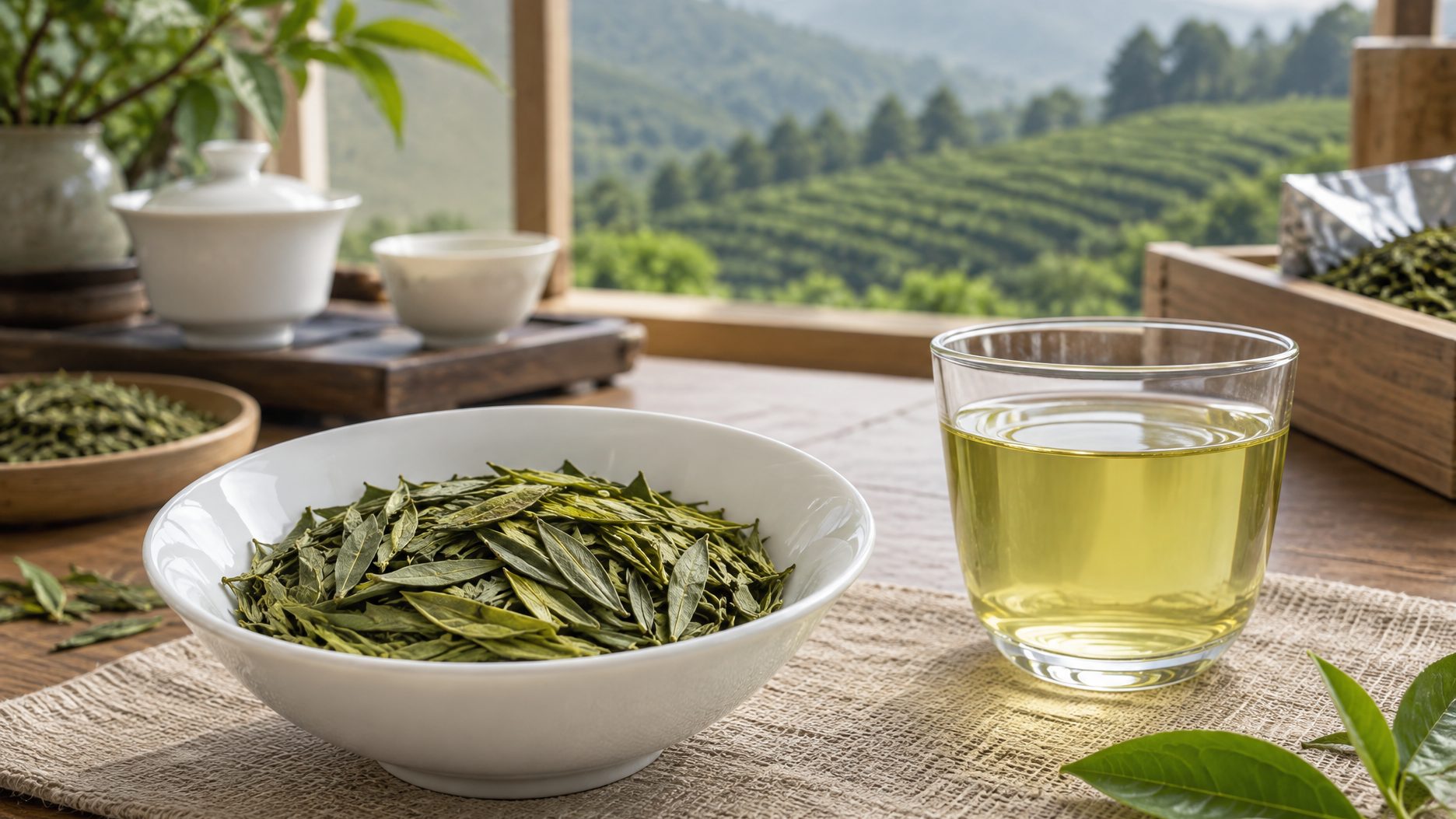
Why the West Lake district sets the bar
Longjing, literally dragon well, is the most name-checked green tea in China, and the reference lots come from the West Lake district of Hangzhou, Zhejiang. The terroir is narrow and specific: low hills that hold spring fog, mild nights, acidic soils, and cultivars selected over generations for flat-pressed leaf. Together they give the cup its signature - a fresh, toasty sweetness with almost no bitterness - and they explain why pre-Ming Longjing anchors gift programs and premium shelves across Chinese retail. Green tea is the backbone of China's tea trade, roughly four fifths of export volume by the customs numbers, and Longjing is the name buyers abroad recognize first. The desk works with partner gardens across the West Lake area and the wider Hangzhou region, and every lot record states plainly which district the leaf came from, because the difference in cup and in price is real.
How the leaf is made flat
The process is pan-fired and unforgiving of shortcuts. Picked leaf is first spread out to rest and shed surface moisture, which softens the grassy edge; it then goes through the initial firing, where wok heat stops oxidation while the leaf is pressed flat against the pan; a final firing dries it further and polishes the flat, spear-shaped leaf the trade expects. Rushing any stage shows in the cup as grassiness or a dull baked smell. Refining follows the standard chain - sieving, winnowing, stem and flake removal - and blending for batch consistency comes last. The desk cups every candidate lot against the season reference on the five trade factors before offering it, and keeps retain samples so later lots can be checked against the sample you approved, not against a memory.
Pre-Ming and pre-rain: the calendar sets the grade
No green tea lives by its calendar quite like Longjing. Pre-Ming lots are picked before Qingming, in late March and the first days of April, from the season's first small leaves: tender, dense with flavor per gram, scarce, and priced accordingly. Pre-rain lots, picked across the following weeks, are broader, a touch more open in the cup and far steadier on volume, which is why many retail programs run pre-Ming as the hero SKU and pre-rain as the everyday line. Later pickings have a place in foodservice but are a different product, and honest sellers say so. For buyers the implication is operational: spring samples circulate in April, bulk follows within weeks, and year-round programs must plan reserve storage in advance. The desk builds the schedule backwards from the harvest window - the logic is set out under MOQ and lead time and in the spring harvest timing guide.
The cupping sheet and brew reference
| Factor | Pre-Ming | Pre-rain |
|---|---|---|
| Dry leaf | Flat, even spears, pale jade, bud-forward | Broader flat leaf, deeper green, less down |
| Liquor | Tender yellow-green, bright | Greener-gold, clear |
| Aroma | Toasty bean and chestnut, fresh | Softer toast, more vegetal lift |
| Taste | Fresh, sweet, smooth, no bite | Sweeter-plain, round, gentle |
| Wet leaf | Whole even buds and leaves, tender green | Whole leaves, slightly coarser |
| Brew parameter | Reference |
|---|---|
| Ratio | 3 g per 150 ml |
| Water temperature | 80-85°C |
| Steep time | 2-3 minutes |
These parameters are printed on the lot sheet so your barista, your label and your customer's kettle all agree. Green tea punishes boiling water; too hot and the cup turns bitter whatever the grade.
Who buys Longjing, and for which shelf
Three programs repeat. Retail and gift buyers take pre-Ming lots for tins and corporate gift boxes, where the harvest story on the pack is part of the product. Hotels and tea houses pour pre-rain lots by the pot: forgiving in service, recognizable by name, easy to explain to a table. E-commerce sellers build green walls around Longjing with Biluochun beside it - the two are natural shelf neighbors, and the honest differences are set out in the Longjing vs Biluochun comparison. Where a program does not fit - a bottled-tea line that needs cheap, extraction-friendly material, for instance - the desk says so early rather than selling a mismatched hero.
Private label and packing a fragile hero
Longjing is fragile in two ways: the flat leaf breaks under rough handling and the freshness fades without protection. Bulk ships in foil-lined bags inside cartons, with a nitrogen-flush option for retail programs that sit on shelf through the year. Retail formats run from 50 g foil pouches to gift tins with solid walls - light is an enemy. Labels are built to destination-market rules, artwork is handled through the packaging options program, and MOQs follow the standing private label reference ranges, confirmed in writing per program.
What buyers check before bulk
- Harvest dates on the lot record - a pre-Ming claim must match the picking dates.
- Dry leaf first: flatness, evenness, color. Broken and dusty material means rough finishing.
- Cup against the approved reference: brightness, chestnut sweetness, no grassy edge.
- Packing integrity on arrival: sealed foil liners, unbroken cartons.
- Lab panel per batch from a third-party laboratory, issued in your name and scoped to your destination market.
When the profile is clear, send it to the desk and a written sample plan comes back - usually the fastest way to settle the pre-Ming question for your market.