
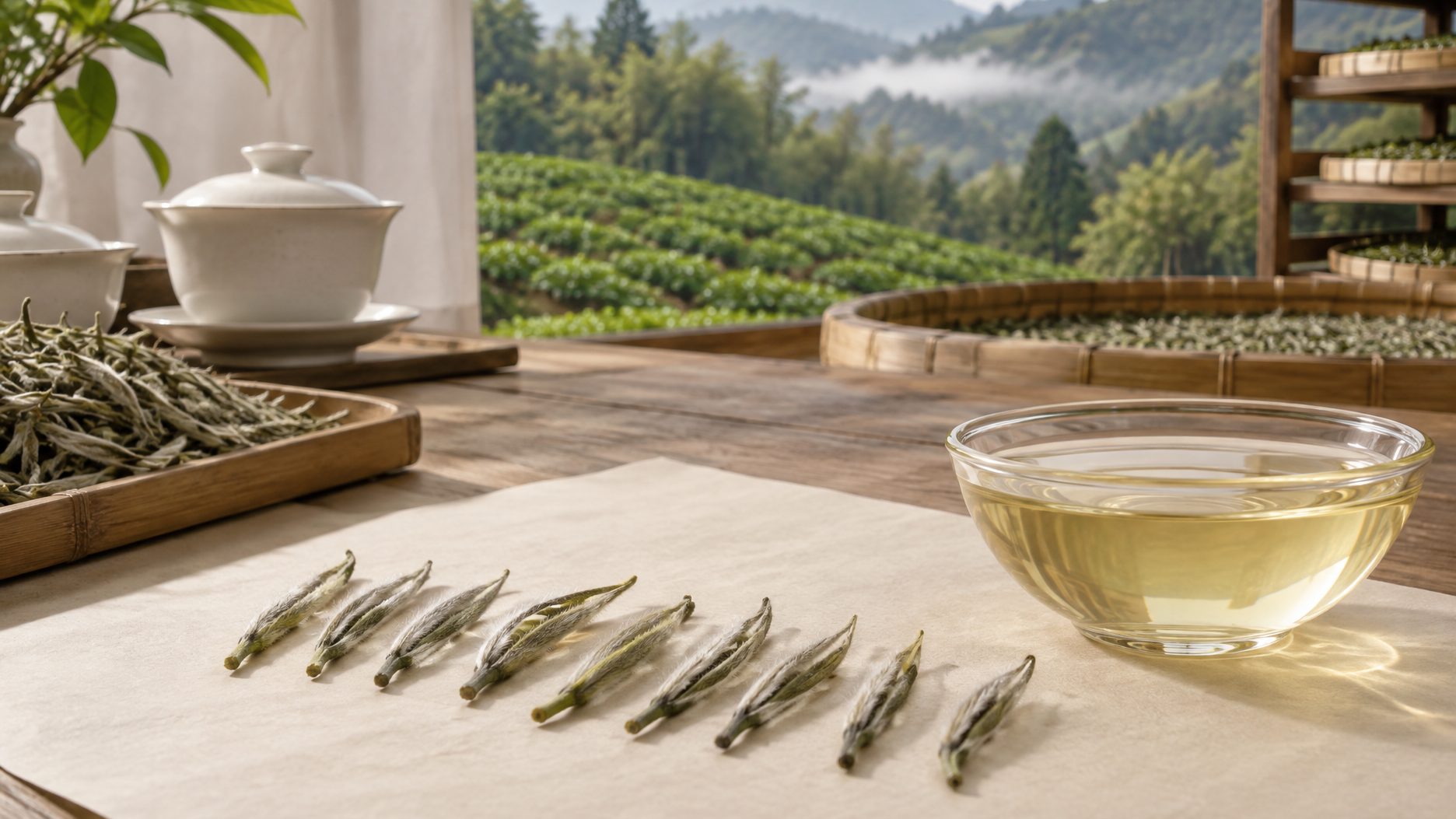
Origin: Fuding and Zhenghe, the two white-tea homes
Silver Needle comes from two counties in Fujian that anchor the whole white tea category: Fuding on the coast and Zhenghe inland. Both grow the large-leaf varieties the tea is made from, both have generations of white-tea craft behind them, and both names carry weight with professional buyers - which is why origin is stated per lot on the sheet rather than blurred into a generic province claim. The two counties give slightly different expressions of the same tea, and serious programs cup them side by side before choosing. Traceability to county and maker is part of every program file, and the network behind it is the one described on the origin network page.
Processing: withering and drying, nothing else
White tea is defined by restraint. The leaf is picked, laid out to wither until it reaches the right moisture, then dried. No pan-firing kills the enzymes, no rolling breaks the cells, no smoke, no roasting. That near-absence of process is also why the tea is unforgiving to make: nothing covers up sloppy withering or hurried drying, and the bud's down - the fine silver hair that reads as the tea's quality signal - survives only careful handling. In the cup the restraint shows up as clarity: pale color, soft sweetness, and the pekoe fragrance the trade calls hao xiang. Buyers who know the category check the down first, then the cup; the desk sends both together, because dry leaf and liquor tell complementary stories.
The cupping sheet
| Factor | What a sound lot shows |
|---|---|
| Dry leaf | Plump straight buds, dense silvery down, even length |
| Liquor | Pale apricot, clear, bright |
| Aroma | Pekoe fragrance, fresh and clean, faint floral |
| Taste | Soft, clean sweetness, gentle thick texture |
| Wet leaf | Even buds, olive-green with silver, unbroken |
The five-factor frame is the same used across the catalog, but on this tea the dry-leaf row does more work than usual: down density, bud plumpness and evenness separate premium lots from ordinary ones before water is poured. A leaf-and-bud mix sold as Silver Needle is visible in the first handful.
Brew parameters
| Parameter | Reference |
|---|---|
| Leaf to water | 5 g / 150 ml |
| Water temperature | 85-90°C - below the boil |
| Infusion | First pours patient; buds open slowly |
| Service fit | Glass or gaiwan, where the buds standing upright are part of the cup |
Boiling water is the usual first mistake with Silver Needle: it scalds the buds and pushes out bitterness the tea never needed to show. The reference parameters print on the lot sheet, and for menus the desk recommends keeping them on-pack - the tea rewards a customer who brews it as directed, and the brewing guide walks the details for staff training.
Grades and the spring window
The picking standard is the bud, and the bud is a spring event: the plump, down-heavy buds the grade is named for come from the first growth, and the window is short. Later pickings and leaf-inclusive material belong to the other white lines - White Peony at one bud and one or two leaves, then the leaf-heavy grades below it. Within the spring window, lots separate on bud plumpness, down density and withering craft, which is why the reference sample, not the harvest certificate, is the thing that locks a program. The calendar discipline - reserving volumes, cupping new lots as they land, releasing bulk against the golden sample - is the same spring logic described in the spring harvest guide, and the lead-time math sits under MOQ and lead time.
Who buys Silver Needle, and how it sells
Tea houses and professional channels lead: the tea is poured where the buds standing in glass are part of the experience, and staff can narrate the restraint of the process. Premium retail follows, where a clear pouch shows the down and does the selling without adjectives. Gift programs use it as the quiet-expensive choice, and wellness-leaning channels favor its gentle cup while the desk keeps any health framing to general, typical-values language - including on caffeine, where the honest summary is in the white tea caffeine note. As a range position, Silver Needle is the top of the white program, with White Peony as the everyday cup below it and the leaf grades below that.
Packing, private label and buyer checks
Bud tea is fragile freight: the down rubs off and the buds snap when mishandled, so bulk ships in foil-lined cartons with minimal transit handling, and retail formats favor pouches that show the buds - with nitrogen flushing available for long shelf slots, as on the packaging options page. Private label follows the standard program ladder, with destination-market labels produced per market. Before bulk, the checks are the standing five: dry leaf against sheet with down and bud evenness judged first, the five-factor cup against the golden sample, moisture, per-batch lab panel, pack integrity - all documented through the desk's quality control routine. Start with the quote form and a sample plan comes back in writing.