
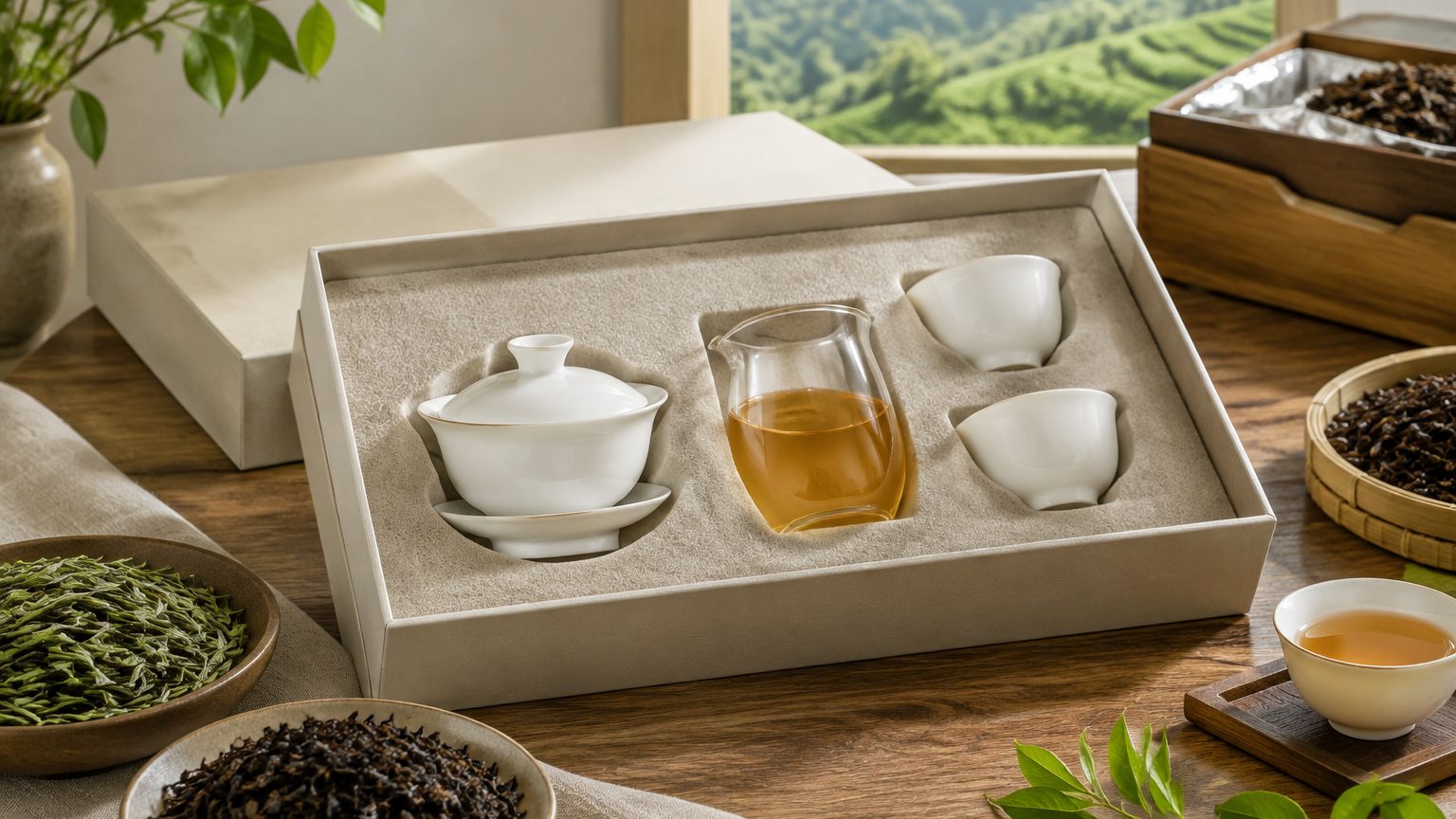
Sets sourced where the kilns are
China's teaware is regional: thin porcelain from the Jingdezhen area, the gongfu brewing tradition around Chaozhou, unglazed clay pots from Yixing. The desk does not manufacture any of it - it coordinates partner kilns and workshops per program, matches the ware to your price point, and holds the program to the sample you approved. That distinction matters to buyers: it means the desk can say which district suits your brief instead of selling whatever one factory makes, and it means substitutions are a written decision, not a silent swap. Set composition is modular - gaiwan, fairness pitcher, two to six cups, or a teapot format - and the tea inside the box is sourced from the same catalog as every other line, so one purchase order covers the whole gift unit.
Component options at a glance
| Component | Typical options |
|---|---|
| Gaiwan | Porcelain, 110-150 ml, plain or decorated; the gongfu standard |
| Fairness pitcher | Matching porcelain or glass, evens the pour across cups |
| Cups | 2-6 per set, small tasting format; larger mugs for Western service |
| Teapot format | Porcelain or clay pot replacing the gaiwan for steep-and-pour markets |
| Tea load | 1-4 tins or pouches from any catalog line; oolong and gongfu sets pair naturally |
| Inserts | Molded pulp or foam-free cushioning, brew cards, care instructions |
Why buyers bundle
Three reasons come up in every conversation. Margin: a boxed set sells at a gift price while its components - ware plus tea - cost a fraction, and the bundle is hard to comparison-shop piece by piece. Story: the set teaches the brew, so the tea inside tastes the way the brand intended, and the care card turns a one-time buyer into someone who steeps correctly. Operations: one supplier, one quality standard, one carton, one customs line instead of coordinating a potter, a packer and a tea desk separately. Retail buyers building gift walls and corporate buyers needing an acceptable handout both land here, often via the organic gift box program when certification matters.
Fragile freight: the part that decides everything
Teaware lives or dies on packing engineering. Sets are packed in molded inserts sized to each component, cartons are drop-tested against the freight lane, and a pilot carton is smashed before the production run is approved - not after the container lands. Inspection before packing checks glaze defects, chip edges and lid fit piece by piece on gift orders, and the routine sits under quality control. Breakage in transit is a claims conversation only if the packing spec was followed and documented; the desk would rather spend the margin on a better insert than on apologies. Sea freight is the default for volume, air for deadline saves, with the trade-offs under logistics and shipping.
MOQ, lead time and tooling
The typical reference range is 300-500 sets per program, confirmed in writing per order on the MOQ and lead time page. Stock ware in existing shapes moves fastest; custom decoration, custom box sizes or new molds add tooling time, planned at the 35-60 day reference for new molds. The honest sequencing is sample first, always: cup the tea, handle the ware, drop the pilot carton, then scale. Buyers who skip the pilot carton to save two weeks usually spend the savings twice on replacements.
Pairing sets with teas
The classic pairing is gongfu: a gaiwan set with an oolong program, where the brew ritual is the point and the ware earns its space. Porcelain teapot sets suit black teas and blended formats for steep-and-pour markets; glass pitchers suit flowering and visual teas; clay pots belong with the oolong and pu-erh ends of the catalog where the pot seasons over years. The desk matches set to tea in the sample round, because the combination is what the end customer actually reviews. Sets also travel well as components: a buyer who already sells tea can add one gaiwan-and-cups SKU before committing to a full boxed program, testing the category on a shelf rather than in a container. The desk supports both routes with the same sample discipline, and reports which components chip or disappoint most often, so the second order is built on evidence rather than optimism. When the composition is settled, send it with quantities and destination to the quote desk, and the program - ware, tea, box, labels - comes back as one written offer.