
One region, two products
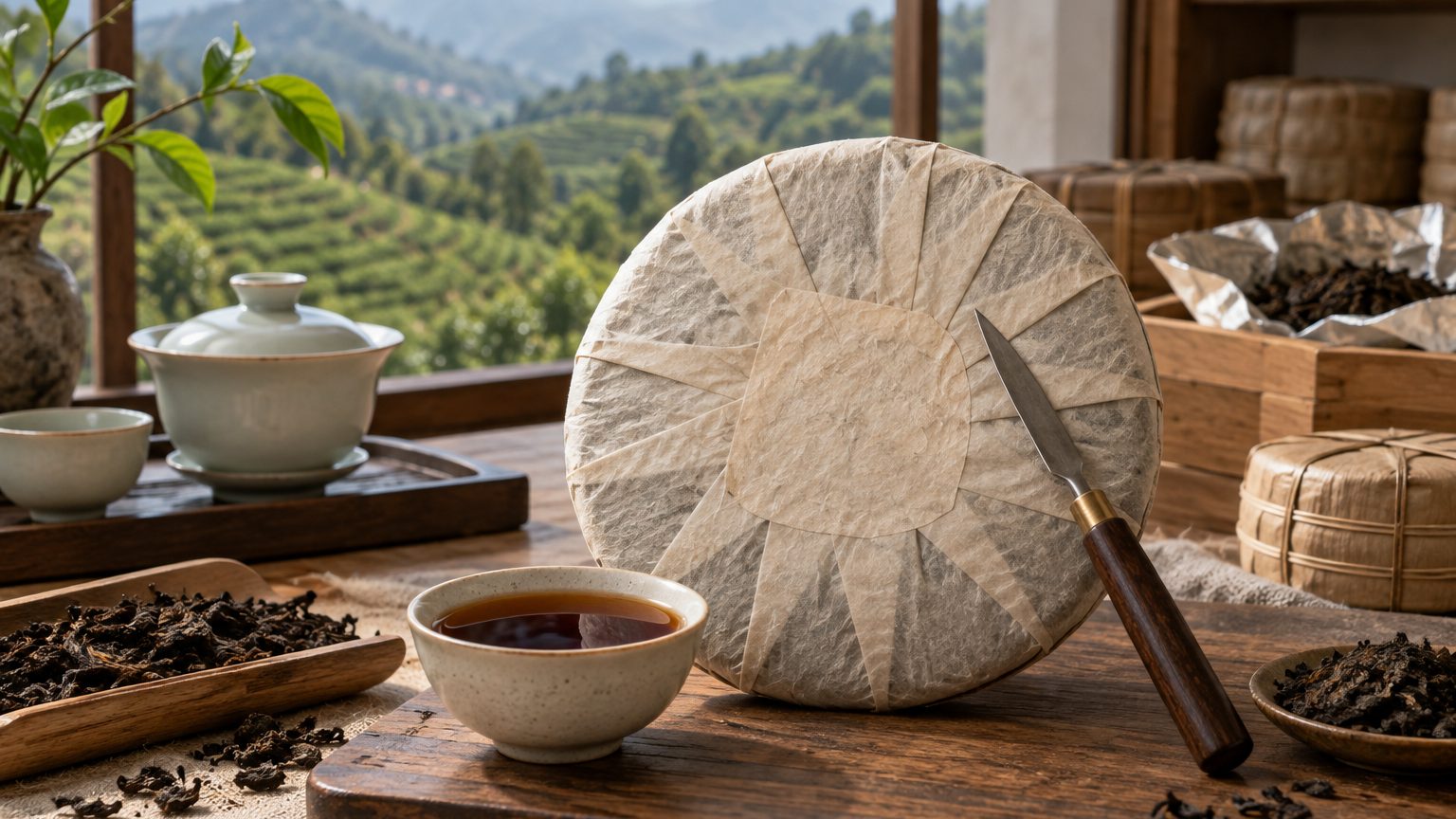
Pu-erh begins one way. Leaf from Yunnan's large-leaf plant - grown across Xishuangbanna, Lincang and Pu-erh city - is dried in the sun as maocha, steamed soft, pressed into shape and dried again. The classic form is a 357 g cake wrapped in cotton paper and stacked seven to a bundle, a convention that keeps pressing, pricing and freight comparable across the trade. What happens after picking splits the category in two. Ripe pu-erh is wet-piled: the leaf is moistened and fermented under controlled conditions, a process standardized in the 1970s, so it arrives ready to drink with a dark, thick cup. Raw pu-erh skips the pile and presses green, changing slowly in storage over years. Same leaf, opposite buying logic - and usually opposite programs.
Raw, ripe and chenpi compared
| Line | Process | Liquor | Best use |
|---|---|---|---|
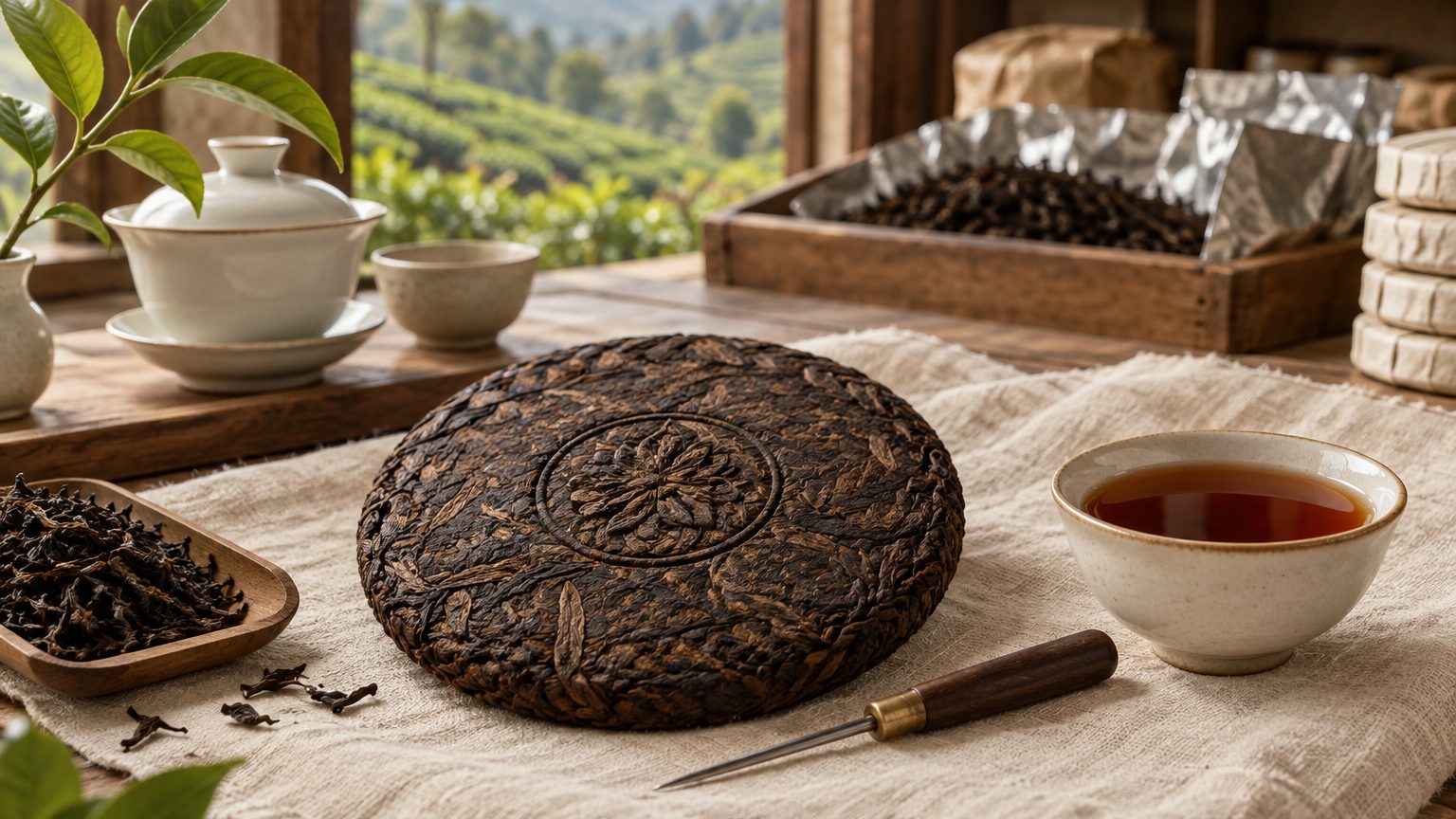
| Ripe cake | Wet-piled fermentation; ready to drink | Chestnut red, thick | Restaurants, daily dark tea, gifting |
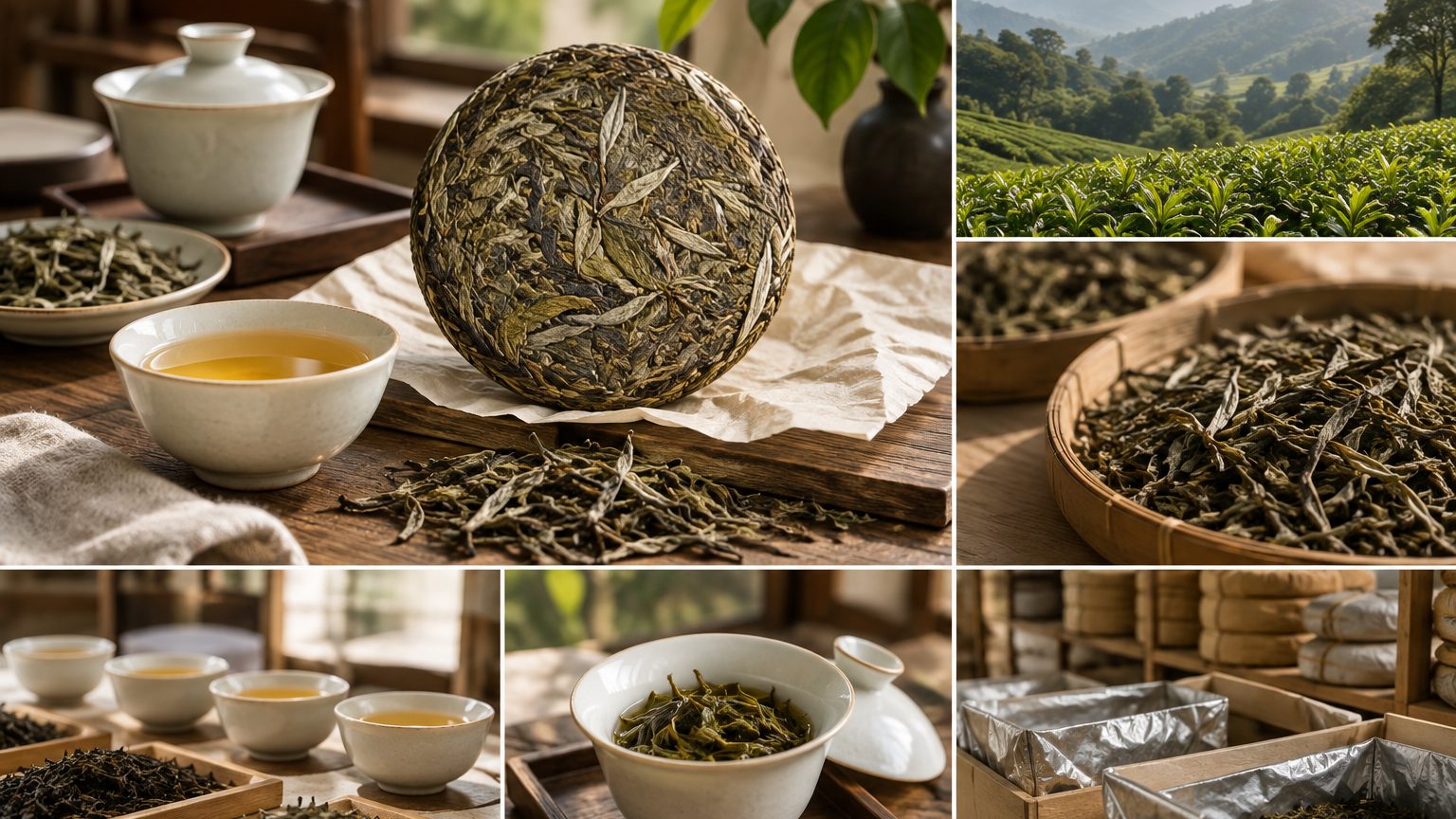
| Raw cake | Sun-dried maocha pressed green; ages in storage | Yellow-green moving to orange | Tea houses, aged ranges, collectors' retail |
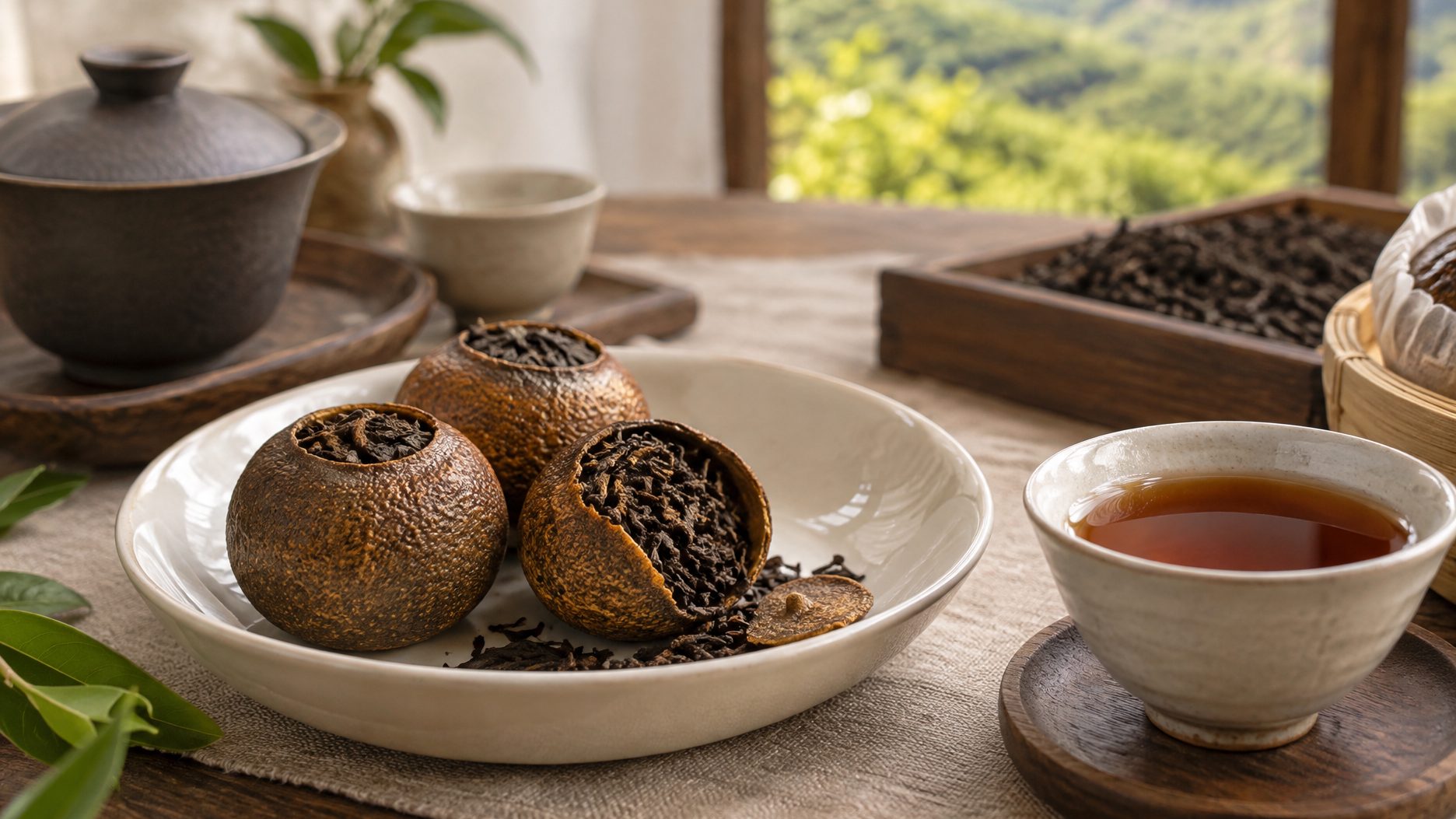
| Chenpi puer | Ripe tea with Xinhui tangerine peel | Bright red | Gifting, dessert menus, peel-aroma drinkers |
The desk's advice for first programs is usually ripe: it drinks well the day it lands, forgives service mistakes, and needs no storage story to sell. Raw is a separate commitment - brighter and slightly bitter young, it rewards patience and storage discipline, which is why tea houses and aged-range buyers take it on. Chenpi sits as the accessible bridge: ripe tea's comfort with a citrus-edged lift that retails on aroma alone.
Wet piling, briefly
Ripe fermentation is controlled transformation: leaf is moistened, piled, and turned by hand and thermometer over weeks, with temperature and moisture deciding how deep the fermentation runs. Deeper piles give darker, rounder, more uniform cups that foodservice can pour all day; lighter piles keep more lift and edge for drinkers who want fruit and wood over earth. The 1970s standardization of the process is what turned ripe tea from an accident into a repeatable industrial product, and it is why consistency claims can be checked: every lot is cupped against the program reference, and fermentation depth is stated on the lot record. The step-by-step of the pile - turning, moisture, rest - is described in this process note.
Chenpi: the peel changes the channel
Chenpi puer pairs Yunnan ripe tea with tangerine peel from Xinhui in Guangdong, either as peel blended through the leaf or as whole fruit hollowed and filled - gan pu - with loose leaf inside. The peel adds a cool, citrus-edged aged aroma that reads instantly on the nose, which is why chenpi is the line most often bought as a gift and poured after rich meals. It is also a two-ingredient product, so labels, customs lines and certificates cover both components; the desk states both origins on the lot record and keeps the documentation in the program file. For buyers bridging tea and wellness-adjacent retail, chenpi is usually the line that does the bridging - on aroma and tradition, with claims left to what the ingredient list supports.
Storage: raw tea is an inventory decision
Because raw cakes age in storage, a raw-puer program holds inventory that is itself changing - which is either the appeal or the problem, depending on your shelf. Cakes are wrapped in cotton paper that lets the tea breathe, and they want cool, dry, odor-free conditions away from direct sun; a cake stored beside anything aromatic will taste of it within a season. Age statements follow the same rule as the rest of the desk: stated on the lot record, storage history attached, no silent relabeling of young cakes as aged. Most programs start with ripe for immediate drinking and add raw as a longer-horizon line once the channel proves itself. The two styles side by side, including how their brewing differs, is covered in the raw-versus-ripe comparison, and warehouse conditions for long holds in this storage guide.
Brewing for menus and packs
Pu-erh brews hot and unapologetic: 5-7 g in a 110 ml pot at 100°C, a quick rinse poured off before the first serving to wake the cake and carry off loose dust. Ripe tea suits after-meal service and self-serve carafes; raw tea rewards gongfu pacing, with the middle infusions showing what the mountain was paid for. Cakes are broken with a pick rather than snapped, keeping leaf threads intact so the cup stays clean. The standing lines ship as pressed cakes in the formats described above; other formats can be raised as a custom program and confirmed in writing after sampling rather than assumed from the catalog.
What buyers check before bulk
- Fermentation depth on ripe lots, cupped against the program reference.
- Region and harvest record on raw lots - stated on the sheet, not implied.
- Cake integrity: clean break, even compression, sound cotton paper.
- Storage history behind any age claim.
- Lab panel per batch; chenpi documented for both ingredients.
Open the three line pages for cupping sheets and brew parameters, or tell the desk which side of the raw-ripe line your channel sits on via the brief; samples follow with a written offer and the standing MOQ ranges.