
Three layers, in the order they fail
Tea quality problems arrive in a predictable order: first the cup drifts, then the leaf looks wrong, and last - rarely, if the system works - the lab finds something. So the control system runs in the same order: sensory evaluation catches drift early and cheaply, physical checks confirm what the leaf should already show, and the laboratory panel settles the questions only an instrument can answer. The desk runs all three per program, and each layer produces a document: the cupping record, the lot inspection notes, and the lab report. This page explains what each layer checks and how the results bind a supplier to what you approved.
Layer one: five-factor sensory evaluation
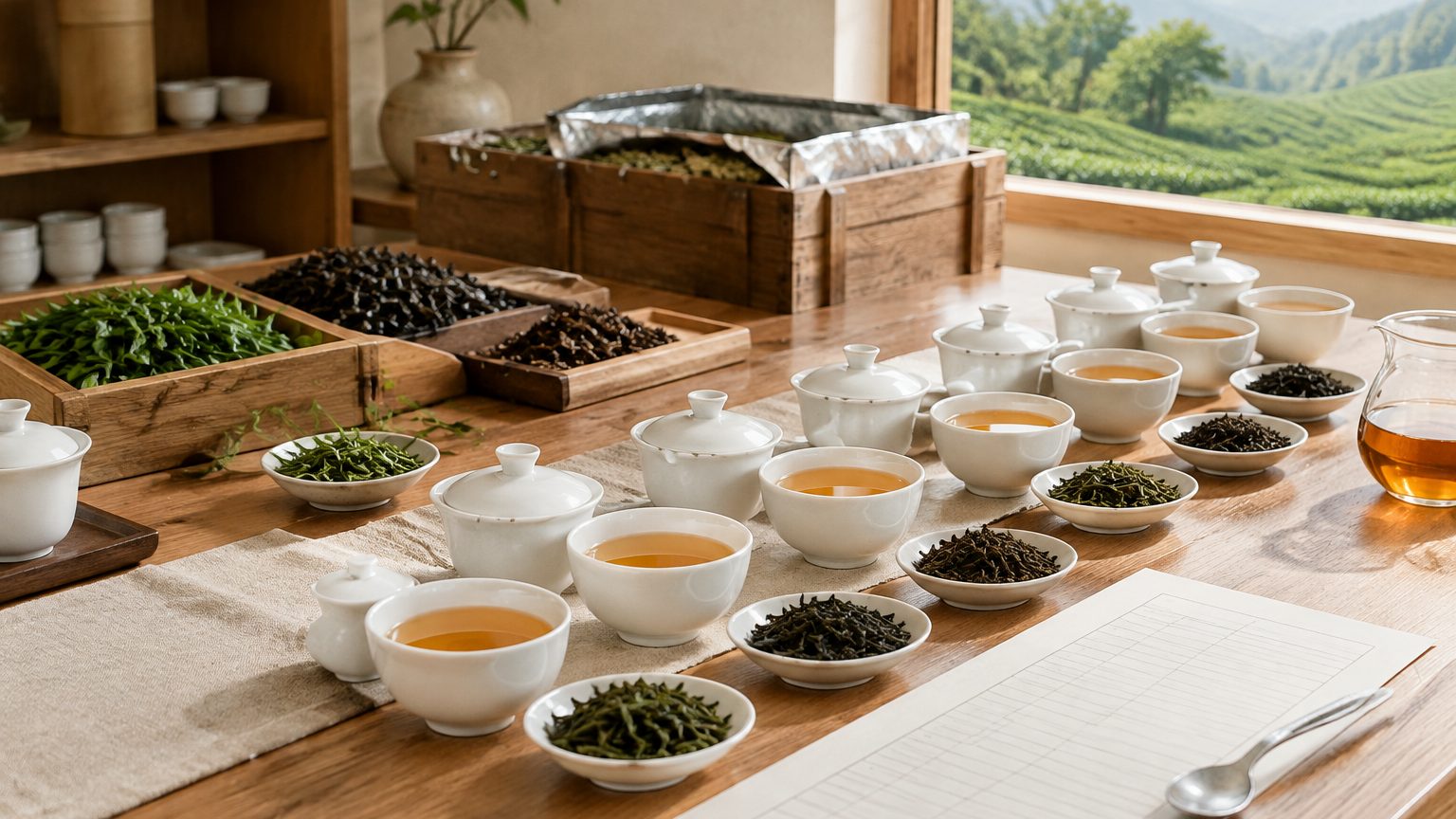
The industry's shared sensory language is the five-factor review - appearance of the dry leaf, liquor color, aroma, taste, and the wet leaf after infusion - performed as a dry pass and a wet pass, with standardized leaf-to-water ratios and steep times so two tasters in two rooms score the same lot the same way. The widely used national method behind this practice is GB/T 23776, the public sensory evaluation standard, and it is named here as a method reference, not as a claim about any particular lot. The desk cups against it with a simple discipline: every candidate sample, every pre-shipment lot and every retained sample is scored on the same five factors, against the program's golden sample rather than against memory. The five factors, briefly:
| Factor | What is read | What it catches |
|---|---|---|
| Dry leaf | Grade uniformity, color, particle size, cleanliness | Skipped refining, mixed lots, age |
| Liquor | Color, clarity, brightness | Over-oxidation, stale storage, wrong grade |
| Aroma | Type, intensity, purity, off-notes | Scenting quality, smoke or odor pickup |
| Taste | Strength, sweetness, bitterness, astringency, finish | Process drift, harvest substitution |
| Wet leaf | Evenness, leaf integrity, true color after infusion | Fixing and rolling faults hidden in dry form |
The golden sample: the only judge that counts
Every program locks a golden sample - a sealed reference from the approved trial run - and from that moment the sample, not the brochure, defines the spec. Bulk is made against it; arrival cups are poured against it; substitutions require written approval against it. The discipline has three practical rules. First, the golden sample is sealed and retained twice - one copy at the desk, one dispatched to you - so both sides judge the same leaf. Second, every production batch keeps its own retained samples on file, so a lot that behaves oddly in your market can be re-cupped months later without guesswork. Third, when a new harvest or a new blend iteration is proposed, it is re-locked as a new golden sample with your written sign-off, never quietly rolled forward. This is the mechanism that makes the standing catalog honest, and it is why the desk's short answer to "will next season taste the same" is: next season will be cupped against this season, and you will see the score before you ship.
Layer two: physical and grade checks
Between the cup and the laboratory sit the cheap checks that catch the most common failures: moisture measured against the packing spec, grade and particle size read against the approved leaf standard, stem and dust content noted on refining-intensity grades, packing integrity confirmed on foil liners and cartons. Moisture matters more than buyers expect - it drives shelf life as much as any barrier film, and a lot packed a point too wet will dull in transit no matter how good the pouch is. These checks happen before packing and again on packed cartons, and they are recorded in the lot inspection notes that travel with the shipment file.
Layer three: the per-batch laboratory panel
Food safety is the one layer where the desk does not lean on sensory judgment at all. Each production batch is sampled and sent to an accredited third-party laboratory for a panel covering the three groups a buyer's market actually regulates: pesticide residues, heavy metals, and microbiology. The reports are issued in the buyer's name, per batch, so they slot directly into import files - this is a deliberate choice, because a report made out to the supplier proves nothing about the carton that reached you. The desk does not publish invented test values and does not state limits here; the scope of each panel is set per destination market - EU MRL scope, US-bound scope, or the market your channel specifies - and confirmed in writing before sampling. What the panels cover in practice is summarized under certifications, and the reading of them is unpacked in tea testing parameters.
How a non-conforming lot is handled
When a lot fails any layer, the sequence is fixed. The batch is held at the packing facility - it does not ship and wait. The retained samples are re-cupped or re-tested to confirm the finding. If the fault is process drift, the batch is re-worked where the process allows and re-run through all three layers; if it is not recoverable, the batch is rejected and a replacement lot enters production against the same golden sample. The buyer hears the finding in writing, with the documents attached, before any decision is needed. What this system cannot do is make a bad harvest good; what it does do is make sure bad never travels quietly - the enforcement logic behind why the desk prefers samples before estimates, as set out under procurement process.
What you receive, per program
The paper trail at handover runs: the golden sample record, cupping records for the shipped batch, the lot inspection notes with moisture and grade results, the third-party lab panel in your name, and the origin and packing dates on the lot record. Together with the document chain under certifications, this file is what your import broker, your retailer's compliance desk or your own auditor will ask for - and having it assembled per batch, rather than reconstructed per crisis, is most of what quality assurance means in this trade. If you want the control system applied to a brief, send the cup profile and destination market through the quote form and the sample plan will include the testing scope in writing.