
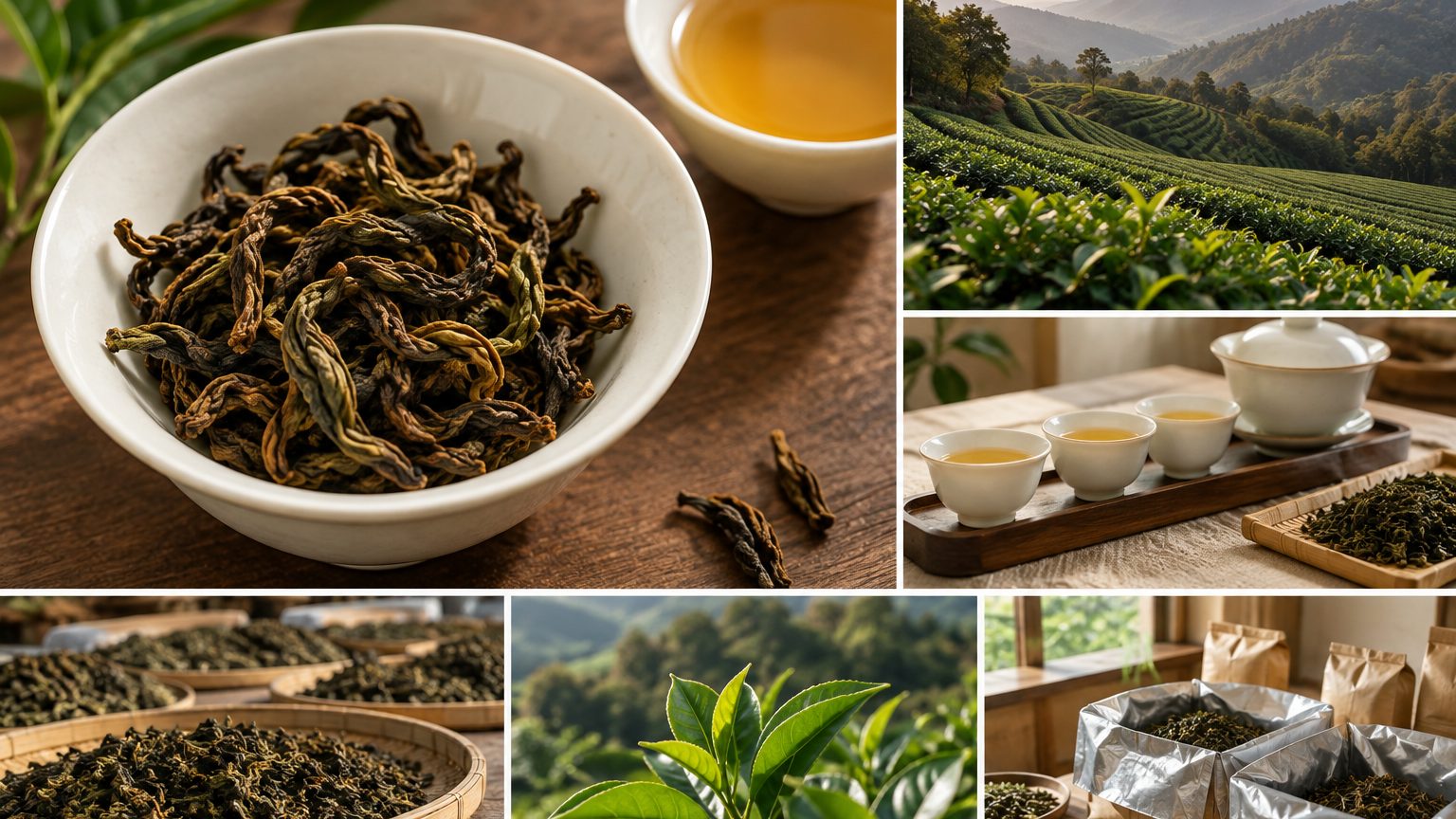
A tea named for its fragrance
Most teas are marketed by place or grade; Dancong is marketed by smell. Each garden bush line - and Dancong means single bush - carries its own aroma signature, and the trade names the tea after it: Mi Lan Xiang, the honey orchid fragrance, is the flagship and the gateway for most programs; Ya Shi Xiang, the famously misnamed ginger-flower type, runs cooler and sharper; almond, gardenia, pomelo-flower and a dozen more types fill the map. This is not flavoring - nothing is added - but cultivar and micro-terroir expressed through careful oxidation and firing. For buyers it changes the sourcing conversation: instead of one SKU to approve, Dancong is a family of profiles, and the desk's job is to help pick which aroma types earn slots on your shelf. The oolong hub positions Dancong against the Wuyi rocks; the oolong primer covers the category logic.
Terroir: Phoenix Mountain
Phoenix Mountain rises behind Chaozhou in eastern Guangdong, a region with centuries of single-bush tea culture. Old trees on higher slopes - some genuinely ancient - give the deepest, most persistent aromatics; mid-slope gardens give the working lots that carry most commercial programs; lower, younger plantings give volume material with a thinner echo of the signature. Elevation, fog and the region's red soils all feed the intensity Dancong is known for, and within any one aroma type the difference between an old-tree lot and a young-garden lot is wide and honest to taste. The desk states garden age band and elevation band on lot sheets where the program needs it, and reference samples anchor each tier - because in Dancong, more than most lines, the cup is the only honest label.
Processing: how the aroma is built
Dancong processing leans hard on oxidation control. Leaf is picked - often with mature leaves for body - sun-withered briefly, then shaken and rested through repeated cycles so the edges oxidize while the leaf's own aromatics develop; the maker's judgment of when those cycles have gone far enough is the craft the whole category rests on. Fixing locks it, rolling twists the strips, and a moderate bake dries and settles the tea without burying the fragrance. Too little oxidation and the cup is raw and edgy; too much and the signature flattens toward generic fruit. The result, done right, is what the trade calls high fragrance, sharp and long - aroma that survives multiple infusions and still hangs in the empty cup. Buyers can see how this compares with other oolong chains in the withering and oxidation notes.
The cupping sheet, Mi Lan Xiang reference
| Factor | What the reference shows |
|---|---|
| Dry leaf | Dark brown-black strips, slight sheen, even twist |
| Liquor | Golden-amber, clear, bright |
| Aroma | Honey and orchid lift, sharp, persistent in the empty cup |
| Taste | Sweet floral attack, light tannin, long aromatic finish |
| Wet leaf | Red-brown margins, soft intact strips |
Brew gongfu: 7-8 g in a 110 ml gaiwan at 95-100°C, quick pours - Dancong rewards fast hands and punishes long steeps with astringency. Expect strong middle infusions and a session that runs six or more. For menus, a single charge serves a tasting flight; for retail packs, the desk prints the same parameters so customers brew to the spec the lot was approved at.
Choosing aroma types for a program
Start with Mi Lan Xiang: it is the most legible to new audiences - honey and orchid read immediately - and the most forgiving across seasons. Add Ya Shi Xiang if your audience has any connoisseur lean; its sharp, cool character generates the strong opinions that drive repeat interest. Almond and gardenia types round out a three-SKU wall with distinct signatures at comparable price logic. Beyond that, depth is a tea-house decision: old-tree single-bush lots of any type are seasonal, priced accordingly, and worth program slots only where customers ask by name. The desk cups candidates side by side per program and states plainly which types are in good supply this season - outturn varies year to year, and an aroma type that underperformed this harvest should wait, not ship.
Seasonality, stock and where Dancong fits
Phoenix Mountain picks in spring primarily, with a smaller autumn season; spring sets the aromatic benchmark and most programs buy spring. Unlike roasted rock teas, Dancong's fragrance is the fragile asset - it fades with air, light and time - so packing and turnover matter more here than buyers expect: foil barriers, tight seals, cool storage, and honest attention to packing dates on lot records. Freshness-driven lines argue for smaller, more frequent orders; the logistics page covers how air and sea options trade speed against that clock, and storage guidance sits on the grading and storage page.
Tea houses and professional channels are the core audience - Dancong is a session tea that shows off. Specialty retail takes Mi Lan Xiang as an approachable hero SKU; e-commerce brands use the aroma-type story for content-rich listings; gifting programs feature old-tree lots where the story justifies the box. It is rarely the right line for mass foodservice: the fragrance that makes it special fades in a thermos, and astringency punishes casual brewing. The retail and importer program notes where Dancong sits in a full range, and private-label retail packing runs through packaging options with MOQ ranges confirmed in writing per program.
What to check before bulk
- Aroma type verified against reference - Mi Lan Xiang is widely imitated, rarely matched.
- Garden and elevation band stated for premium tiers; season stated for all.
- Cup at 7-8 g / 110 ml: sharpness, persistence in the empty cup, clean finish.
- Packing date and seal integrity - fragrance is the asset.
- Lab panel per batch; documents per destination market.
Name the aroma types you want to test and send the brief to the desk; sample Mi Lan Xiang beside Rougui and Tieguanyin to hear three oolong signatures in one sitting.