
Not tea - and why that matters commercially
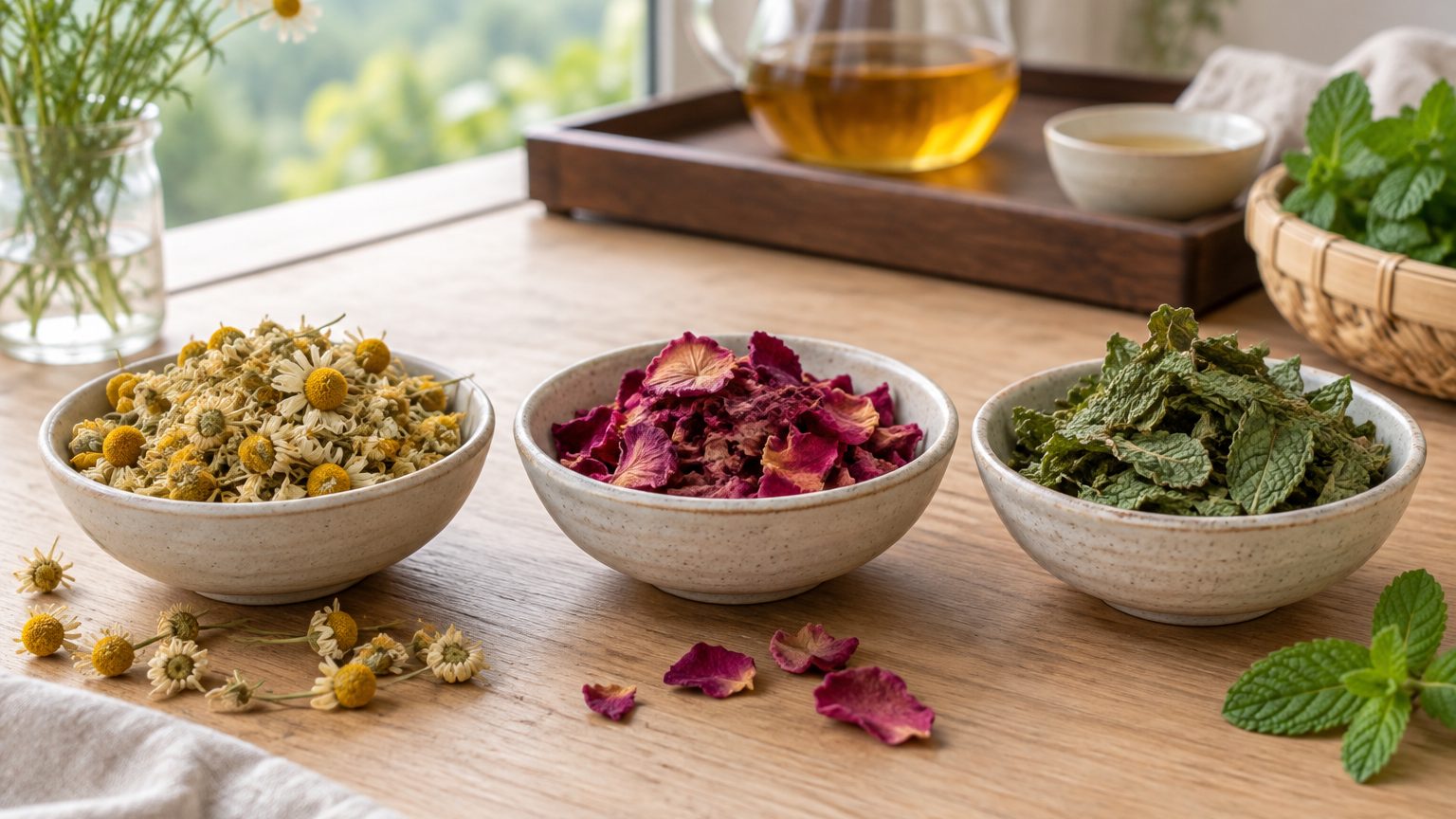
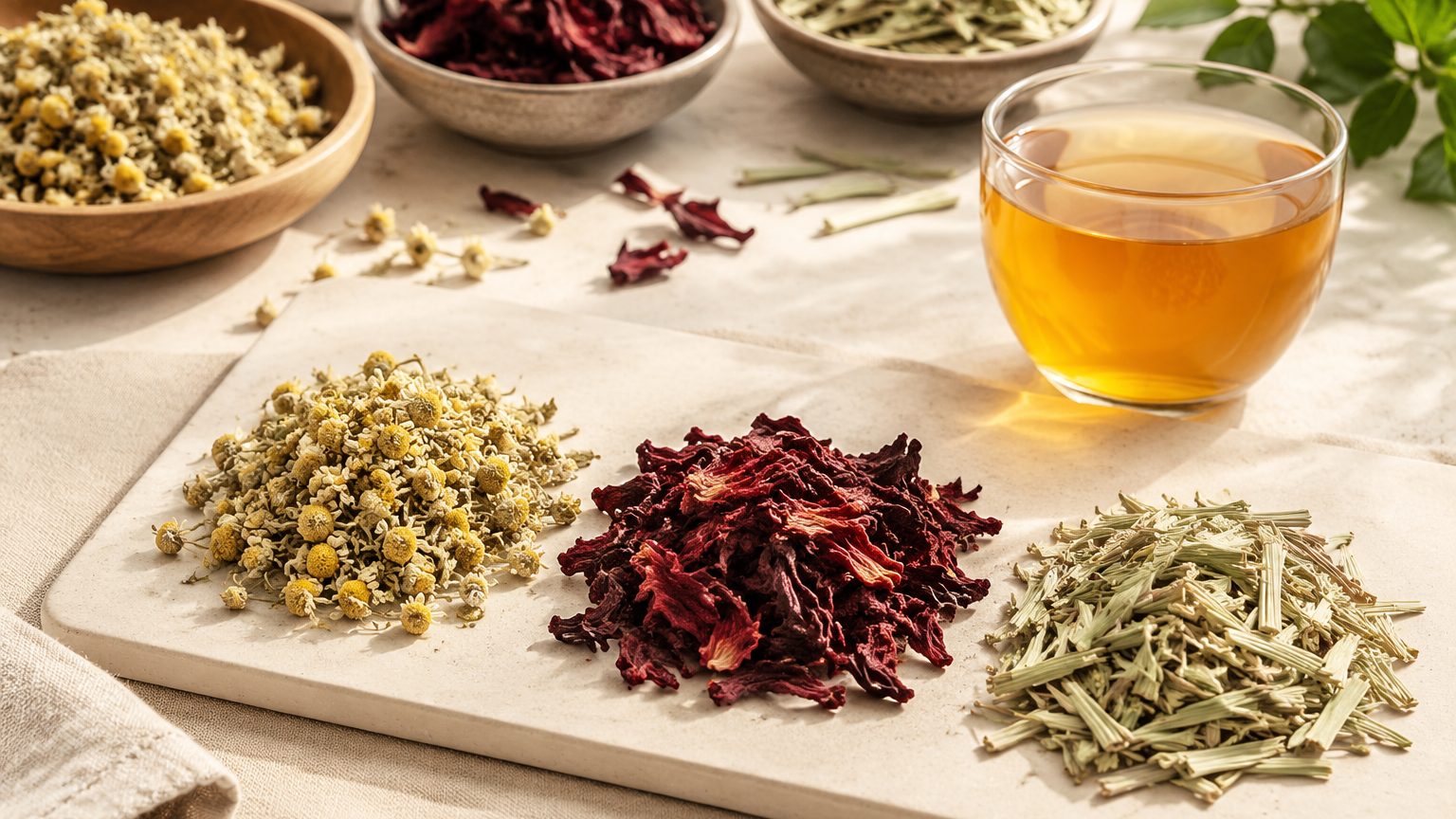
Every line here infuses like tea and packs like tea, and none of it comes from the tea plant. That one fact shapes three things a buyer should settle early. Caffeine: nothing here needs decaffeinating, so the claim on the pack is natural and the documentation is an ingredient list, not a process certificate. Classification: botanical infusions sit under different tariff lines from true tea in most markets, so codes are confirmed with your customs broker per destination rather than assumed from the tea side of the catalog. Claims: rules on what an infusion may say about wellbeing vary by market, so copy stays inside what the ingredient list supports. Settle those three and the commercial case is simple: this category fills cups the tea plant cannot - evening menus, caffeine-free office pantries, family retail where the children drink from the same pot.
The five lines compared
| Line | Base material | Character | Brew | Best use |
|---|---|---|---|---|
| Herbal tea blends | Chamomile, hibiscus, lavender and botanical recipes | Round, floral to gently tart | 95-100°C, about 5 minutes | Hotels, evening retail, wellness channels |
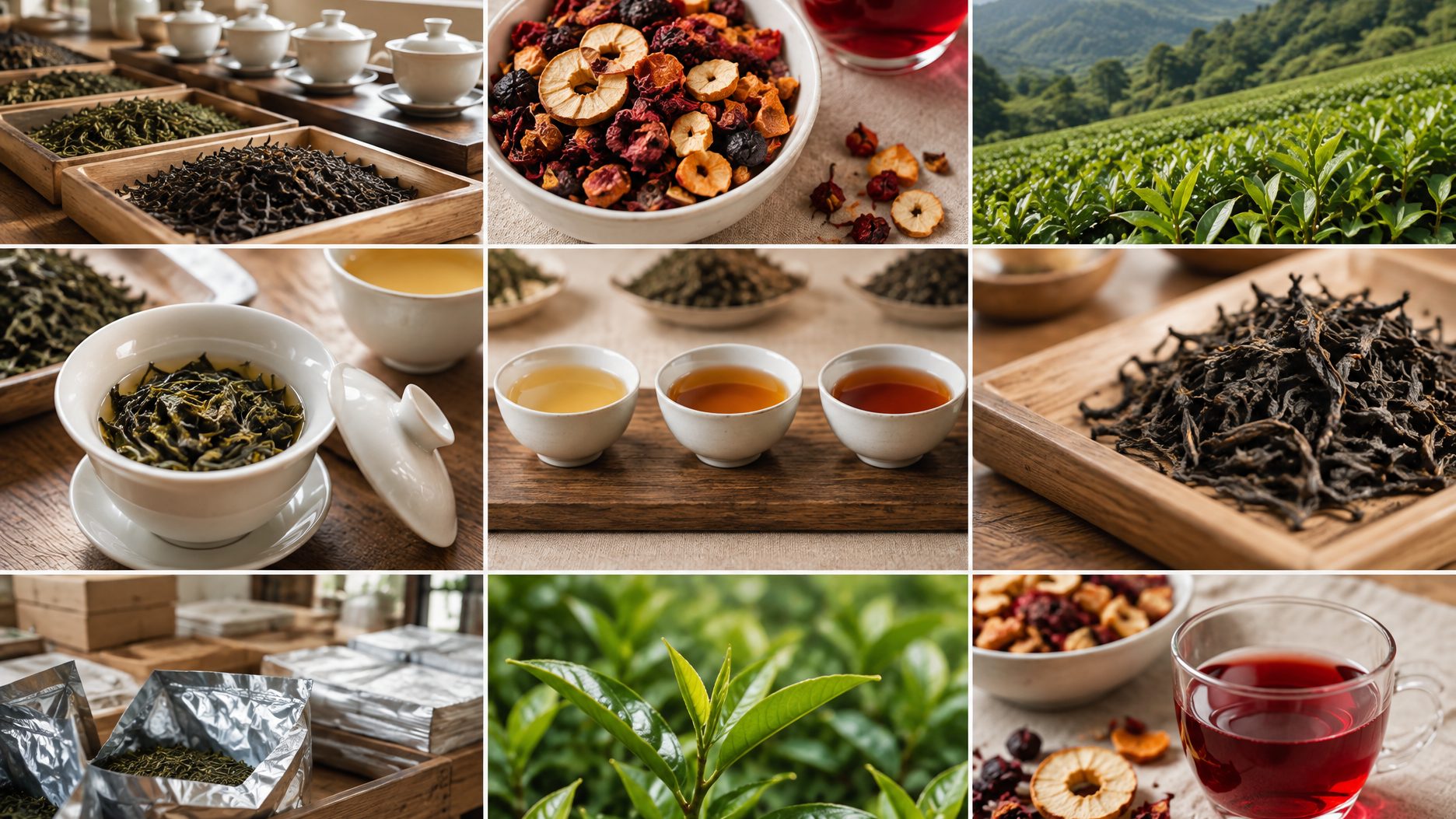
| Fruit tea blends | Dried fruit pieces and peels | Juicy, vivid over ice | 100°C 5 minutes or cold brew | Iced menus, cafes, e-commerce |
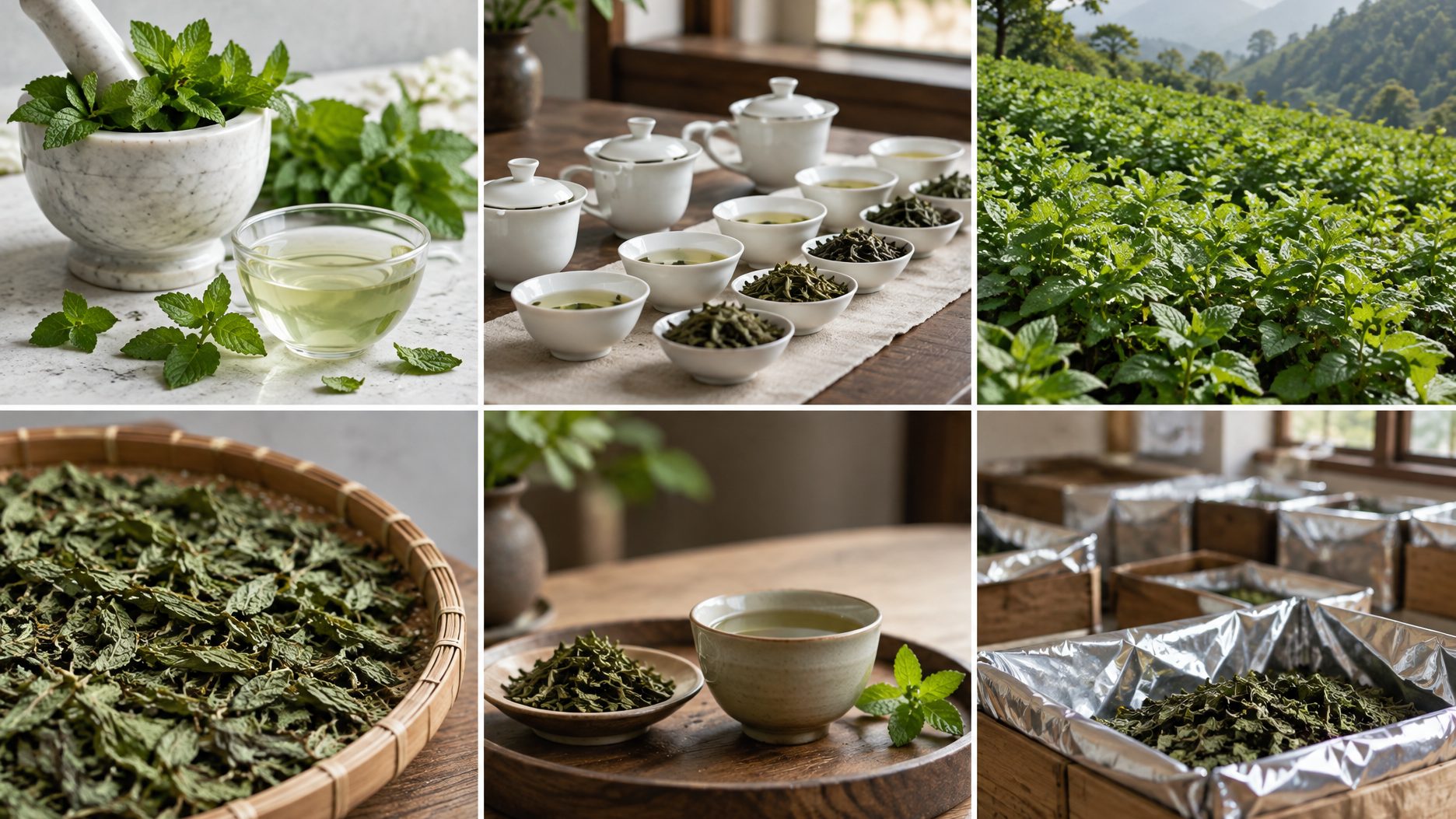
| Peppermint tea | Single-herb mint | Cool, clean, sweet finish | 100°C, 3-5 minutes | Restaurants, after-meal service |
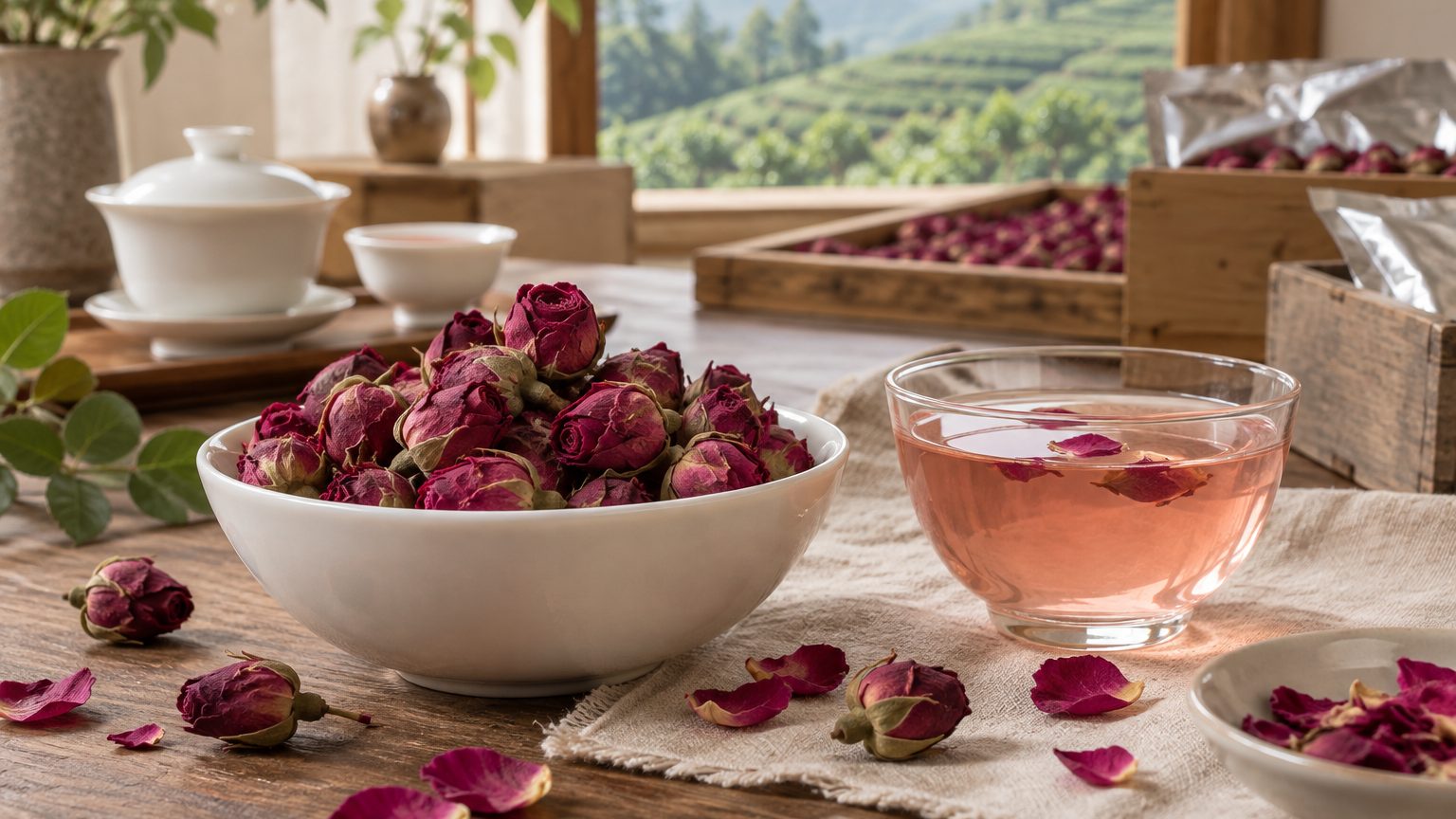
| Rose herbal tea | Double-petal rose with blending | Perfumed, soft | 90-95°C, about 4 minutes | Retail gifting, tea houses |
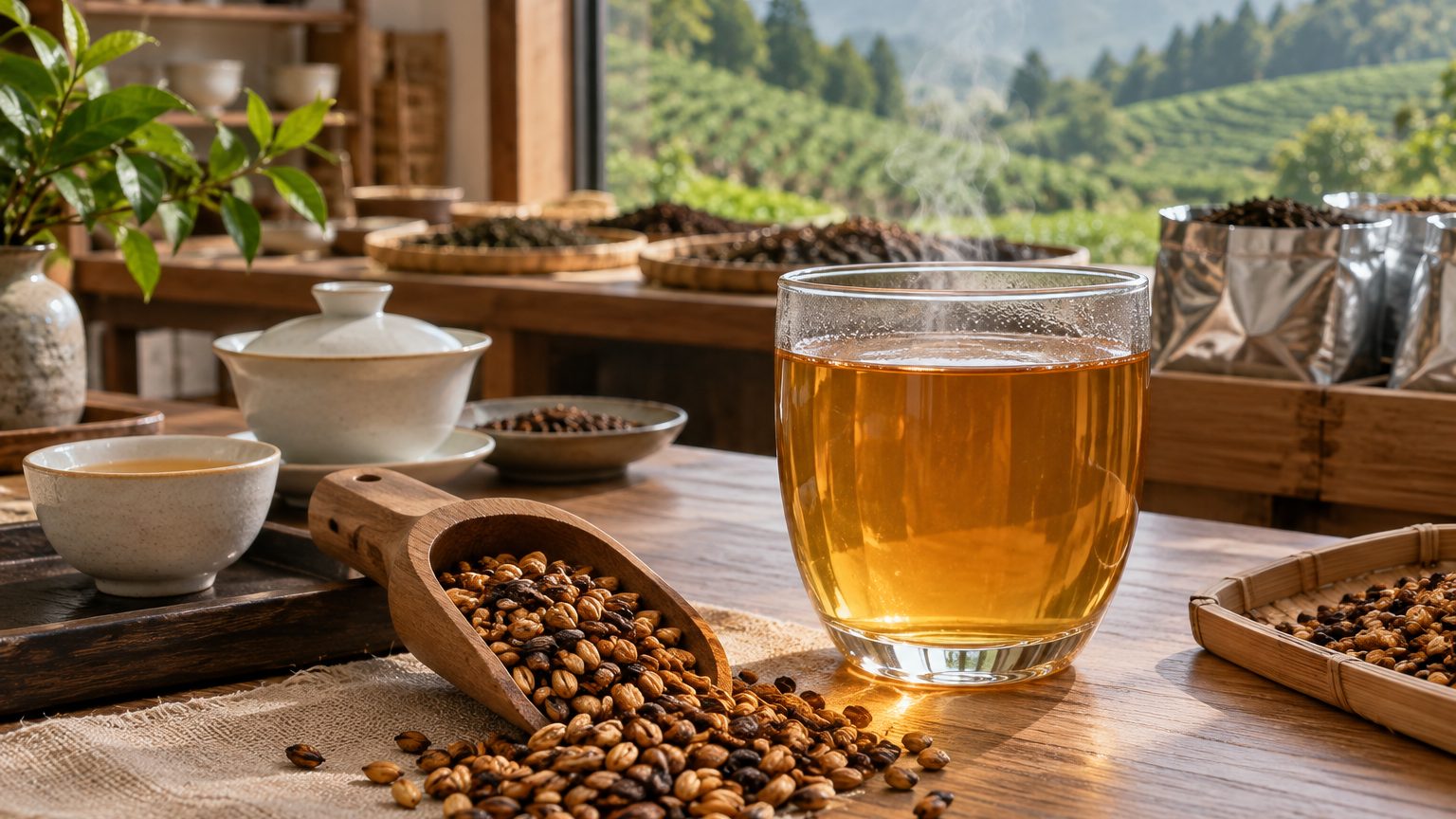
| Barley tea | Roasted barley grain | Toasty, grain-sweet | Boiled, or 100°C 5-10 minutes | Korean and Japanese foodservice, family retail |
Four of the five are botanicals; barley is a roasted grain that entered the category through the household tables of Korea and Japan, where a carafe of it sits on the family table hot in winter and iced in summer. That everyday status is worth copying in markets where the category is new: it sells as a drink, not a statement.
The caffeine-free positioning, stated honestly
'Naturally caffeine-free' is the strongest claim this category needs, and it requires no processing to back it - the ingredient list does the work. That makes the category the straightforward answer for evening menus, office service and any channel where caffeine is the objection rather than the attraction. What it is not, on this desk, is a health platform: chamomile and rose carry centuries of reputation, and label rules on wellbeing claims vary by market, so the copy the desk supplies stays on ingredient, aroma and service - ground where it is defensible in every market you ship to.
Blending is the product
For the blend lines, the recipe is the asset: proportions, cut sizes and the order of assembly decide whether a fruit blend tastes like fruit or like the memory of fruit, and whether a chamomile blend stays round instead of dusty. Programs run on golden samples and batch records the same way tea blends do, with the recipe locked in writing and each production batch cupped against it - the mechanics are described under blending and customization. Single-note lines work differently: peppermint and rose live or die on raw material freshness, since their volatile aromas fade faster than leaf tea. That is why cut size is matched to the pack - coarse for loose pots, finer for pyramid bags - and packing dates are stated on every lot record.
Sourcing and documentation
Mint, rose, chamomile and most botanicals move through mixed imported and domestic channels, so origin is documented per component rather than presented as a single origin story. Barley runs on its own grain harvest cycle and is roasted to the color spec the program sets. Every line ships with a lab panel per batch in your name, an ingredient list with origins, and packing dates - the document set that a caffeine-free claim and a customs line both rest on. MOQ follows the desk's standing reference range for bulk blended product - 50-100 kg per line as the typical example - confirmed in writing per program; bag-filling programs follow the packing ranges instead. The ranges and lead times are laid out on the MOQ and lead time page.
Where each line earns its keep
Hotels and restaurants take peppermint as the after-meal default and an herbal blend as the evening list. Cafes and iced programs lean on fruit blends, which hold color and flavor over ice and cold brew better than most true teas. Korean and Japanese restaurants treat barley as house infrastructure - the carafe on the table - and family retail follows the same logic. Rose is the gifting line, singular enough to carry a box on its own. E-commerce finds its repeat buyers in fruit and rose, where aroma on opening is the review that gets written. If your channel needs one line to start, the desk usually suggests the one your menu already misses at eight in the evening.
What buyers check before bulk
- Ingredient list with origin stated per component.
- Aroma freshness on opening - cut botanicals fade faster than leaf tea.
- Cut size matched to the pack: loose pot, pyramid bag, cold brew.
- Caffeine-free claim support on file.
- Lab panel per batch, issued in your name.
Open the line pages for recipes and brew sheets, or send the channel and occasion you are stocking for to the desk - the reply is a shortlist, samples and a written offer.