
What genmaicha is, exactly
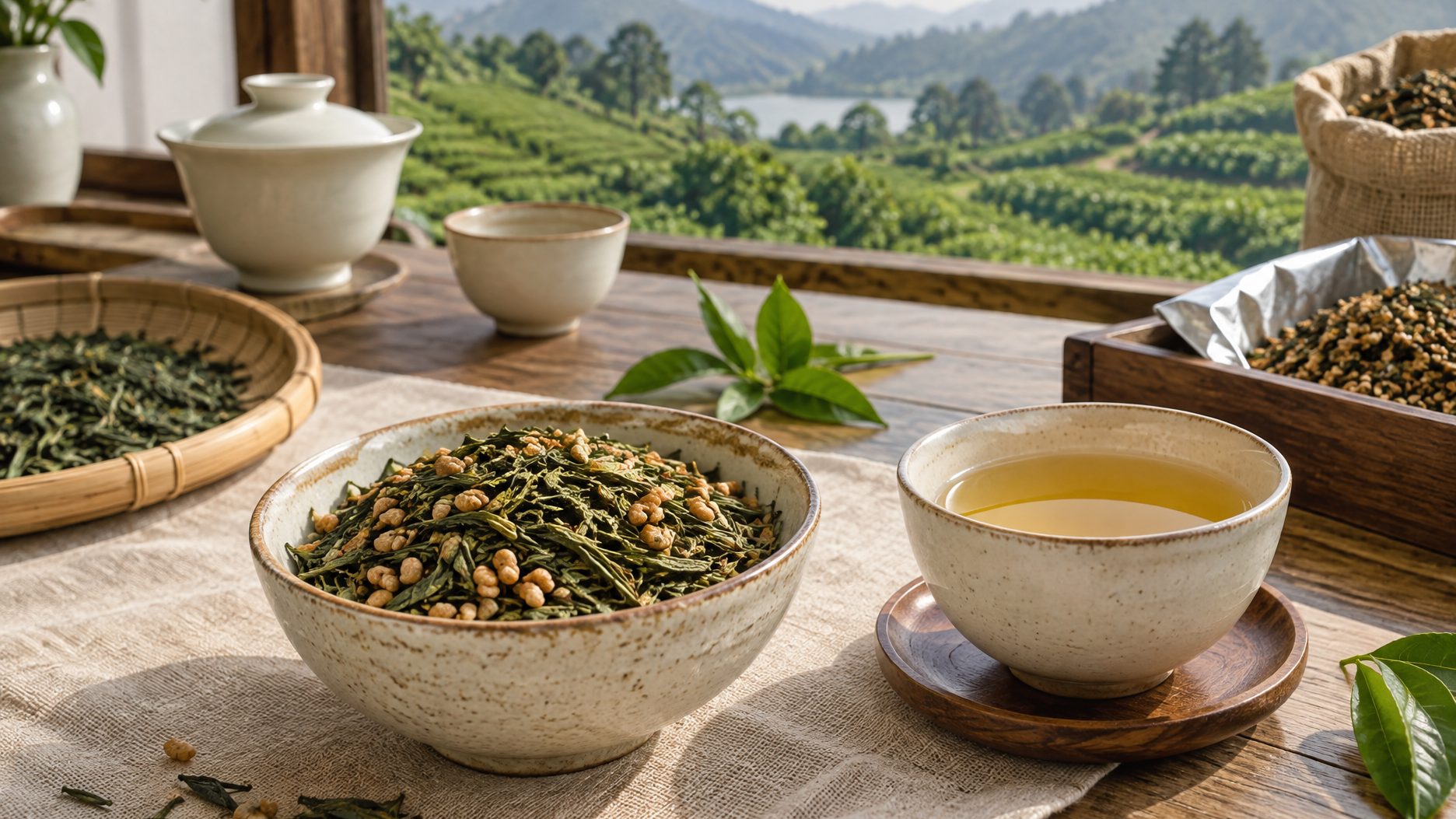
Genmaicha is a blend, not a single-origin tea: steamed Japanese green tea - usually sencha or the more everyday bancha - mixed with roasted brown rice, some grains popping during roasting. The rice contributes the signature aroma: warm, cereal, faintly like toasted grain or fresh popcorn. The leaf contributes color, a light vegetal freshness and the caffeine. Because rice dilutes the leaf, the cup is gentler than straight sencha - lower perceived bitterness, a rounder texture - which is precisely why foodservice buyers like it: it forgives steeping mistakes that would turn a purer green tea harsh. The desk sources through Japanese channels and Sino-Japanese processing channels, and cup-checks that the rice share and the leaf grade both match the reference sample before any lot ships.
The cupping sheet
| Factor | What the reference shows |
|---|---|
| Dry leaf | Flat dark-green needle leaf mixed with sandy-brown rice grains, some popped |
| Liquor | Pale yellow, clear, bright |
| Aroma | Roasted grain up front, steamed greens behind it |
| Taste | Soft, toasty, mild sweetness, very little astringency |
| Wet leaf | Deep green fragments with brown rice husks, no scorch |
Two things to read on arrival. First, the ratio: too much rice lowers cost and flavor together, so the blend share is written on the lot sheet and held against the golden sample. Second, the rice itself: fresh roast smells nutty; stale or badly stored rice smells flat or oily. Both are one-cup checks your own team can run, and the desk runs them again before packing.
Brew parameters that hold up in service
The reference brew is 5 g per 150 ml at 85-90°C for about two minutes - hotter than delicate greens tolerate, because the roasted character needs heat to open. In a cafe this translates into a forgiving pot tea: a slightly long steep bends the cup toward toastiness rather than bitterness, unlike sencha, which punishes over-steeping fast. For iced service, brew hot at the same ratio, strain over ice, and the toast carries through dilution better than most vegetal greens do. The desk prints these parameters on the lot sheet so your barista cards, pack copy and internal training all repeat the same numbers.
Who buys it, and for what shelf
Genmaicha earns its slot in three channels. Japanese restaurants and fusion cafes use it as the default pot tea - approachable, distinctive, and recognizable to anyone who has eaten at a Japanese place. Retail brands use it as the friendly entry point into green tea: shoppers who find pure sencha too grassy often stay with genmaicha, and the visible rice makes the pack photograph and explain itself. Hotel and hospitality programs use it in room-service selections where a low-risk, broadly likable green is needed without another training session. It is rarely the hero of a tea wall; it is the line that quietly reorders. The desk's hospitality and cafe program notes position it exactly that way, one step easier than the straight sencha beside it.
Private label and packing options
The blend packs well in every mainstream format. Loose leaf in foil-lined kraft or alu pouches for retail; pyramid bags where the visible rice through the mesh is part of the appeal; larger foodservice packs for back-of-house. Retail pouches can carry artwork, destination-market food labels and barcode work under the private label program, and the packaging options page lists the format decisions that move MOQ. Typical reference ranges follow the desk's standing terms - bulk loose leaf from the low tens of kilograms per line, retail packing per the private-label band - and the binding figure is confirmed in writing per program on the MOQ and lead time page. Because rice adds bulk weight at low cost, genmaicha is one of the friendlier lines for first programs and air-freighted samples.
Seasonality and stock planning
The green component follows the Japanese harvest calendar: spring leaf sets the year's quality tone, and lots packed from fresh-season material taste brighter. Unlike first-flush sencha, though, genmaicha's identity lives more in the roast than in the vintage, so the line tolerates mid-year blending and later-season leaf better than premium single-cultivar teas. The practical plan for a retail program is one main buy after the spring season plus a smaller top-up, stored cool and sealed; the rice fraction is the more perishable half for aroma, which is why packing date and foil barriers matter more here than buyers expect. Storage guidance sits with the grading and storage page.
What to check before bulk
- Blend ratio against the reference sample - leaf to rice by look and by weight.
- Rice freshness: nutty, not flat; no oily or scorched notes in the dry cupping.
- Leaf grade of the green component, stated on the lot sheet.
- Brew check at 5 g / 150 ml, 85-90°C, versus your approved sample.
- Packing date, foil liner integrity, and lab panel per batch for the destination market.
If genmaicha is your first Japanese-style line, pair the sampling with sencha and gyokuro so the contrast is cupped in one sitting, then send the profile to the desk for a written offer.