
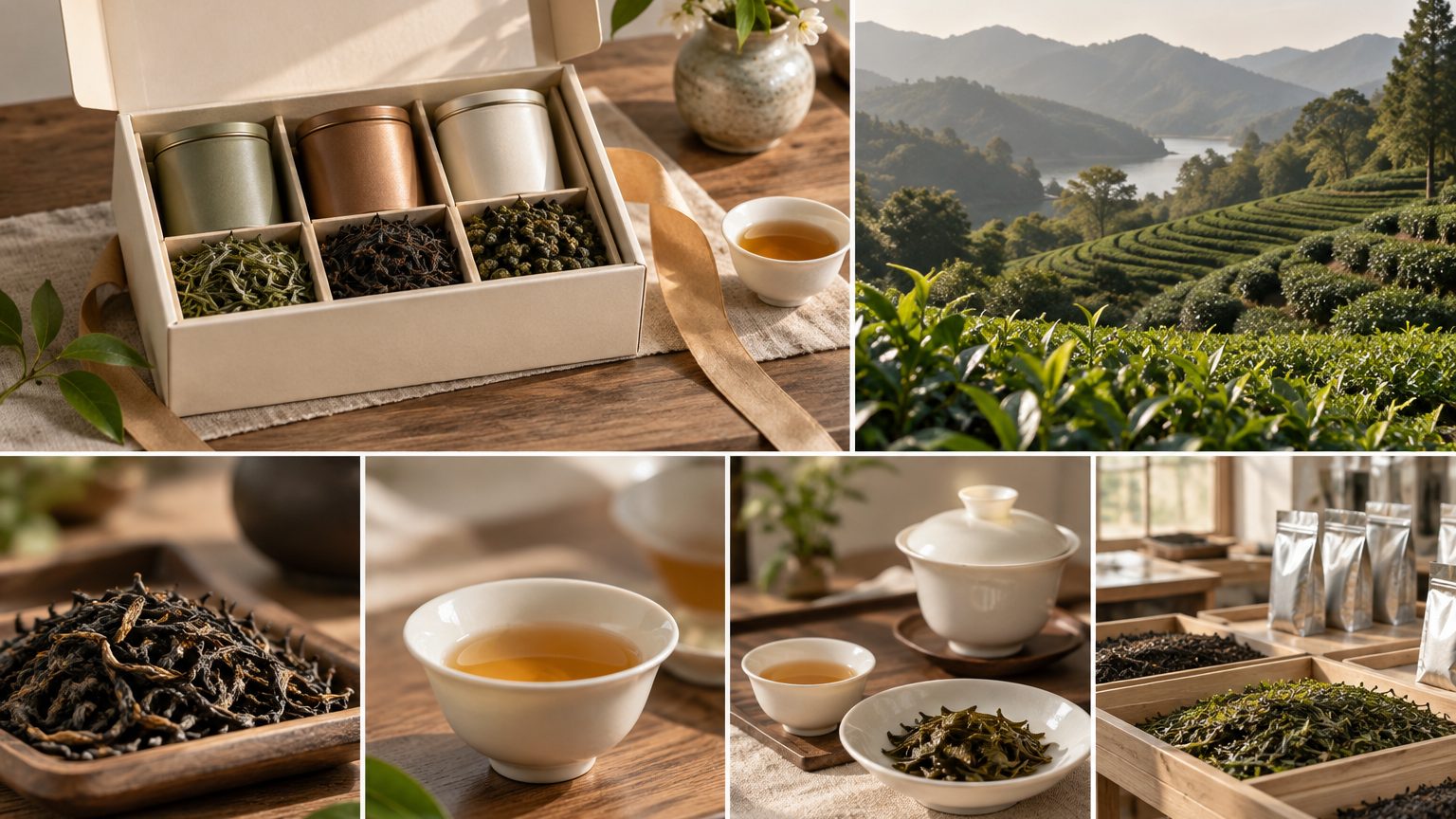
A program, not a SKU
Gift boxes fail in two ways: the leaf inside is generic, or the box outside arrives crushed. This program treats both as spec items. The leaf comes from organic-certified lines across the catalog - greens, whites, herbals, whatever your channel needs - and the box is engineered as packaging, with inserts, print and materials treated like any other production run. That is why the desk runs it as a program with a written spec rather than selling a fixed box off a shelf: a corporate buyer ordering 2,000 units for a December handout and an organic retailer building a permanent shelf line need different everything except the certificate. The buying logic is set out under corporate gifting, and the packing craft under packaging options.
The certificate chain, in plain terms
The word organic is only as good as the paperwork behind it. Certified material is sourced per channel against USDA NOP, EU 2018/848 or JAS standards, and the desk verifies the chain per program: the grower or processor certificate, the transaction records that tie your purchase to certified stock, and supporting documents such as conversion certificates and purchase records, available on request. Two rules keep buyers out of trouble. First, the certificate holder and the actual lot must connect - a certificate PDF in your inbox proves nothing about the carton on the dock unless the transaction trail says so. Second, the claim wording on your label must match the certification scope and the destination market's rules; label compliance is part of the certifications work, not an afterthought. The chain is explained end to end in the organic certification explainer.
The program spec at a glance
| Spec item | Typical arrangement |
|---|---|
| Leaf base | Organic-certified lines from the catalog, mixed as the program needs - greens, whites, herbals or a category set |
| Certification | USDA NOP / EU 2018/848 / JAS material per channel; chain verified per program |
| Box formats | 2-6 tins or pouches; rigid or foldable cartons; inserts, sleeves, greeting cards customized |
| MOQ reference | 500-1,000 boxes typical reference range; confirmed in writing per program |
| Lead reference | 35-60 days where new box tooling is involved; less for existing formats |
| Labels | Destination-market food labels and claim wording, matched per market |
Who buys it and why
Three buyers dominate. Corporate gift purchasers need a credible, universally acceptable handout with a delivery deadline that does not move - hence the staged delivery option, where boxes ship in batches against a calendar. Organic retail channels need the certificate chain as much as the tea, because their customers audit claims harder than regulators do. E-commerce sellers need a giftable SKU with margin room, and a box program with custom inserts delivers differentiation a pouch cannot. All three share one trait: the box is judged before the tea is brewed, so print quality, insert fit and carton strength are inspected with the same seriousness as the cup - the inspection routine sits under quality control.
Customization: what is actually yours to choose
Nearly everything. Box structure and size, paper stock and print finish, tin or pouch, leaf selection per compartment, insert cards with your story and brew guidance, sleeve artwork in your language, and the outer carton spec for freight. What the desk holds the line on: claim wording, certification references and ingredient labels must match the verified documents and the destination market - artwork that prints a certification mark out of scope does not ship. Multi-language label sets are routine under the private label program, and each language version is checked against that market's regulatory vocabulary before print.
Timing, delivery and freight
Gift calendars are unforgiving: a box that lands after the holiday is a write-off regardless of quality. The desk plans backwards from your handout date - leaf selection and sampling first, box tooling next, filling and packing last - with the lead references above as planning figures, confirmed in writing per order. Staged delivery splits the run into batches so a corporate program can distribute over months without warehousing a year of stock. Freight runs standard modes: samples by courier, bulk by sea or air depending on the calendar's slack, with the trade-offs laid out under logistics and shipping. Start early: sampling and tooling are the two stages that always take longer than buyers expect, and both sit before the first carton is sealed.