
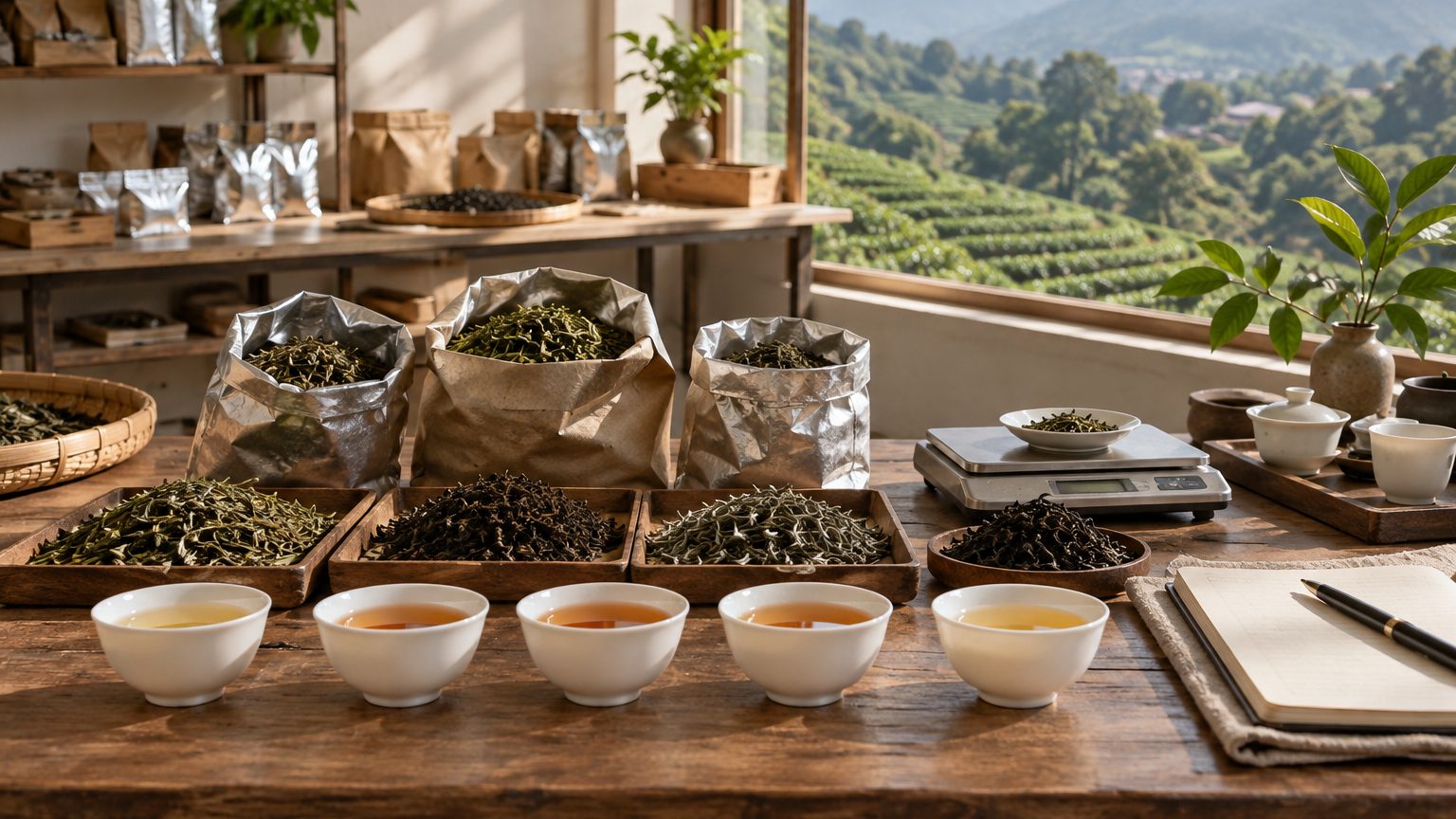
What a sourcing desk means here
Tea is made in gardens and finished in packing facilities; nobody covers all 39 lines of this catalog from one address. The desk's job is coordination across the origin network: shortlisting the right partner per program - an Anxi maker for Tieguanyin, a Fuding packer for white tea, a Yunnan facility for pu-erh - then holding the program to the spec you approved. Quality is enforced through cupping and lab panels; programs run on the written spine of procurement process. We cup samples, chase documents, inspect before packing and take responsibility for what arrives. When you ask a question, one person answers with the lot record in front of them.
Why we are not a factory, on purpose
A factory sells what its lines make well. A desk selects per program and is honest about trade-offs: which season suits your market, which grade your format actually needs, which certificate chain is real. Being independent of any single facility is what lets the desk say "this lot is not good enough this season" instead of shipping it. The trade-off is equally plain: we do not claim to grow, process or pack anything ourselves, and every capability on this site points to a partner facility or a lab, verified per program.
Part of FULVERA
Camellane is a FULVERA sourcing brand. FULVERA runs the sourcing, quality and fulfillment framework behind several category desks; the tea desk inherits its written-offer discipline and its rule that every claim needs a document. You can read about the parent brand at fulveraglobal.com.
How a first conversation goes
- You send the brief: market, channel, cup profile, format, quantity.
- The desk replies in writing with a shortlist, a sample plan and reference MOQs.
- Samples ship; you cup them against your reference.
- The golden sample locks the spec; bulk runs against it with inspection before packing.
Between steps two and three sit the decisions most first programs underestimate: which grade actually suits the format, how the pack must survive the freight lane, which certificates the channel will ask to see, and what the calendar allows given the harvest window. The desk's value is mostly there - in the questions asked before money moves. That is also why the desk prefers to start with samples rather than estimates: a cupped sample settles arguments that a quotation cannot, and it gives both sides the same reference when the bulk arrives. Programs that begin this way tend to reorder quietly; the desk's favorite metric is the second order, not the first quotation.
The desk works China hours, Monday to Saturday, and replies to quote forms and email in writing, usually within two working days. The operations office is in Wenzhou, Zhejiang - an office, not a garden.
How the desk is staffed
Programs are run by desk leads who own the file from first message to container: they cup, they write the spec, they chase the partner facility and the lab, and they sign the shipping paperwork. It is deliberately unglamorous. Behind them sits a small operations team in Wenzhou for documents and payments, and an informal bench of origin-side colleagues - the people who walk the rows in Anxi or Fuding and know which maker ran a clean season. When a buyer asks in November whether the spring Longjing program can hold its profile at twice the volume, the honest answer comes from that bench, not from a brochure.
Working languages and markets
The desk works in English and Chinese with written offers, spec sheets and lot records in English by default; French, German, Japanese, Korean and other market languages for labels and listing copy are handled through the private label program with translation checked against your market's regulatory vocabulary. Markets served so far run from North America and Western Europe to Southeast Asia and the Gulf; the common thread is a buyer who wants the document trail, not just the carton. Logistics run from the desk's packing partners via express, air and sea freight, with samples moving by courier in days and bulk by the mode your margin and calendar agree on.
What we will not do
No invented certificates, no stock photos passed off as garden shots, no price lists published in place of written offers, no health claims a label lawyer would strike. If a claim on this site ever outruns a document, that is a bug in the desk's own rules - tell us and it gets fixed.