
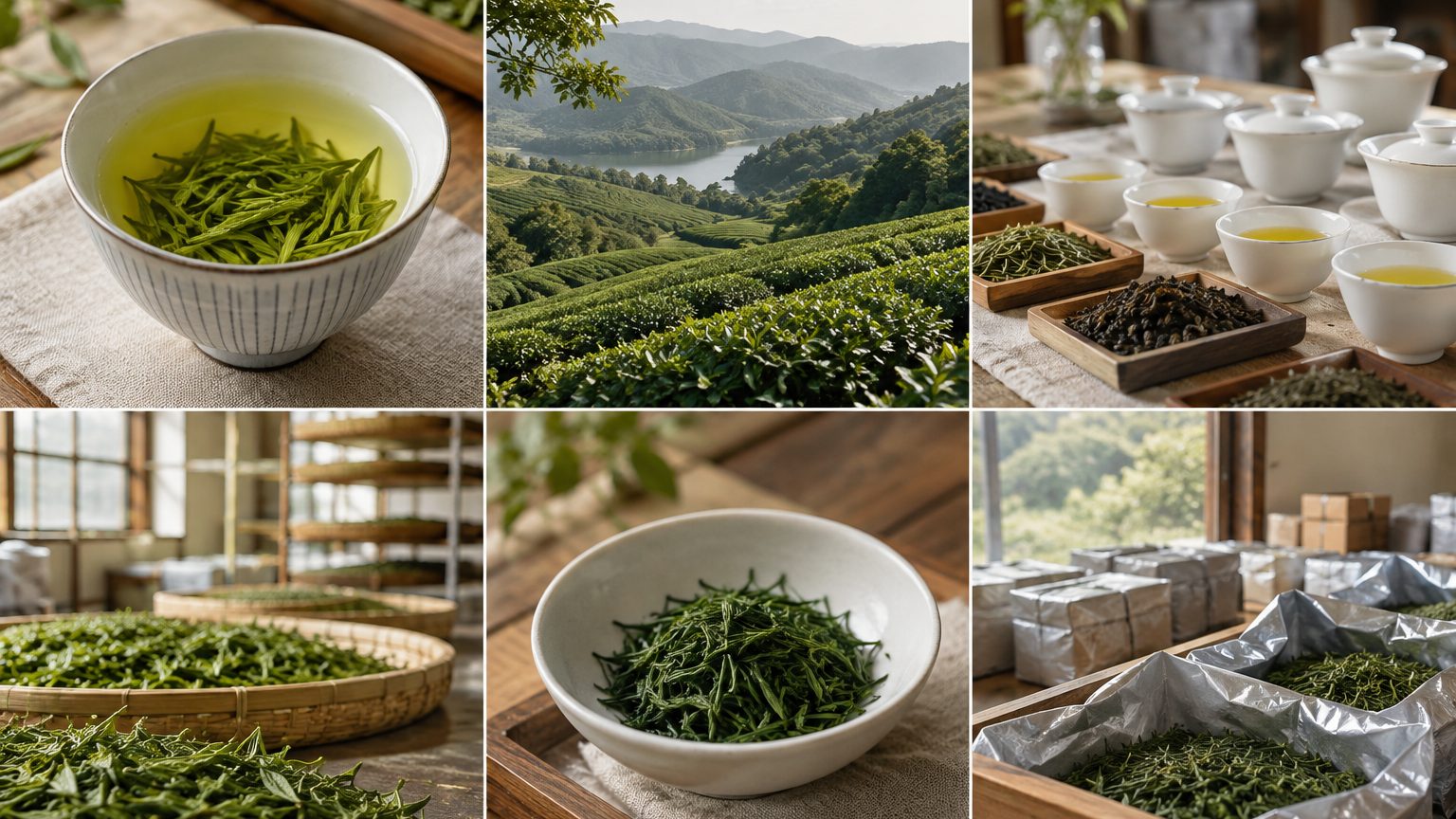
What steaming changes
Every green tea starts by stopping oxidation; sencha does it with steam instead of a hot pan. Steaming fixes the leaf faster and preserves more of its fresh, green character, and the cup shows it: yellow-green liquor, a vegetal sweetness, a slight clean astringency and a marine, seaweed-like aroma that is the signature of the style. Pan-fired greens taste toasty; steamed greens taste green. For a product range that difference is a category position, not a detail - a shelf carrying both covers the customers who hate grassiness and the customers who love it, with the green tea desk mapping where each style fits. It also means sencha ages faster, which is a packing and rotation question rather than a defect, and programs that treat it that way keep cups honest.
From steamer to needle leaf
The process is short and precise: fresh leaf is steamed for a controlled pause, just long enough to fix color and enzymes; rolled through stages that press moisture out and draw the leaf into the thin, needle-like strips the trade expects; then dried down to a low final moisture level. Steaming length and rolling pressure are the craft variables - they set how deep the color goes and how much astringency carries into the cup. Finished lots are sieved into grades: whole needle leaf for loose-leaf retail, finer cuts that infuse fast for pyramid bag programs, where speed of extraction matters more than how the leaf looks in a glass. The desk states which cut a lot is, so bag programs do not end up with leaf that infuses too slow for the format.
The cupping sheet and brew reference
| Factor | Reference profile |
|---|---|
| Dry leaf | Thin, glossy needle strips, deep green |
| Liquor | Yellow-green, clear |
| Aroma | Fresh vegetal note with a marine, nori edge |
| Taste | Fresh and brisk, gentle sweetness, slight clean astringency |
| Wet leaf | Deep green needles, springy, intact |
| Brew parameter | Reference |
|---|---|
| Ratio | 3 g per 150 ml |
| Water temperature | 70-80°C |
| Steep time | 2-3 minutes, shorter at the hotter end |
Start cooler for delicate lots: the astringency sharpens with heat, and the fresh marine note is the first thing to go when the water is too hot.
Sourcing sencha honestly
Shizuoka and Kagoshima are the best-known producing regions, with Uji among the noted names, and the desk sources through Japanese channels and Sino-Japanese joint processing channels depending on the program's grade and volume. Whichever channel applies is stated on the lot record, because provenance claims in Japanese-style tea are exactly where sloppy sourcing happens: leaf grown and steamed outside Japan but sold with Japanese imagery is a compliance and reputation risk in strict markets. Programs that need the origin documented get it documented; programs that need the cup profile at a workable cost get an honest statement of what the material is. Either way the buyer decides from samples, not from adjectives, and the paperwork matches the claim on the label.
Who buys sencha
Japanese food retail is the natural channel, where sencha sits beside the pantry staples its customers already buy. Cafes and restaurants with a Japanese-leaning menu pour it as the house green - see the hospitality program notes - and e-commerce sellers find the steamed style converts tea drinkers who dislike pan-fired grassiness. Genmaicha, sencha blended with roasted rice, is the usual companion line and the friendlier entry price point; the genmaicha vs sencha comparison helps programs pitch the pair. For a spring promotion, first-harvest lots reach market early in the season and make the freshest story a green tea program can tell.
Packing for a fast-fading style
Steamed greens fade faster than pan-fired ones - the fresher character is more volatile - so packing runs to the strict end: foil-lined bulk bags, nitrogen flush as the default for retail formats, opaque packs only. Rotation matters more than for Chinese greens; the desk dates lots plainly and advises sizing orders to a faster sell-through rather than holding a year of stock. Labels and artwork run through packaging options, with MOQs confirmed in writing per program and pack sizes matched to the channel's turnover.
What buyers check before bulk
- Color and gloss on the dry needle leaf - dull green means age.
- Cup at 70-80°C: vegetal freshness first, marine note present, astringency clean not harsh.
- Origin statement on the lot record matched to what the program claims.
- Moisture and seal integrity; nitrogen flush for retail packs.
- Lab panel per batch, scoped to destination market.
Send the profile to the desk - steamed-style samples should be cupped within days of arrival to read true, and the sample plan will say so.