
What single-botanical means on a spec sheet
Many herbal listings are blends by default; this line is not. Peppermint tea here means one botanical - peppermint leaf, cut and sifted, nothing else - so the ingredient panel on your retail pack stays one line long and the cup stays predictable lot to lot. That matters commercially. Single-botanical herbals are the easiest products in the catalog to specify, test and reorder, because there is no blend ratio that can drift between harvests. Hospitality buyers use it as the caffeine-free anchor of a list, and blenders buy it as a clean mint base when they build their own mixes. For how it sits among the other herb-and-grain lines, see the herbal and barley category page.
The cupping sheet
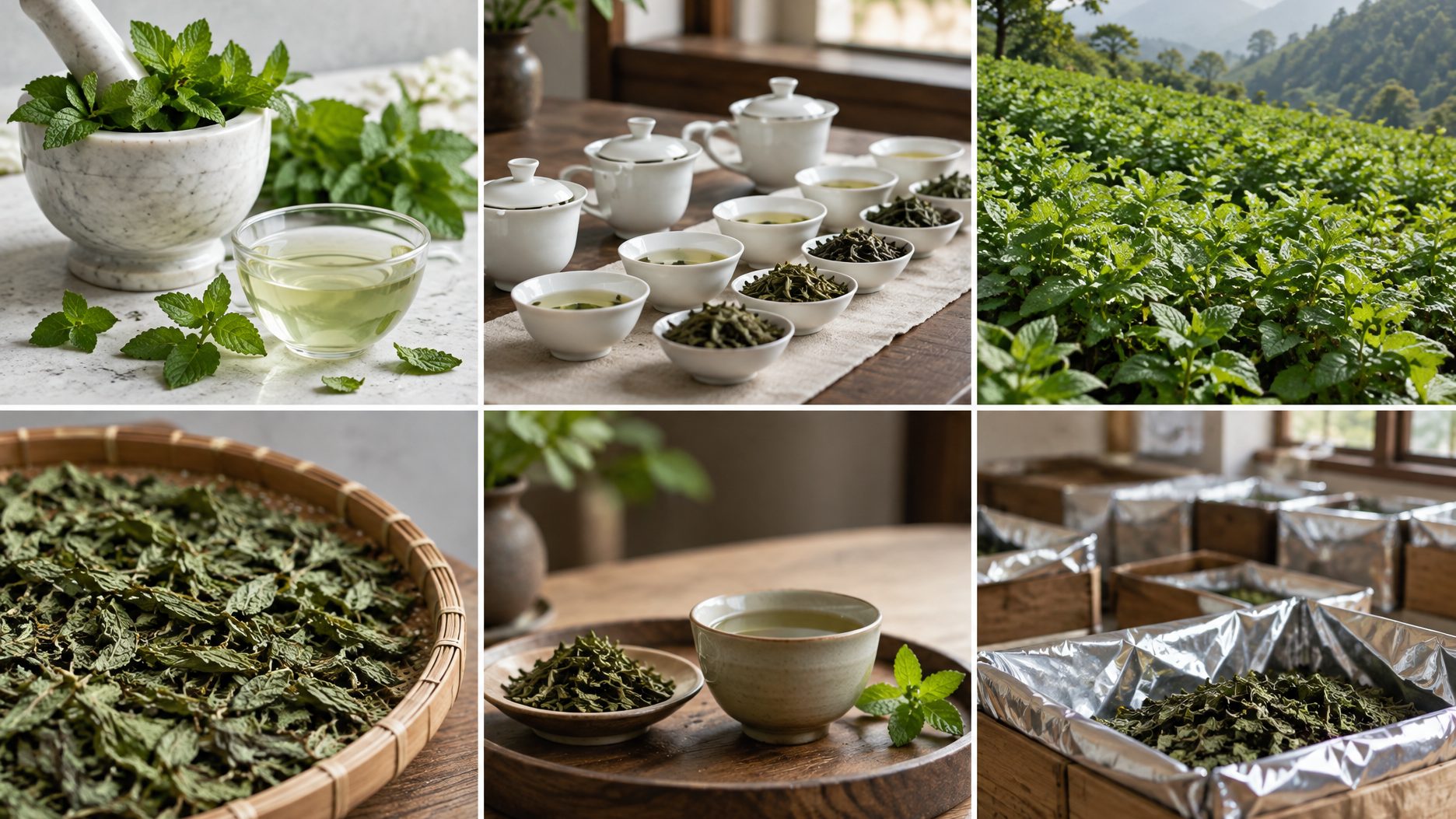
Herbals are cupped with the same five-factor discipline the desk applies to true teas - dry leaf, liquor, aroma, taste, wet leaf - so a peppermint lot can be compared across seasons the way an oolong can. The reference points the desk checks:
| Factor | Reference points for a clean lot |
|---|---|
| Dry leaf | Even cut with visible leaf structure, bright green; no stems, dust or olive-brown material |
| Liquor | Pale straw-green, clear and bright; level 1 on the swatch |
| Aroma | Sharp, cool menthol over fresh herb; hay or mustiness signals age |
| Taste | Clean menthol sweetness with a cooling finish; no bitterness from over-cut material |
| Wet leaf | Uniform spent leaf, free of foreign matter |
Where peppermint earns its slot
Three channels buy this line repeatedly. Hotels, restaurants and cafes use it as the after-dinner cup that needs no menu explanation, and as an iced option that brews clear over ice - the service angle is covered under hospitality and cafes. Retail brands slot it into caffeine-free sections where shoppers read ingredient panels closely, and a one-line ingredient list is itself a selling point on shelf. Beverage developers buy it in bulk as the mint component of iced blends and mocktail-style drinks, where extraction matters more than how the leaf looks in a pouch. If your use is outside food-grade leaf - extracts, capsules, cosmetics - the desk will say so plainly rather than stretch the spec.
Sourcing and what quality looks like
Mint leaf reaches the desk through imported and domestic channels mixed by season, and the lot record states which. Quality is mostly a story of handling after drying: color should stay green rather than slide toward olive-brown, aroma should arrive the moment the bag opens, and the cut should be even enough to dose consistently in a filling machine. Old or badly stored herb smells like hay before it tastes like mint, and cupping catches that in seconds. Every lot passes the standing quality-control routine: sensory check against the retained reference, lab panel issued per batch in your name, and reserve samples kept so later shipments can be compared against what you approved.
Brewing, iced service and packs
Peppermint is forgiving at the boil. The reference brew is about 3 g per 250 ml at 100°C for three to five minutes, and longer steeps mostly add cooling intensity rather than bitterness - which makes the line unusually easy to run in foodservice, with no temperature control or timer discipline required. For iced service, brew hot at double strength and pour over ice, or cold-steep overnight for a smoother profile. Retail formats run from bulk cartons to single-serve sachets; the filled-bag route is described on the pyramid tea bag program page, where single-serve weights run 2-3 g and material options include nylon and PLA.
Storage and shelf life
Cut herb loses aroma faster than leaf tea loses flavor, because the cut exposes more surface to air. Bulk lots ship in foil-lined liners inside cartons and keep best sealed, dark and cool; retail pouches should reseal or move fast. The desk states packing dates on lot records, and reasonable shelf-life wording for labels is matched to the pack format rather than guessed - a generic two-year stamp on a thin pouch is exactly the kind of claim that comes back as a customer complaint. Programs that sell year-round usually hold reserve stock from the freshest pack month rather than stretching old lots.
Program mechanics: MOQ, samples, documents
Bulk loose leaf follows the desk's standing reference range of 50-100 kg per item, while filled pyramid programs run at the 100,000-bag scale - both are typical reference ranges, and the binding figures are the ones confirmed in writing per program on the MOQ and lead time page. Stock samples dispatch in days; a custom cut or grind takes longer because it runs as a trial first. Caffeine wording on labels deserves care: the leaf is not from the tea plant and is naturally caffeine-free as widely published, but claim rules vary by market, so label wording is matched to the destination - the framing is set out in the caffeine explainer. When the profile is settled, send market, format and quantity to the quote desk and let samples decide the rest.