
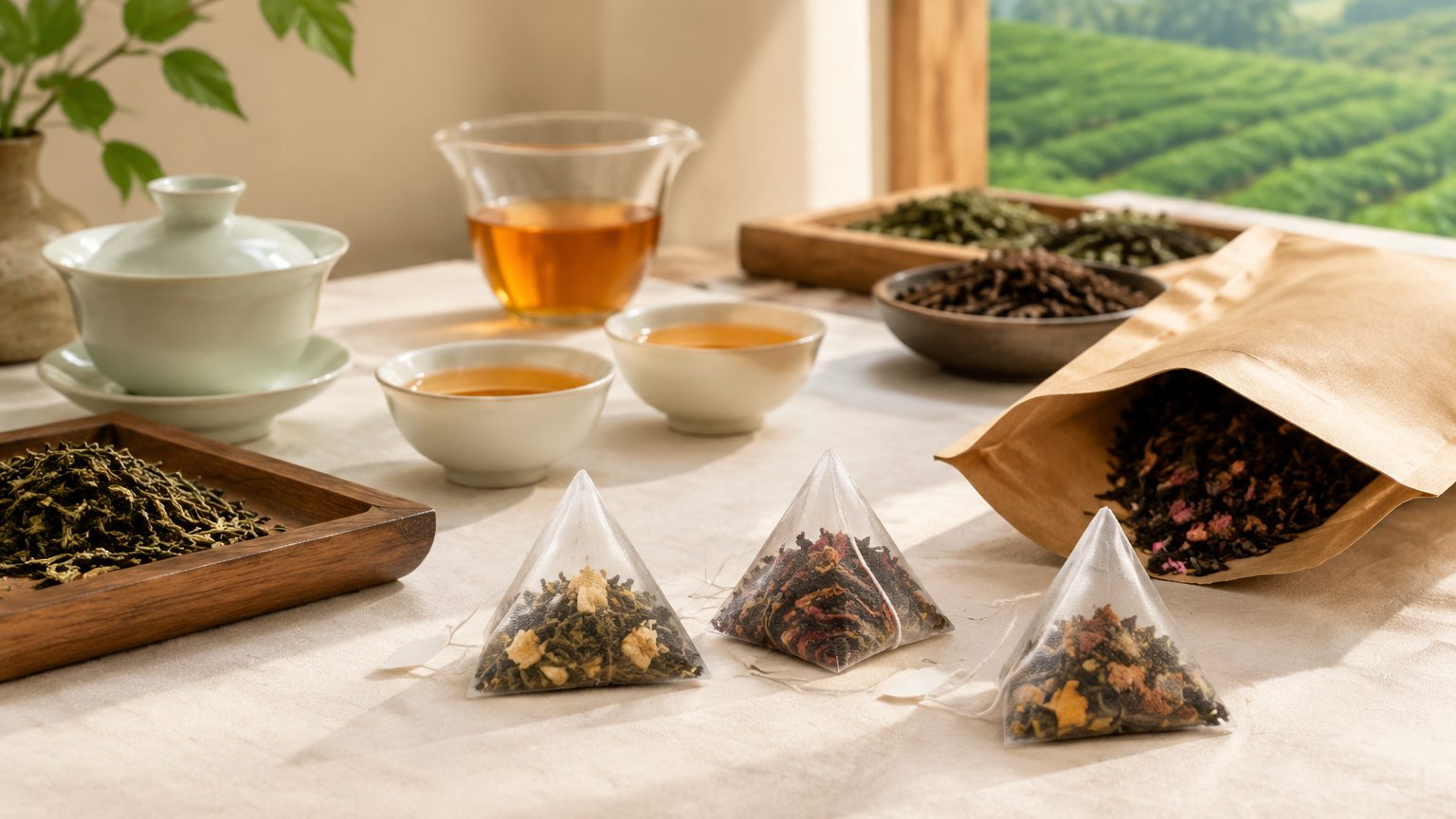
What a filled pyramid program includes
The sachet is the visible part; the program is everything behind it. Leaf selection and grade, mesh material, weight per bag, tag and string, overwrap and pouch, carton count, and the label set for your destination market. All of it is specified in writing before filling starts, and all of it is checked against approved samples - a bag program has more places to go quietly wrong than a bulk leaf order, which is why the spec discipline is tighter, not looser. Filling runs at the 100,000-bag scale as a typical reference range, which sounds like a lot until you spread it across a retail run: it is roughly the volume a mid-size chain sells through in a season, not a year. Program structure and pack formats sit under packaging options.
The program spec at a glance
| Spec item | Typical arrangement |
|---|---|
| Sachet | Pyramid mesh, 2-3 g single serve; tag, string and overwrap optional |
| Materials | Food-grade nylon (PET) or PLA corn fiber; chlorine-free bleached paper on request |
| Tea | Any catalog line in a fast-infusing grade; blends and flavored formats included |
| MOQ reference | 100,000-bag scale, typical reference range, confirmed in writing |
| Lead reference | 20-35 days standard packing; 35-60 days with new tooling |
| Labels | Destination-market food labels; material claims matched to reports |
Bag grade is not loose grade
The leaf that steeps beautifully in a gaiwan for six infusions is usually wrong for a two-to-three-minute cup. Pyramid bags want material that gives up its flavor fast and evenly - broken-leaf and smaller grades with more cut surface - while whole-leaf grades often sit in the bag looking handsome and tasting thin. This is the most common first-timer mistake: specifying a premium loose grade for bags and getting a weaker cup than a cheaper grade would have given. The desk inverts the logic: the brew time your customer will actually use defines the grade, and the grade is proven in a filled-bag cupping, not a loose-leaf one, before the line runs. The trade-off between formats is argued properly in the loose leaf versus bags comparison.
Material choice: nylon, PLA or paper
Food-grade nylon (PET) is the workhorse: strong, heat-tolerant, transparent, and the mesh shows the leaf well. PLA corn fiber covers programs that want a plant-based material story; degradability claims must follow the material report, because what a brand may say on a pack differs by market and by certificate - the desk keeps claims and documents aligned rather than hopeful. Chlorine-free bleached paper remains an option for flat and some pyramid formats where cost or aesthetics point that way. The material decision touches filling behavior, seal integrity, shipping weight and marketing copy at once, so it is made early, in writing. The materials are compared plainly in the PLA versus nylon explainer.
Quality control at the 100,000-bag scale
Bag filling multiplies small errors by large numbers, so the checkpoints are where errors multiply. Weight checks on a sampling cadence keep the 2-3 g honest across the run, because a drift of half a gram is invisible in one bag and obvious in a quarter's sales. Seal integrity is pulled and inspected per shift; a bad seal shows up as a broken string or an open seam in the customer's cupboard, which is where brand damage actually happens. Tea is cupped against the reference lot before filling and after, with retention samples kept per batch - so a complaint six months later can be answered from the archive, not from memory. The full routine is described under quality control, and lab panels issue per batch in your name.
From spec to shipment
A first program runs a short, boring path: brief and samples, filled-bag cupping, spec locked, pilot run approved, production, inspection before packing, shipment. Lead references are 20-35 days for standard packing and 35-60 days when new tooling enters - a new tag shape or custom pouch counts as tooling. Buyers with their own filling lines should look at the empty pyramid bag program instead, which supplies filters without the filling service. When the four decisions - tea, material, weight, label - are settled, send them to the quote desk with intended volumes, and the program comes back as one written offer with the reference ranges confirmed.