
A formulated category, not a harvest
Every true tea starts in a garden; an herbal blend starts in a formulation. The desk's role is closer to a blending house's: source each botanical from its competent origin channel, compose the ratio to an agreed cup - florals, tartness, body, color - then lock the recipe with a retained reference so batch two tastes like batch one. That is the whole discipline of this line, and it is why the blend development page matters as much as the ingredient list.
The working palette
| Botanical | Contribution | Common role in a blend |
|---|---|---|
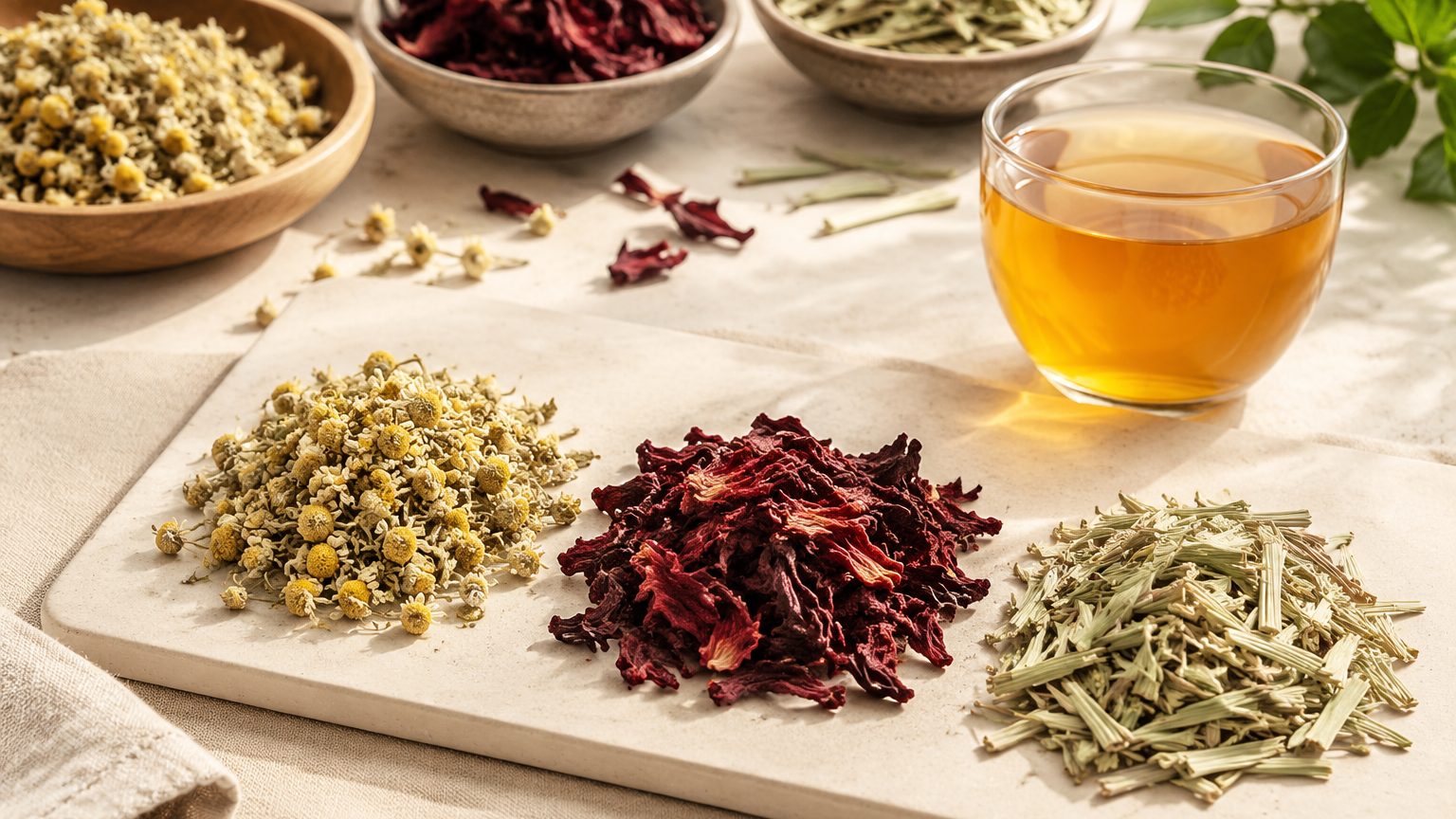
| Chamomile | Soft apple-sweet florals | Calm center of evening blends |
| Hibiscus | Tart, ruby color | Acidity and iced-drink color |
| Lemongrass | Citrus lift | Top note, cuts heaviness |
| Chrysanthemum | Delicate floral bitterness | Chinese-market familiarity |
| Mint | Cooling | Blends and single-botanical lines |
Single-botanical lines (pure chamomile, pure mint) sit alongside blends; the peppermint page and rose page cover those. Blends exist because single botanicals are narrow: a chamomile-dominant blend with lemongrass and a whisper of rose sells to far more menus than chamomile alone.
Caffeine-free as a positioning
Botanicals contain no tea-plant caffeine, so a caffeine-free claim is fair for pure herbal lines - with one guardrail: the moment any true tea is added, the claim changes, and so does the tariff line. The desk keeps the two categories separate on spec sheets and labels, which spares buyers an awkward conversation with their own regulators. Positioning copy stays on taste, ritual and ingredient transparency; statements follow each market's labeling rules, and the desk writes labels to that constraint rather than around it.
How a blend program actually runs
Week one is the brief: what the cup should do, in plain words - "floral, soft, golden, no tartness" is a usable brief. Week two brings trial blends, usually two or three, cupped side by side with written notes on what each ratio does. From there it converges fast: adjust the front-runner, lock the golden sample, and file it with retained references on both sides. Bulk then runs against that sample with a per-batch panel and a sensory check before release. The timeline is mostly packing-bound rather than blending-bound, which is why blend programs rarely miss a launch window once the sample round is done - the constraint sits in tin and label lead times, on the packaging page.
Formats and where each wins
Loose blends serve refill retail and tea walls, where the visual mix is the product. Pyramid bags serve hotels, offices and e-commerce, where a consistent single-serve matters more than the look of a tin - and the pyramid program takes the same blend at bag scale. Brew specs print on-pack: roughly 3-5 g per 250 ml at 95-100 C for four to six minutes. Herbal lines forgive long steeps, which is a genuine service advantage over green tea.
What to check before bulk
- The profile brief: tart or soft, floral or minty, color for glass or mug.
- Sample rounds against the brief, then a golden sample retained by both sides.
- Botanical documents: origin statements and the finished-blend lab panel per batch.
- Label review per destination market - ingredient naming rules differ.
- Format economics: loose versus pyramid at your channel's volumes.
One more merchandising note: herbal blends are the shelf's most photogenic category after flowering teas, and the dry blend IS the pack shot. Brief the photographer on the blend's key botanicals and make sure the golden sample is what gets shot - a reference sample kept for exactly this purpose. Programs that shoot the sample consistently report fewer "the pack looks different from the listing" conversations, which in marketplaces is a refund driver, not a cosmetic one.
Quality control for blends runs on two legs. Ingredients arrive with origin statements and clean panels; the finished blend then gets its own panel per batch, because a compliant ingredient does not automatically make a compliant blend once everything is mixed and packed. Sensory checks catch what a lab cannot - a hibiscus lot that turned sharper, a chamomile that lost its sweetness - and retained references make the comparison honest instead of nostalgic. The desk issues the finished-goods reports in the buyer's name so the document chain ends with you, described under quality control.
Bring the profile to the desk and the sample plan comes back in writing; MOQ follows the standard reference ranges on MOQ and lead time.