
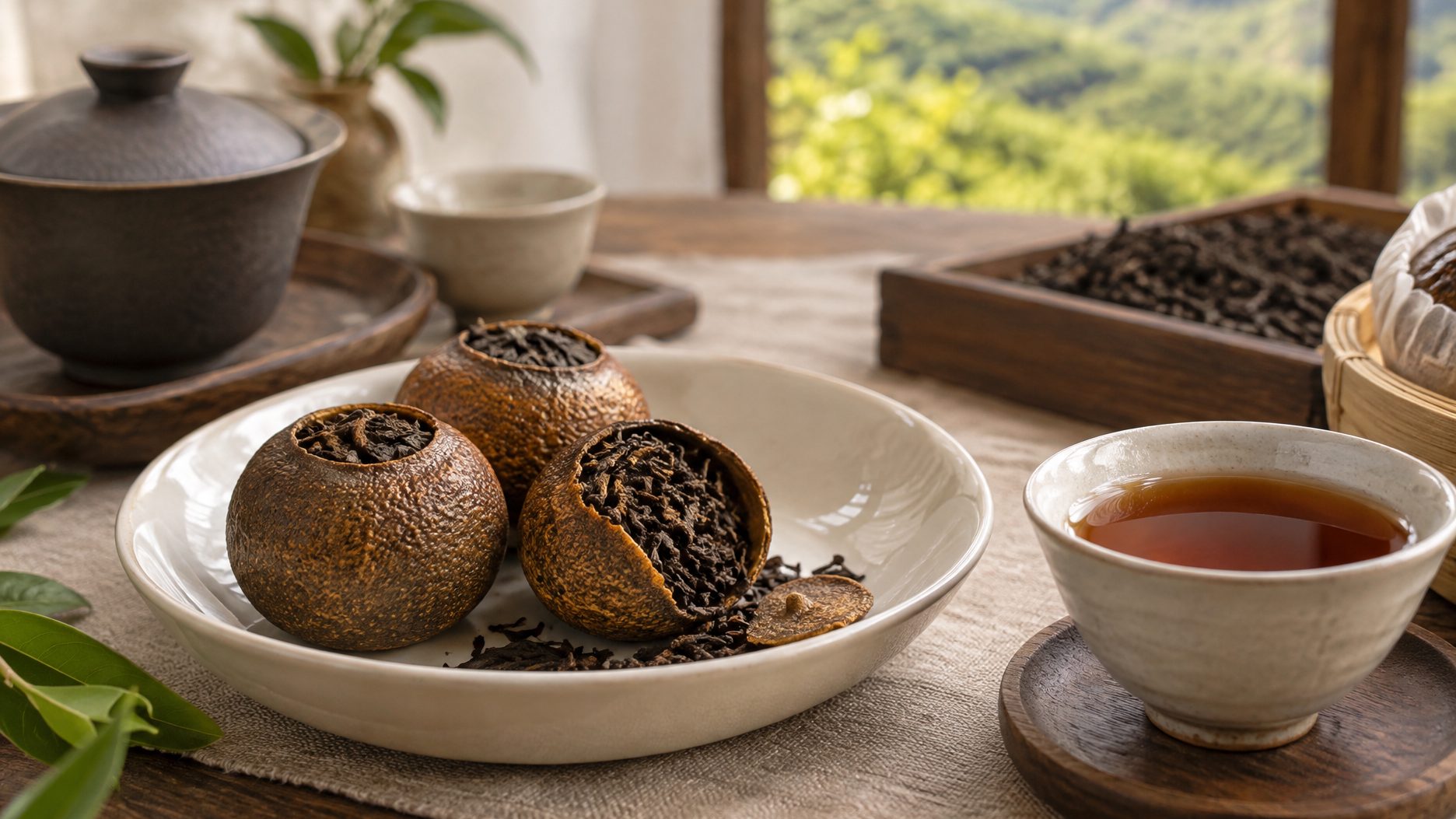
What the blend actually is
Two materials, one cup. The tea base is ripe pu-erh - the wet-piled, dark, smooth style described on the ripe cake page - broken from cakes or used as loose ripe material. The peel is chenpi: tangerine peel dried and aged to a fragrant leather, with Xinhui in Guangdong as the classic named origin. Pack either as a loose blend or in the showpiece format, a whole hollowed tangerine filled with tea. The two materials rest together, and the peel keeps working on the tea during storage - one reason this SKU sells long after lighter teas would have faded.
The cupping sheet, briefly
| Factor | Whole-fruit format | Loose blend |
|---|---|---|
| Dry | Whole dark tangerine, tea visible at the cap | Dark tea leaf with peel flecks |
| Liquor | Red-brown, clear | Red-brown, clear |
| Aroma | Citrus lift over aged depth | Softer citrus, more earth |
| Taste | Sweet-earth, citrus brightness | Rounder, tea-forward |
| Wet leaf | Soft peel, dark tea | Even dark leaf, peel pliable |
Format changes the experience more than buyers expect: the whole fruit brews slower and leans citrus; the blend brews like ordinary ripe tea and leans tea. Menus that pour by the pot usually prefer the blend; gift boxes prefer the whole fruit because the shelf presence earns its price on sight.
Two origins, so two document chains
Because the SKU crosses provinces, the paper trail has two legs: the tea side documents Yunnan origin and the ripe-tea process; the peel side documents the source of the chenpi. Buyers who sell into markets with ingredient-origin labeling should treat the peel as a named ingredient - the desk's spec sheets list both origins explicitly, and lab panels cover the finished blend per batch. This is the same document discipline the desk applies to every multi-origin program, described under quality control.
Where chenpi pu-erh sits against the pu-erh family
Inside the category, this line plays the flavor bridge. Plain ripe cake is the purist's pour - earth, thickness, nothing else; raw cake is the collector's track with its austere youth. Chenpi pu-erh is the third door: the same ripe comfort with a citrus top note that makes it an easy first pu-erh for drinkers who find plain ripe too earthy. Retail data across the trade consistently shows flavored or composed pu-erh formats converting new drinkers at higher rates than plain cakes, which is why gift programs almost always include this line rather than a plain cake. It also solves a menu problem: a dark, caffeine-moderate cup with a familiar fruit note fits an after-dinner slot where neither plain ripe nor any black tea feels quite right.
Whole fruit versus loose: a program decision
Choose as if they were two SKUs, because operationally they are. The whole fruit is a gift product: it photographs, it unboxes well, and it carries a higher price point per piece - but it is bulky for its weight, fragile in transit, and slower to brew, which is a real cost in a self-service context. The loose blend pours like any ripe tea, costs less per cup, and fits standard packs and bags - but it gives up the shelf theater that makes the whole fruit sell. Programs that start with one usually add the other within a year: whole fruit for the gifting season, blend for the daily shelf. The desk quotes them as separate lines with separate reference ranges, and the packing implications of each sit on the packaging page.
Brewing and service
Rinse once, then brew hot: about 5 g in a 110 ml vessel at 100 C, pouring the first infusion off to wake the compressed tea. The cup stands up to reinfusion and also works as an iced pour for menus that want a familiar citrus-and-earth profile cold. For retail packs the recommendation is the same parameters printed on-pack; for gift boxes, a brew card replaces a paragraph of copy.
Programs this line fits
Chenpi pu-erh earns its slot in three programs: gifting (the whole-fruit format is self-explaining on a shelf), everyday premium retail (positioned on tradition and ingredient transparency, never on medical claims), and restaurant after-dinner pours (dark, familiar, forgiving in the pot). Private label follows the desk's standard reference ranges - confirmed in writing per program on the MOQ and lead time page - with pack options from single-fruit boxes to loose-blend pouches under private label.
What to check before bulk
- Which format - whole fruit for gift presence, blend for service economics.
- Peel quality: fragrance on the dry peel, not just in the cup.
- Tea base grade against the ripe tea reference.
- Both origin document chains, plus the finished-blend lab panel.
- Gift box engineering if the whole-fruit format is chosen - it is fragile freight.
Send the format and quantity to the desk and the reply comes back in writing with a sample plan.