
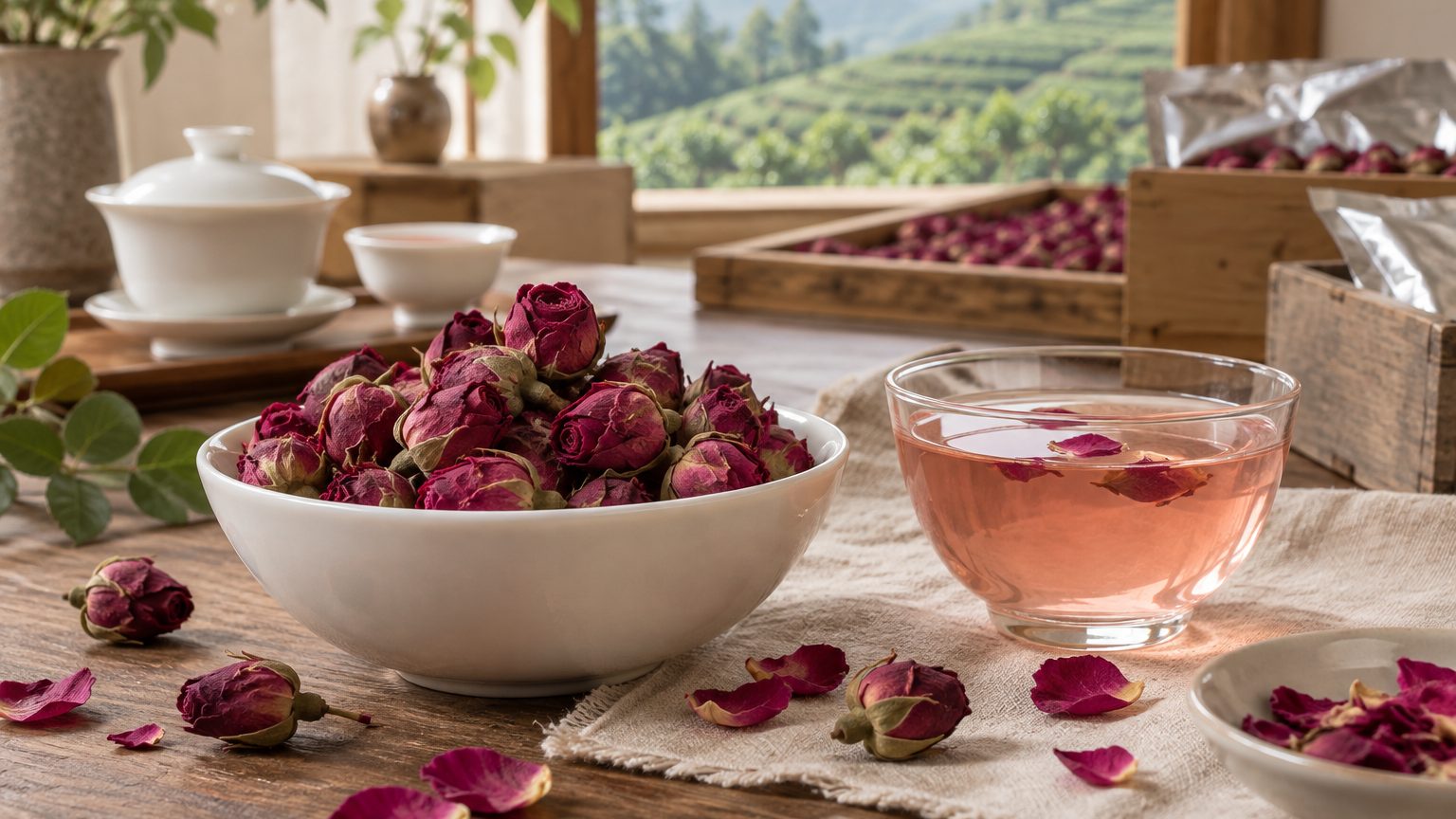
Whole buds first, blends second
This line runs two related programs. The core is whole dried rose buds - dense, unbroken, deep red - steeped on their own for a gentle, caffeine-free infusion. Around them sit the blends the trade actually re-orders: rose over a black tea base, rose over white tea, or rose among other herbals, where the buds act as both flavor and visible decoration in the pack. Most buyers start with the pure buds because they are the easiest product to specify and photograph, then add a blended SKU once the first program shows repeat demand. The desk cups buds and blends against separate references, because a bud that scores well alone may fade entirely under a strong base. Category context sits on the herbal category page.
The cupping sheet
Rose is judged mostly by nose, but the full five-factor sheet still applies - and the wet leaf tells you more about handling than any photo can.
| Factor | Reference points for a clean lot |
|---|---|
| Dry leaf | Whole, tight buds in deep red to burgundy; no crushed petals, brown material or loose stamens |
| Liquor | Pale pink-gold, clear; level 2 on the swatch |
| Aroma | Sweet floral lift that reads unmistakably rose; stale or cardboard notes signal old stock |
| Taste | Soft and lightly sweet, low astringency, florals carrying into the finish |
| Wet leaf | Buds open to intact petals without mush; no foreign matter |
Aroma is the product, so handling is the spec
A rose bud can look perfect and smell like nothing, which is why the desk treats aroma as the pass-or-fail factor. Buds are dried at low temperature and packed quickly, because fragrance fades faster than color; a bright red bud with no scent in the cup is a handling failure, not a variety problem. Bulk lots ship in foil-lined liners away from light and moisture, and retail formats move to opaque pouches or tins for the same reason. On arrival, open the bag before you read the paperwork - if the room does not smell of rose, the lot goes back to comparison against the retained reference under the standard quality-control routine.
Where rose sells
Gift programs buy rose first: the buds photograph well, weigh little, and turn a plain tin into something that looks considered - a natural component in the organic gift box program where the box is the product. Cafe menus use it two ways, as the caffeine-free floral cup and as the base for rose-style milk drinks built on a black tea base. Retail walls and e-commerce sellers value the same visual, since a jar of whole buds sells the category to shoppers who cannot smell through a screen - a channel worked through the e-commerce seller program. The desk will say plainly when a market is saturated: rose is everywhere, so differentiation comes from bud quality and pack, not from the idea.
Brew and service parameters
The reference brew is 3-5 g of buds per 300 ml at 90-95°C for about four minutes; hotter water pulls sharper edges from the petals without adding flavor. Buds re-steep two or three times, which matters for pot service and for the per-cup math in cafes. For rose milk drinks, the usual route is a blended SKU - rose over a black base - brewed strong and cut with steamed milk, rather than steeping buds into milk directly. Blended programs get their own brew sheet printed on-pack so the cafe, the label and the lot record agree.
Grades and what moves the price
Bud size, color depth and intactness drive the trade: large, uniform, deep-red buds from a careful dry sit at the top, while smaller or broken material serves blending work where the pack hides it. Price also moves with the harvest - rose is an agricultural product with good and bad years, and an honest supplier says which year you are buying. The lot record states harvest window and origin channel, and reference samples are retained so a reorder can be compared against what you approved rather than against memory. Buyers new to the category should budget for one season of samples before locking a spec.
Program mechanics: MOQ, labels, timing
Bulk buds follow the desk's standing reference range of 50-100 kg per item; retail formats and gift components follow the private label ranges, with the binding figures confirmed in writing per program on the MOQ and lead time page. Label language needs the same care as any herbal: rose carries a lot of soft wellness phrasing in retail, and claim rules vary by market, so wording is matched to the destination before artwork is finalized - the line-drawing is summarized in the caffeine and herbal explainer. Samples ship in days; custom blends run a full trial first. Send the brief to the quote desk and let a side-by-side cupping settle the grade.