
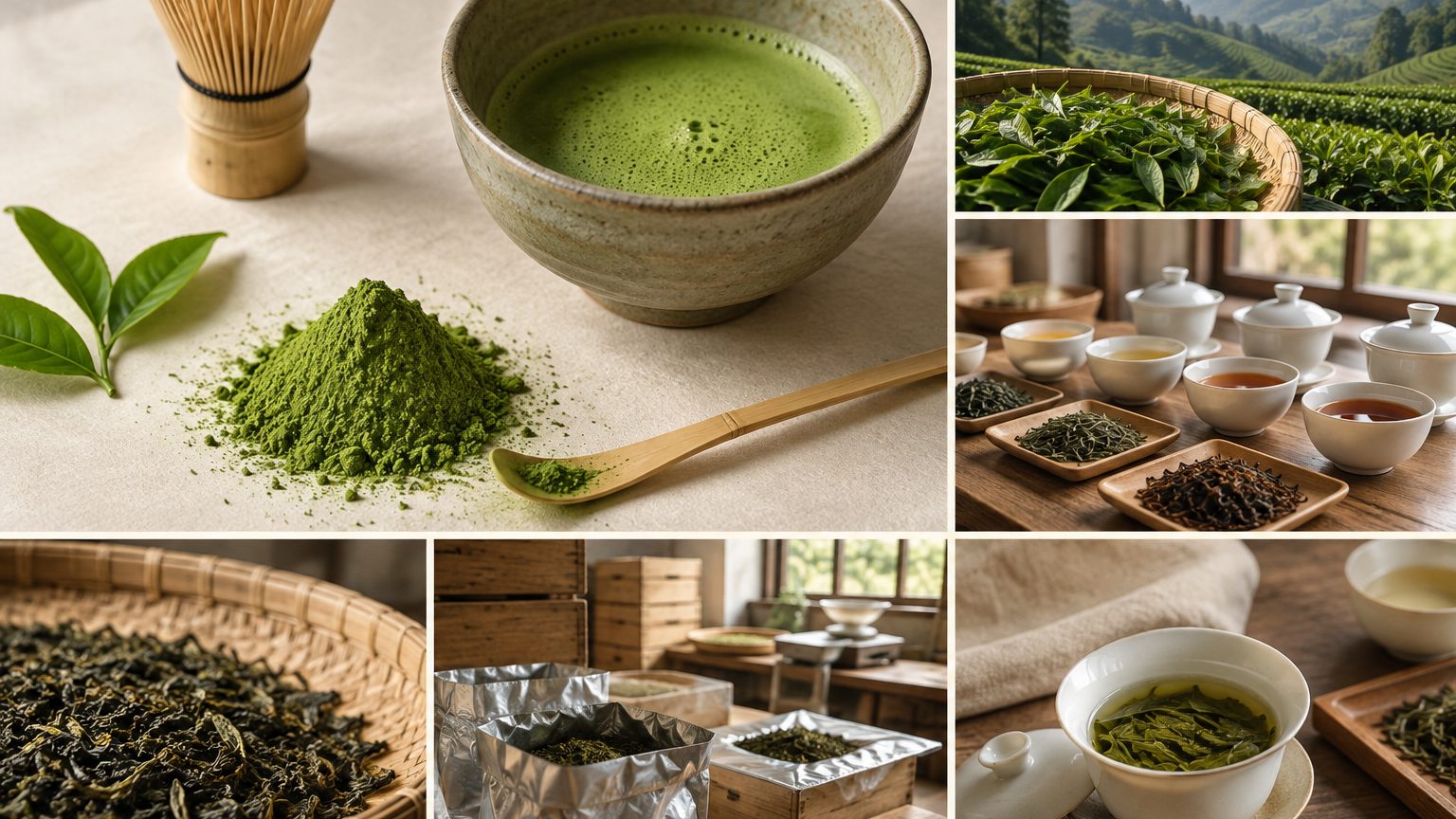
Grades: ceremonial is a use case, not a certificate
The trade splits matcha into two working families. Drinking grades - often sold as ceremonial - are meant to be whisked with water and judged straight: thick texture, deep umami, a sweetness that needs no milk. Food or ingredient grade, the line on this page, is milled and blended to perform inside a recipe: it must color a latte convincingly, survive baking heat, carry flavor through cream and sugar, and stay stable in a tub of ice cream mix. Neither label is standardized internationally, which is why responsible suppliers describe grade by what the powder is for, and why the desk specs every lot by measured attributes - color, particle size, harvest, cultivar - instead of by a borrowed word. Buyers moving between the two families should read the matcha primer before comparing offers, because price gaps that look arbitrary usually track real differences in tencha quality and grinding.
From tencha to powder: how it is made
Matcha starts where gyokuro does: shaded. Covers go over the rows for roughly the final weeks before picking, forcing the leaf to hold chlorophyll and amino acids, which is where both the vivid green and the umami come from. Picked leaf is steamed - not pan-fired - then dried without rolling into flat flakes called tencha. Only then comes the step that defines the product: milling. Traditional granite stone mills grind slowly and run cool, protecting color and aroma at modest output; ball mills and other industrial grinding run faster and cheaper and dominate mainstream food-grade supply, including the China-based milling that serves most of the world's ingredient demand. The desk sources from Japanese channels and Sino-Japanese processing channels, with food-grade milling capacity in Zhejiang and Guizhou among partner facilities. Fineness, heat damage and color retention are checked at the mill, because a powder that ran hot is dull olive in the pack no matter how good the tencha was.
The cupping sheet, adapted for powder
| Factor | What the reference shows |
|---|---|
| Dry powder | Vivid jade green, fine and uniform, no clumps or stems |
| Liquor | Deep emerald when whisked; opaque, no brown cast |
| Aroma | Fresh cut grass, sweet vegetal, faint marine note |
| Taste | Rich umami, mild pleasant bitterness, light sweetness |
| In application | Color holds in milk and batter; no faded or gray tone |
The last row matters most for food buyers: a powder can look fine dry and still fail in a latte, turning muddy under milk or dulling in a baked crumb. Application tests - one in hot milk, one in a baked good - are part of sample review on every matcha program.
Applications: what each use actually demands
Lattes and café drinks want color first and a clean bitter-sweet balance second: the powder must disperse without a whisking ritual, which argues for fine particle size and a grade blended for milk. The preparation guide covers whisk, shaker and blender routes. Bakery wants heat stability and enough flavor body to survive butter, egg and sugar - this is where budget powders visibly fail, fading brown and flat. Ice cream wants intense color and a tannin structure that reads through frozen dairy, plus fine grinding so the texture never feels gritty. Blended drink powders and RTD lines care most about dispersibility and shelf stability. One grade rarely does all four well; the desk quotes the grade per application, and a program that spans latte plus bakery usually takes two specs.
Storage: the fastest way to lose a good powder
Ground tea has enormous surface area and no defenses: oxygen, light, heat and moisture all attack it faster than they attack leaf. Matcha ships in foil-lined, sealed packs and should live cold and dark once opened, with minimal air space; nitrogen flushing is available for retail formats. Buying cadence matters more with matcha than with almost any other line - smaller, more frequent lots often beat one big buy, because color and aroma fade measurably within months even in good packing. The desk states packing dates on every lot record and plans reorders against the freight options so the powder lands while it is still bright. For label work, best-before dating follows the reasoning on shelf-life labeling, and rules on health claims vary by market.
Market demand and honest planning
Matcha demand has outrun supply in recent seasons; industry reports estimate the segment at roughly 9.7 billion US dollars in 2025 (Grand View Research, 2025), and the tight feeling in premium tencha is real on the procurement side. The practical consequences for buyers are simple: lock specs and volumes earlier in the year, expect seasonal movement in price for top drinking grades, and be suspicious of offers that undercut the market by a wide margin - they usually mean older stock, coarser grinding or a lower leaf share. The desk's answer is the same as everywhere: golden samples, dated lots, written offers, and a plain word when a budget and a spec cannot meet. First programs typically start with a food-grade spec, then add a drinking-grade line once volumes justify it.
What to check before bulk
- Color against the golden sample in daylight, dry and whisked.
- Particle size and dispersibility in your actual application - milk, batter or mix.
- Harvest year and packing date on the lot record.
- Purity of tencha: no stems or veins visible under magnification in reference lots.
- Lab panel per batch; organic certificate chain where the program requires it.
- Packing: foil barrier, nitrogen option, cold-chain plan for the last mile.
Send the application - not just the word matcha - to the desk, and samples will be matched to the use: latte, bakery, ice cream or whisking grade. Programs pairing powder with leaf teas usually add sencha or genmaicha for the same shelf.