
About twenty days in the dark: why shading works
About twenty days before picking, gyokuro fields are covered - the covered cultivation the trade knows as shaded growing. Deprived of light, the leaf shifts its chemistry: the amino acids that read as savory umami climb, while the catechins behind astringency fall. The result is a cup with no real parallel elsewhere in the green tea category - deep, almost broth-like savoriness, a sweet finish, and a covered-hay, nori-like aroma. The same shading logic sits upstream of matcha, which is why the two taste like cousins; gyokuro simply keeps the leaf whole. For a buyer, shading is the entire value story, and it is verifiable in the cup faster than in any certificate: brew it cool, and the umami either leads or it does not.
The cupping sheet and brew reference
| Factor | Reference profile |
|---|---|
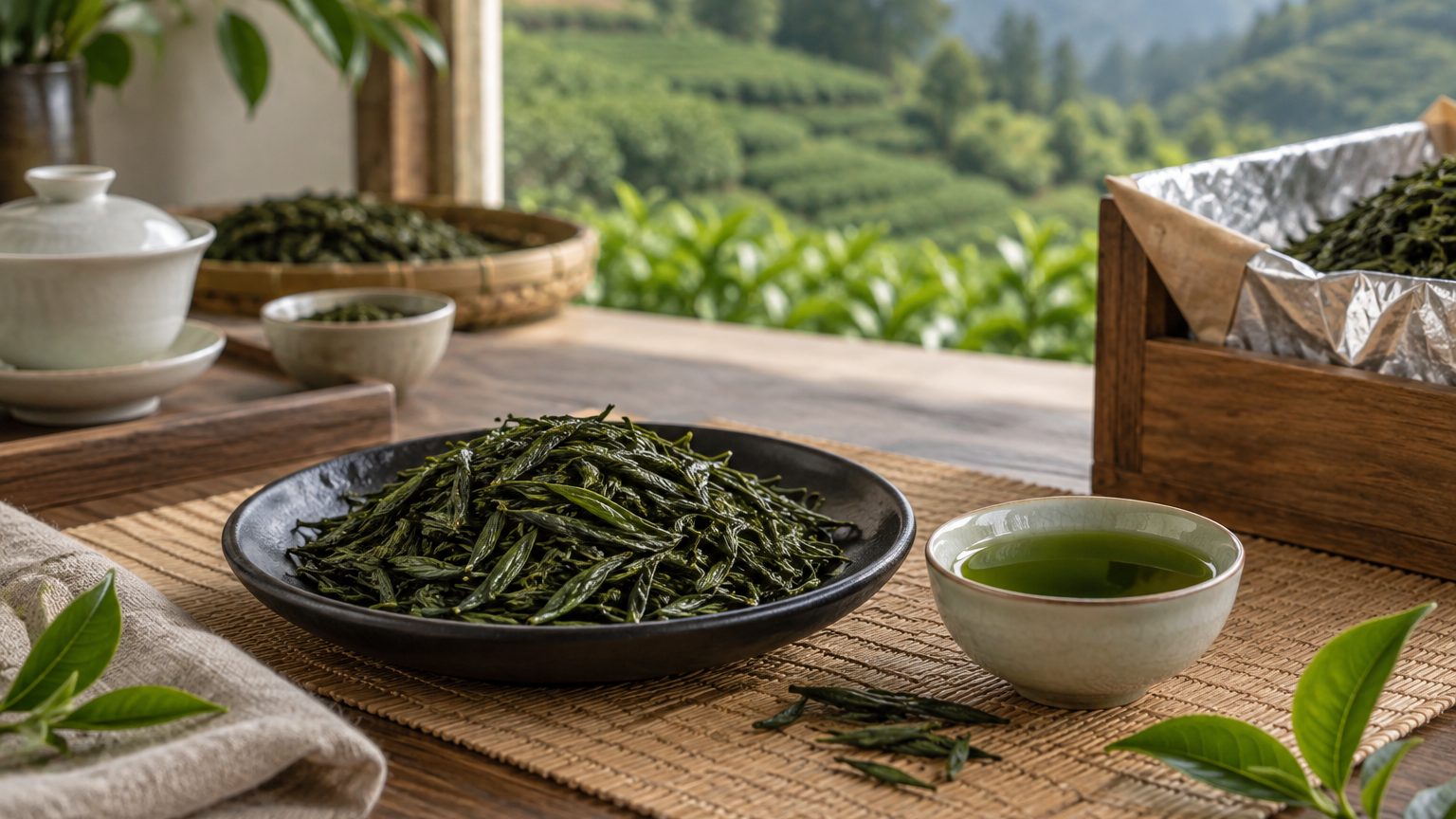
| Dry leaf | Deep glossy green needles, slightly broader than sencha |
| Liquor | Deep green, clear, almost oily in texture |
| Aroma | Covered-hay and nori notes over green sweetness |
| Taste | Thick umami, sweet, virtually no astringency |
| Wet leaf | Deep green leaves, soft, uniform |
| Brew parameter | Reference |
|---|---|
| Ratio | 4 g per 100 ml |
| Water temperature | 50-60°C |
| Steep time | 2-3 minutes |
The ratio is high on purpose: small volumes, heavy leaf, low heat. Hotter water collapses the umami into astringency and the point of the tea is gone.
Brewing gyokuro for a menu
Gyokuro breaks menu conventions: roughly 4 g of leaf per 100 ml at just 50-60°C, steeped briefly and repeated. The low temperature is not ceremony - above that range the savory amino acids give way to the astringency the shading suppressed. Foodservice programs that respect the parameters can pour a cup customers describe for months; programs that treat it like ordinary sencha will serve an expensive astringent disappointment. The gyokuro vs sencha comparison sets out when each belongs on a list, and the water variables that matter at low temperatures are covered in the water quality guide - softness counts for more here than in almost any other tea program.
Sourcing and grading
Uji is the name that headlines the category, with other noted Japanese regions behind it; the desk sources through Japanese channels and Sino-Japanese joint processing channels, and states the provenance on the lot record exactly as it does for sencha. Grades move on shading discipline, picking timing and rolling finish - the deepest umami comes from the longest, most careful covering, and the trade prices it accordingly. Because gyokuro volumes are naturally small and the tea is expensive, the honest desk advice is usually about placement rather than price shopping: it belongs where a program wants one unmistakable top-shelf umami line, not where a cost-effective daily green is needed. Availability also moves with each season's shading outturn, which written offers reflect.
Who buys gyokuro
Tea houses and specialty retail take gyokuro as the conversation piece that rewards explanation; premium retail uses it as the anchor above sencha on the shelf; corporate gift programs like the story density - twenty days of shade fits on a gift card. Restaurants with a Japanese-leaning menu can pour it as a paired non-alcoholic course, where the umami complements the food rather than fighting it. Programs that need volume and forgiveness should stop at sencha, and the desk says so during the first exchange rather than after a mismatched container - that is what the placement advice on retail and importer programs is for.
Packing and private label
The umami character is fragile and worth protecting properly: foil-lined bulk bags with nitrogen flush, opaque retail packs, cold storage for reserve stock. Small pack sizes suit the ritual - 50 g pouches and tins, since a little leaf goes far at the 4 g ratio. Labels and artwork run through packaging options; MOQs follow the standing reference ranges, confirmed in writing per program, with minimums that can tighten in tight seasons. Programs holding stock past the season get a storage plan in writing, because this is one tea where a warm shelf is visible in the cup within weeks.
What buyers check before ordering
- Cup at 50-60°C, not at the usual green tea temperature - umami must lead, astringency must be almost absent.
- Shading and provenance named on the lot record.
- Dry leaf: deep glossy green, uniform needles, no sencha mixed in as filler.
- Packing integrity and nitrogen flush confirmed for retail formats.
- Lab panel per batch, scoped to destination market.
The quote form is the start - a gyokuro program is built around samples cupped at the correct low temperature, and the desk will say plainly if your channel does not justify the line.