
The short answer
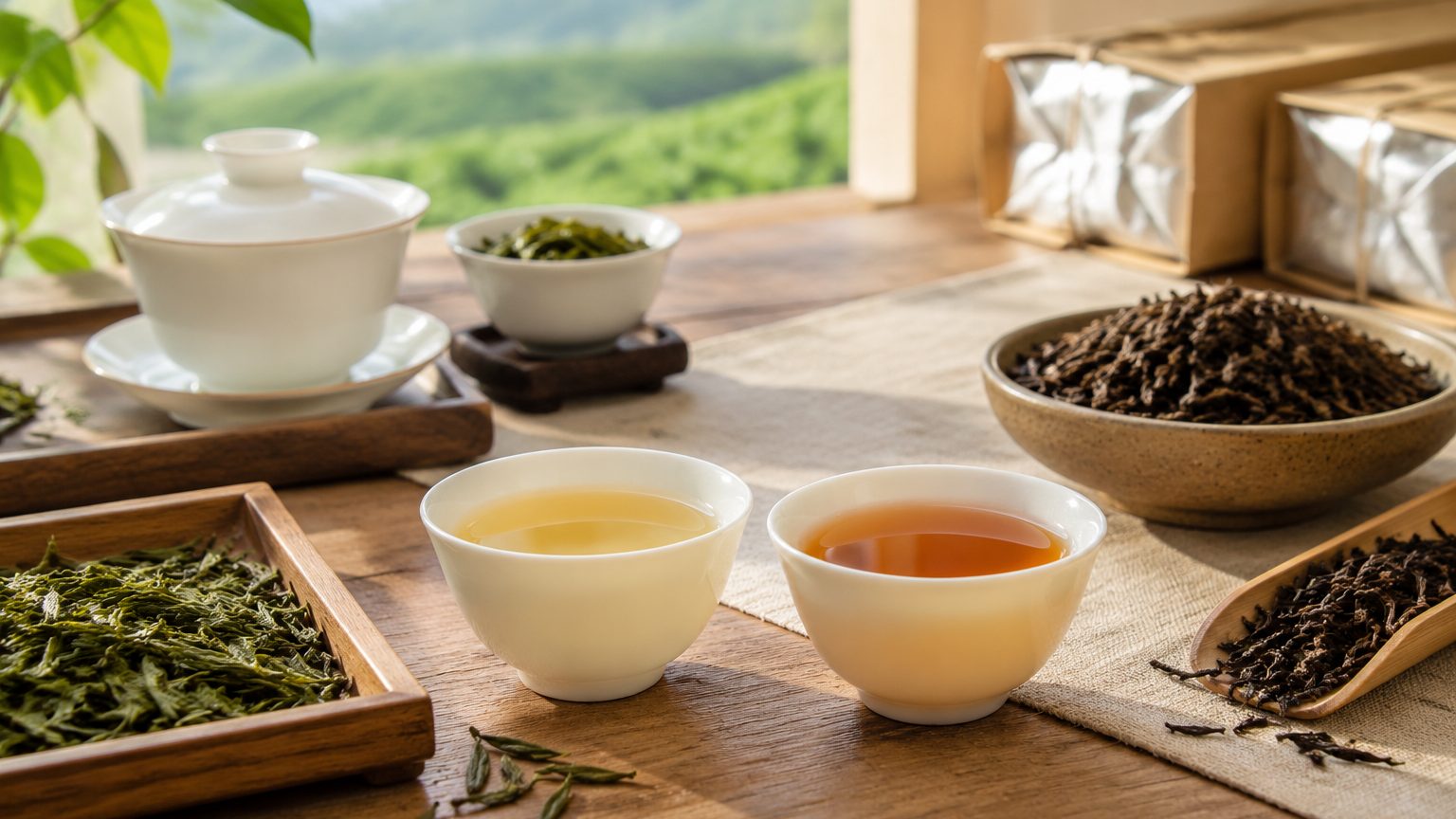
Sencha is the pure expression: steamed leaf, rolled and dried, nothing added - a yellow-green cup that is fresh and savory with a light edge of astringency, the taste most people mean by Japanese green tea. Genmaicha is a blend: sencha or bancha mixed with roasted brown rice, pouring pale yellow with a toasty, grain-sweet aroma and a much gentler edge. Sencha is the purist's cup and the connoisseur's reference; genmaicha is the comfort cup that forgives hot water, welcomes coffee drinkers and reads as cozy on a menu. They are not rivals for one slot. They sit at different heights of the same shelf, and most complete Japanese programs carry both.
Steamed leaf versus leaf plus rice
Both start in the steamer, and there the paths part. Sencha's craft is entirely in the leaf: steaming fixes the green, rolling shapes it and breaks cell walls for fast extraction, and drying stabilizes the lot - with Shizuoka and Kagoshima among the recognized districts, and the sencha line page carrying the per-lot detail. Genmaicha's craft is in the marriage: roasted brown rice, some grains cracked or puffed by the heat of roasting, blended through the leaf in a fixed ratio that decides how much of the cup belongs to the toast and how much to the green. The blend changes the mechanics as well as the flavor. Because rice displaces part of the leaf, the working dose rises to about 5 grams against sencha's 3, and the finished tea is sturdier in transit, the rice cushioning what would bruise. The blend ratio, the leaf base and the roast depth of the rice are the three numbers that describe any genmaicha lot, and a supplier sheet should state all three.
Cup by cup
| Aspect | Sencha | Genmaicha |
|---|---|---|
| Build | Steamed, rolled leaf only | Leaf blended with roasted brown rice |
| Liquor | Yellow-green | Pale yellow |
| Aroma | Fresh, marine-savory | Toasted grain over the leaf |
| Taste | Fresh with a light astringent edge | Soft, grain-sweet, gentle |
| Dose | 3 g / 150 ml | 5 g / 150 ml |
| Menu read | The Japanese green tea | Cozy, roasted, easy |
Tasting side by side, sencha moves in one direction - freshness first, the savory marine note underneath, a clean edge that fades politely. Genmaicha opens with the toast and lets the leaf follow, and the edge barely registers. Coffee-leaning customers usually point at the genmaicha first; tea drinkers who ask about districts and harvests point at the sencha. That split in audience is real and stable, and menus can plan around it rather than fight it.
Brewing frames side by side
| Parameter | Sencha | Genmaicha |
|---|---|---|
| Water temperature | 70-80°C | 85-90°C |
| Leaf and water | 3 g / 150 ml | 5 g / 150 ml |
| Steep | Short; watch the clock | Forgiving; hard to spoil |
| Failure mode | Boiling water sharpens the edge | Under-dosing flattens the toast |
Notice that the direction reverses the usual green-tea instinct: genmaicha wants hotter water than sencha, because heat is what carries the toast, and it punishes carelessness far less. That tolerance is the quiet reason genmaicha anchors self-serve stations and office programs, where nobody is babysitting a kettle; the water temperature note places both frames on the full green tea ladder.
Menu and channel fit
Sencha is the authenticity anchor. A Japanese-leaning cafe builds its credibility on it, tea walls use it as the reference point every other green is measured against, and tasting flights need it to show what steaming - rather than pan-firing - does to the same plant. It pairs naturally with gyokuro and matcha into a complete Japanese rail, and the gyokuro comparison covers the shaded end of that rail. Genmaicha is the workhorse: a self-serve favorite that survives mistreatment, an evening-friendly pour because the cup typically lands lighter than straight sencha - the rice displaces leaf, so treat any caffeine figure as typical and back it with a lab panel if a label depends on it - and the subscription slot that keeps customers who find straight leaf teas demanding. Retail plays to its strength too: an open caddy of genmaicha sells the room on aroma alone, while sencha sells on the label - the office service conversation is, in practice, largely an argument for genmaicha. One dosing trap deserves its own warning: because the rice makes a scoop or sachet look generous, venues used to 3-gram greens routinely under-dose the blend, and the toast needs its full 5 grams to carry the cup.
Price drivers, plainly
The two ladders weigh different things. Sencha prices on harvest timing, district and grade: early pickings from recognized districts sit at the top, broader later material forms the working middle, and the spread between tiers is wide enough that quotes must name season and origin to be comparable. Genmaicha prices on the blend: the quality of the roasted rice, the leaf base underneath it and the ratio between them - a richer leaf fraction reads immediately in the cup and in the cost. Neither ladder converts into the other's terms, so compare sencha quotes against sencha and genmaicha against genmaicha, with the blend ratio stated in writing for the latter. Ask for the ratio and the leaf base on the sheet, because both move cup and cost together. Typical reference order sizes and lead windows sit on the MOQ and lead time page, and both lines ship under the same freshness discipline as the rest of the green family. Start from the green tea category page to see where each sits among the full range.
Choose genmaicha if, choose sencha if
Choose genmaicha if the program needs a cup that works everywhere: self-serve and office service, evening menus, coffee drinkers being coaxed across, and retail shelves where aroma does the selling. Choose sencha if the program needs a reference: a Japanese program that must taste credible, flights and tastings that teach the steamed style, and customers who read labels and ask about districts. Programs with room carry both and let them split the day - genmaicha through the afternoon, sencha where the kettle and the attention are. To test the split on your own counter, request both lines through the quote form, brew each at its own frame, and keep whichever cup your team can reproduce on a bad day - that one earns the shelf.