
What wet piling actually does
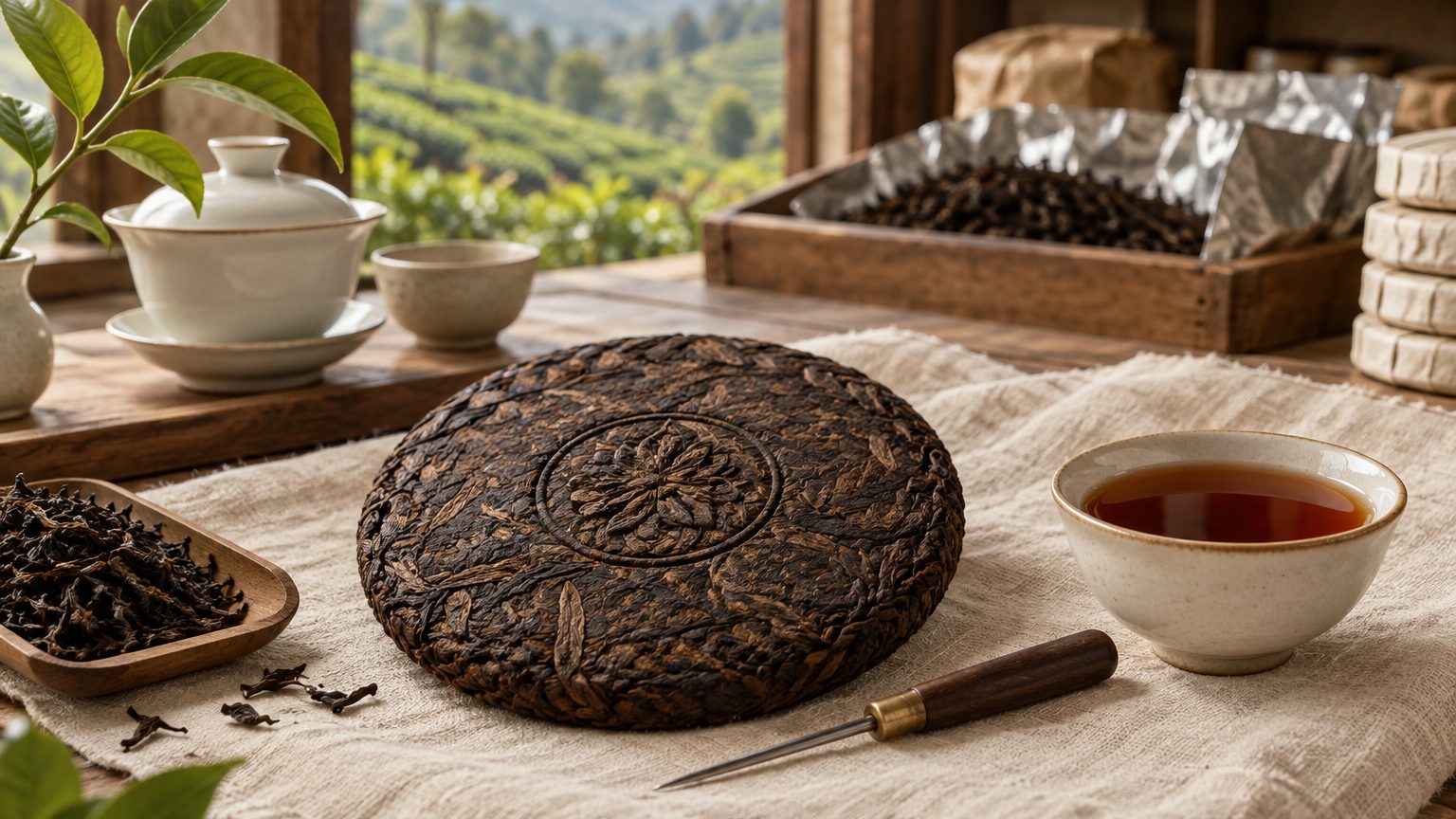
Ripe pu-erh starts as sun-dried maocha, the same green-brown raw material as young sheng. The difference is a deliberate fermentation step - wet piling, wo dui - in which tons of leaf are moistened, piled and turned under controlled temperature over weeks of microbial work. The process was standardized in 1973 and it compresses decades of natural aging into roughly forty-five days: leaf darkens to chestnut, harsh tannin softens, and the cup picks up the thick, earthy-sweet character buyers call chen xiang, aged aroma. Pile management is where quality is made - turn timing, moisture, pile size and ending the fermentation before it sours. A clean pile gives wood, camphor and dark honey notes; a careless one gives sour, fishy off-notes that no repacking hides. That is why the desk works with a small set of Yunnan partner facilities whose pile records go back years, and why samples always precede bulk.
The 357 g bing and its conventions
Pressed formats carry the category's history in their numbers. The standard cake is 357 g - the bing - and by long convention seven cakes are wrapped together as one unit, the tong, a bundle that traces back to carriage-era trade arithmetic. Buyers do not need the folklore, but they do need the consequences: 357 g sizes retail presentations predictably, seven-cake tongs pack cartons efficiently, and cotton paper is the traditional wrapping because it lets the tea breathe. Pressing itself is short and physical - each cake is weighed, steamed soft, pressed to shape, dried and wrapped - the same sequence used for raw cake, and a good use for the pressing line described under production process. Custom weights and shapes can be discussed, but the standard bing is what most programs should start with.
The cupping sheet
| Factor | Clean ripe pu-erh | What the buyer watches |
|---|---|---|
| Dry leaf | Chestnut-black cords, some golden tips | Even color; ash-gray suggests over-piling |
| Liquor | Chestnut-red, thick, glossy | Cloudiness means fines or a rough pile |
| Aroma | Wood, camphor, dark honey | Sour or fishy notes are pile faults |
| Taste | Smooth, glutinous, sweet earth | Sourness at the back means rushed fermentation |
| Wet leaf | Dark brown, pliable, not mushy | Mush signals over-fermented material |
LOTS are cupped on the five standard factors under the national sensory method (GB/T 23776) after a quick rinse, and the reference sample governs every later delivery - a swap without written approval is a claim, not a delivery.
Brew parameters
| Service | Dose | Water | Note |
|---|---|---|---|
| Gongfu | 5-7 g / 110 ml | 100°C | Rinse once quickly, then short pours |
| Pot or mug | 5 g / 150 ml | 100°C | 3-5 minutes, forgiving |
| Boiled, restaurant style | 5-6 g per 600 ml | Simmer | Short simmer, repeatable |
The rinse matters: it wakes the pressed leaf and washes pile dust, and skipping it is the most common first-cup mistake printed about this category. On-pack directions match the format sold.
Where ripe pu-erh sells
Tea houses buy it for the ritual - compressed leaf, rinse, escalating pours - and it is one of the few categories where table service is part of the product. Restaurants and hotels use the boiled style for after-dinner pots, where its smooth darkness pairs with dessert without added sugar. Retailers merchandise the bing as an object: paper-wrapped, stamped, shelf-present, with the year printed. E-commerce sellers lean on the brewing story and repeat-purchase consumables like mini cakes and broken-leaf pouches. It is a weaker fit for standard milk-tea counters, which usually want the punch of a strong black - the honest tool there is a CTC or Dianhong line, and the desk will say so rather than force the fit. For buyers weighing raw against ripe, the differences are laid out plainly in the raw versus ripe guide, and the raw counterpart lives on the raw cake page.
Storage, age claims and honesty
Ripe pu-erh is drinkable on release; it does not need years to justify itself. That said, many programs sell it with an aging angle, and the honest line is this: character continues to develop with age only under proper storage - ventilated, odor-free, neither damp nor baked - and no wrapper can substitute for that history. So age claims here ride on documents: pile and pressing dates on the lot record, storage conditions stated, wrappers dated. Programs wanting extra depth without waiting can look at the peel-mated chenpi pairing, which layers citrus aroma over ripe base. The storage mechanics for any pressed tea are covered under grading and storage.
Private label and pressing programs
The standard program is a 357 g bing in cotton paper with your stamped wrapper, in printed sleeves or gift cartons; broken-leaf pouches and mini-cake samplers extend the range for e-commerce. Wrappers are printed to your artwork, labels follow destination-market food rules, and MOQ rides the desk's typical reference ranges per format, confirmed in writing per program. New wrappers or custom pressings add tooling and lead time, and the honest calendar for that lives under MOQ and lead time. Send the brief - weight, wrapper, market, quantity - to the desk and the samples come back with their pile records attached.