
The short answer
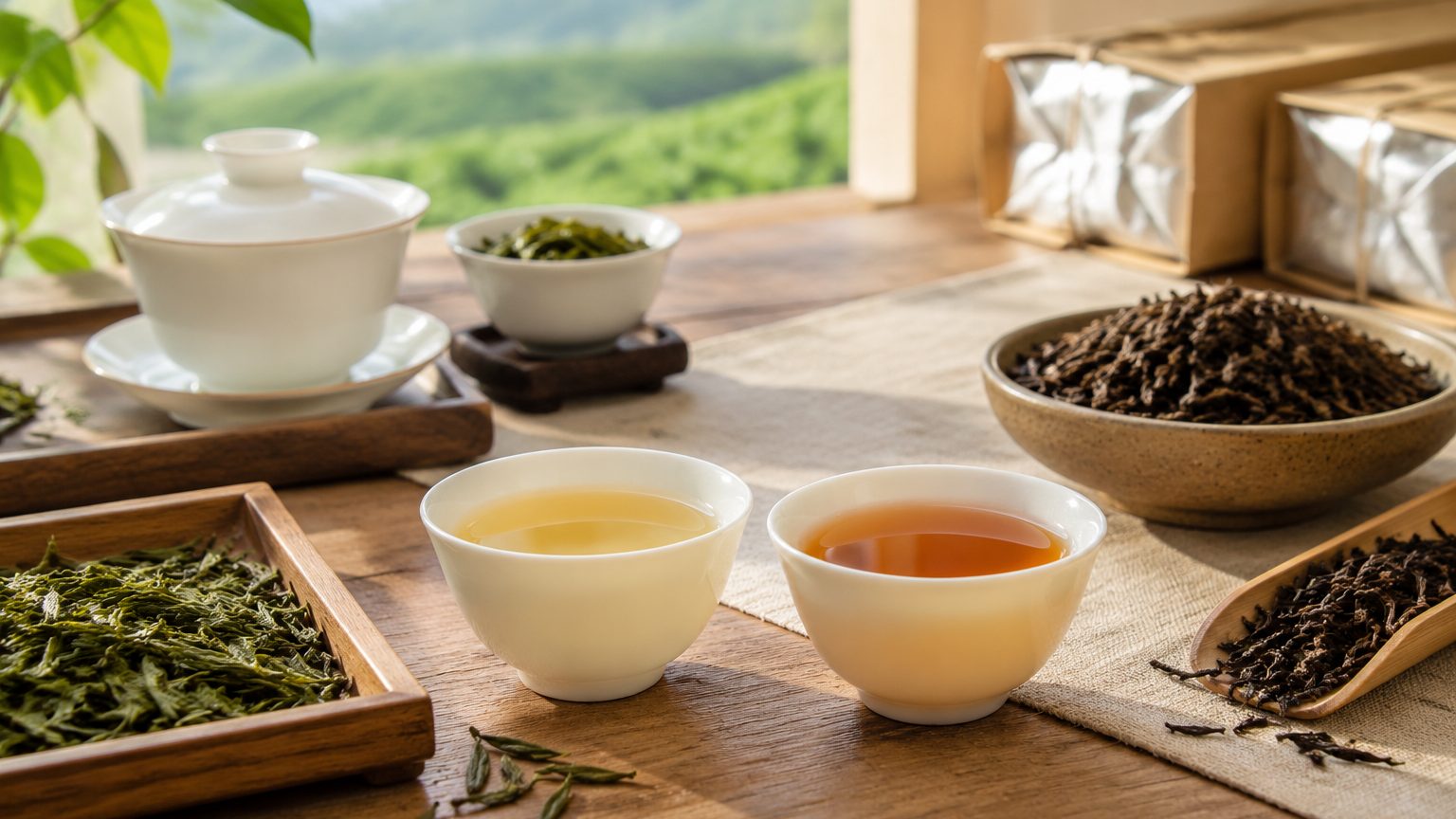
Longjing and Biluochun are both pan-fired green teas from eastern China, and to a casual shopper they read as the same purchase: premium fresh green. For a buyer they separate quickly. Longjing, from the West Lake district around Hangzhou in Zhejiang, is pressed flat in the wok and pours a smooth, mellow-sweet cup - fresh and brisk, with a liquor that runs from tender green to a bright apricot. Biluochun, from the Dongting hills near Suzhou in Jiangsu, is worked into tight little curls and leads with aroma: a floral-fruity perfume the trade connects to tea rows planted between fruit trees. Neither is simply better. Longjing is the recognized flagship that reassures cautious customers; Biluochun is the aromatic specialist that makes a green tea section worth a second visit.
Where the processing paths divide
The shared backbone is the same: leaf picked in spring, fixed quickly in a hot pan so oxidation never begins, then dried - the pan-fired green family. Everything distinctive happens after that fork. Longjing moves through three named work stages: a resting spread that softens the fresh leaf, a primary firing that presses the blade flat and sets the color, and a final polish firing that takes the leaf down to its dry, smooth finish. The flat, even blade is not decoration - it is the shape graders, gift buyers and repeat customers expect to inspect. Biluochun takes the opposite path in the wok: the small spring leaf is curled against the heat into dense spirals, and the maker's skill shows in keeping the curl intact without crushing the leaf. Then there is the field itself. Around Dongting, tea rows share the ground with fruit trees, and the classic account credits that interplanting for the cup's fruit and flower character. Whether the chemistry is fully mapped or partly legend, the market buys the story along with the leaf, and the story is easier to tell on a shelf card than most origin tales.
Cup by cup
| Aspect | Longjing | Biluochun |
|---|---|---|
| Origin | West Lake district, Hangzhou, Zhejiang | Dongting hills, Suzhou, Jiangsu |
| Leaf shape | Flat pressed blade | Tight curled spirals |
| Liquor | Tender green to bright apricot | Tender green |
| Aroma and taste | Fresh, brisk, mellow-sweet | Floral-fruity aroma over a fresh cup |
| Field context | Lakeside tea district | Tea rows planted between fruit trees |
| Season signature | Pre-Qingming spring grades at the top | Spring picking, dense small curls |
Set the two on a tasting bench and the shorthand writes itself. Longjing's freshness rounds off into mellowness - the kind of cup staff describe as smooth. Biluochun's freshness sits on top of the perfume, so the same first sip reads as fragrant rather than soft. Liquor color helps the eye: Longjing can drift toward a bright apricot while Biluochun usually holds a greener tone. For training, the contrast is useful, because a team that can explain smooth versus fragrant in one sentence can guide a customer to the right cup without a script.
Brewing frames side by side
| Parameter | Longjing | Biluochun |
|---|---|---|
| Leaf and water | 3 g / 150 ml | 3 g / 150 ml |
| Water temperature | 80-85°C | Around 80°C |
| Steep | 2-3 min | 2-3 min, pulled by color |
| Vessel | Glass or porcelain shows the blade | Glass, to watch the curls stand up |
Both teas want water well below the boil: heat is what pushes a delicate unoxidized leaf into bitterness, and both of these cups live on their sweetness and aroma. The frames above are trade reference points to tune against the actual lot, not fixed specifications - the green tea water temperature note explains why the number moves and how venues hold it on a busy shift.
Which program fits which tea
Longjing is the anchor buy. The name carries recognition well beyond tea circles, the flat leaf shows cleanly through a transparent retail pack or a gift tin, and the grade ladder - with the pre-Qingming spring tiers at the top - maps naturally onto a good-better-best gift structure. Retailers position it as the default premium green, and hotels pour it as the safe, familiar cup on the room tray. Biluochun is the second chair that earns its place: an aroma-led cup for cafes running tasting flights, for tea walls that need a story customers retell, and for subscriptions that want month two to feel different from month one. Its small curls portion quickly, but the leaf is delicate, so packing and transit handling matter more than with the sturdier flat blade. Both are spring-window teas: material moves right after picking and the calendar shapes availability, so plan volumes against the harvest timing note and confirm windows and lead times for each order in writing. Freshness is the selling point for both, which makes stock turns rather than shelf depth the real discipline - the shelf life note covers the storage side.
What moves the price gap
Neither tea has one price; each has a grade ladder, and the rungs are set by similar forces. Picking date comes first: pre-Qingming material, harvested before the early-April festival, is scarcer and carries a visible premium in both camps. Origin specificity is second: core-district leaf from West Lake or the Dongting hills prices above wider regional material sold under the same names, and a buyer should know which one a quotation actually describes. Handwork is third: the firing, pressing and polishing labor scales the top of the Longjing ladder, while bud density and curl integrity do the same for Biluochun. The practical rule when comparing the two is to compare like with like - same season, comparable grade band - because a pre-Qingming Longjing against a later, broader Biluochun tells you nothing except which ladder rung you are standing on. Sample routines and typical reference order sizes sit on the MOQ and lead time page, and final terms are confirmed in writing for every program.
Choose Longjing if, choose Biluochun if
The decision compresses into one line each. Choose Longjing if you need a recognized flagship green: a smooth, mellow cup that first-time green tea drinkers accept without coaching, gift-grade tiers for seasonal programs, and a flat leaf that photographs and displays well. Choose Biluochun if a green already anchors the list and you want the aromatic counterpart: a floral-fruity cup with a field story, strong in tasting flights and afternoon service, memorable enough to carry a subscription slot. Many retailers run both and let the pair do the educating - anchor and specialist rather than competitors. Either way, start with samples: request both lines side by side through the quote form, cup them in your own water at your own ratio, and let the cup rather than the catalog close the decision. The green tea category page lists the full family, including the other pan-fired and steamed lines, if a third chair is ever needed.