
What fruit tea actually is
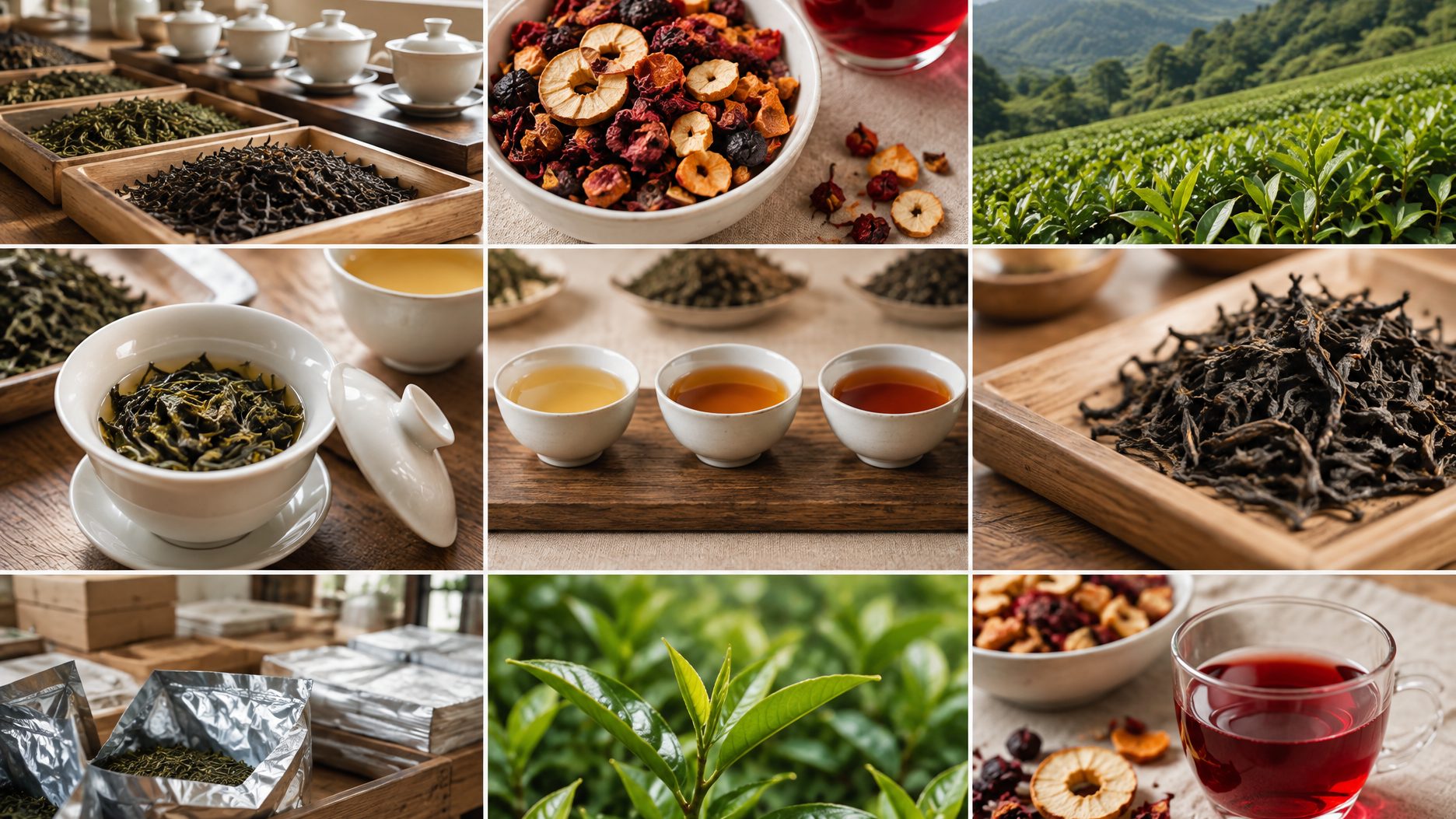
No tea plant anywhere in the bag: fruit tea blends are dried fruits and botanicals - apple pieces as body, rosehip and hibiscus as acid and color, orange peel and berries as accents. That composition explains the category's strengths and its limits. Strengths: a brilliant red liquor, a tart-sweet profile that survives ice and dilution, and no caffeine to declare. Limit: it is a formulated product, so consistency is a blending discipline, not a harvest - exactly the part the desk runs for you, along the same golden-sample system described under blend development.
The build blocks, and what each does
| Component | Contributes | Watch-out |
|---|---|---|
| Apple pieces | Body, sweetness, bulk | Moisture control in storage |
| Rosehip | Tartness, deep red | Seeds add grit; sieving matters |
| Hibiscus | Acid punch, crimson color | Overdose turns sour fast |
| Orange peel | Aroma lift | Oils fade; fresh packs smell it |
| Berries and petals | Visuals, accent flavor | Cost driver at high inclusion |
Blends are composed to a brief - how tart, how red, sweet or clean - and adjusted in sample rounds until the golden sample matches. Batch consistency then runs on retained references and per-batch lab panels, the same as every formulated line here.
Designed for the iced glass
Fruit blends earn their margin in cold service: brew strong and hot, pour over ice, and the dilution lands the flavor exactly where the spec wants it - the ratio math is printed on the lot sheet so staff and label agree. Cold brew works too, with a longer steep and a softer acid edge. Hot service is honest but less theatrical; the category's vacation-in-a-glass look is the selling point, and a clear glass does the marketing. For menus, this line pairs naturally with the formats on the pyramid bag page and single-serve sachets.
Where fruit blends sit in a range
Three placements repeat across programs. As the iced signature in a cafe or hotel list, next to a black tea and a green: it is the glass that sells itself on sight. As the children's and evening shelf in retail: no caffeine, no brewing discipline, a colorful dry blend that parents can serve freely. And as the base for house sodas and mocktails in on-premise menus, where the tart profile replaces syrup rather than competing with tea. Buyers usually combine placements rather than choose one - the same blend serves all three, which is the quiet argument for making the golden sample good instead of making several blends mediocre.
Ingredients: what good looks like
Fruit pieces should read as fruit - apple with visible cell structure, not amber-colored cubes of indeterminate origin; peel cut thick enough to carry oil; rosehip that has been sieved, not swept. Moisture is the quiet variable in this category: fruit pieces drink humidity from the air, and a blend packed a point too wet will cake in the bag within a season. The desk specifies moisture by component, packs in foil-lined liners as standard, and treats a nitrogen flush as the default for retail formats rather than an upsell. None of this shows in a photo; all of it shows in month six, which is when a buyer actually judges the program.
Compliance notes that matter here
Fruit blends sit in the food ingredient world, and their labels carry the usual ingredient-list duties per destination market - dried fruit pieces and botanicals, nothing hidden. Caffeine-free holds as long as no true tea enters the bag; add a tea base for a fruit-and-tea SKU and the label story changes, which the desk flags before development rather than after. Positioning copy stays on taste and ingredients; the desk writes to each market's rules rather than around them.
What to check before bulk
- Profile brief: tart-sweet balance, color depth, intended hot/iced split.
- Sample rounds on BOTH hot and iced service - they drink differently.
- Ingredient documents and the finished-blend lab panel per batch.
- Moisture and packing: fruit pieces are hygroscopic; foil liners are not optional.
- Format economics at your volumes on the MOQ and lead time page.
If the brief already exists, send it to the desk; if it does not, the sample plan starts with two or three trial blends and narrows fast.