
The short answer
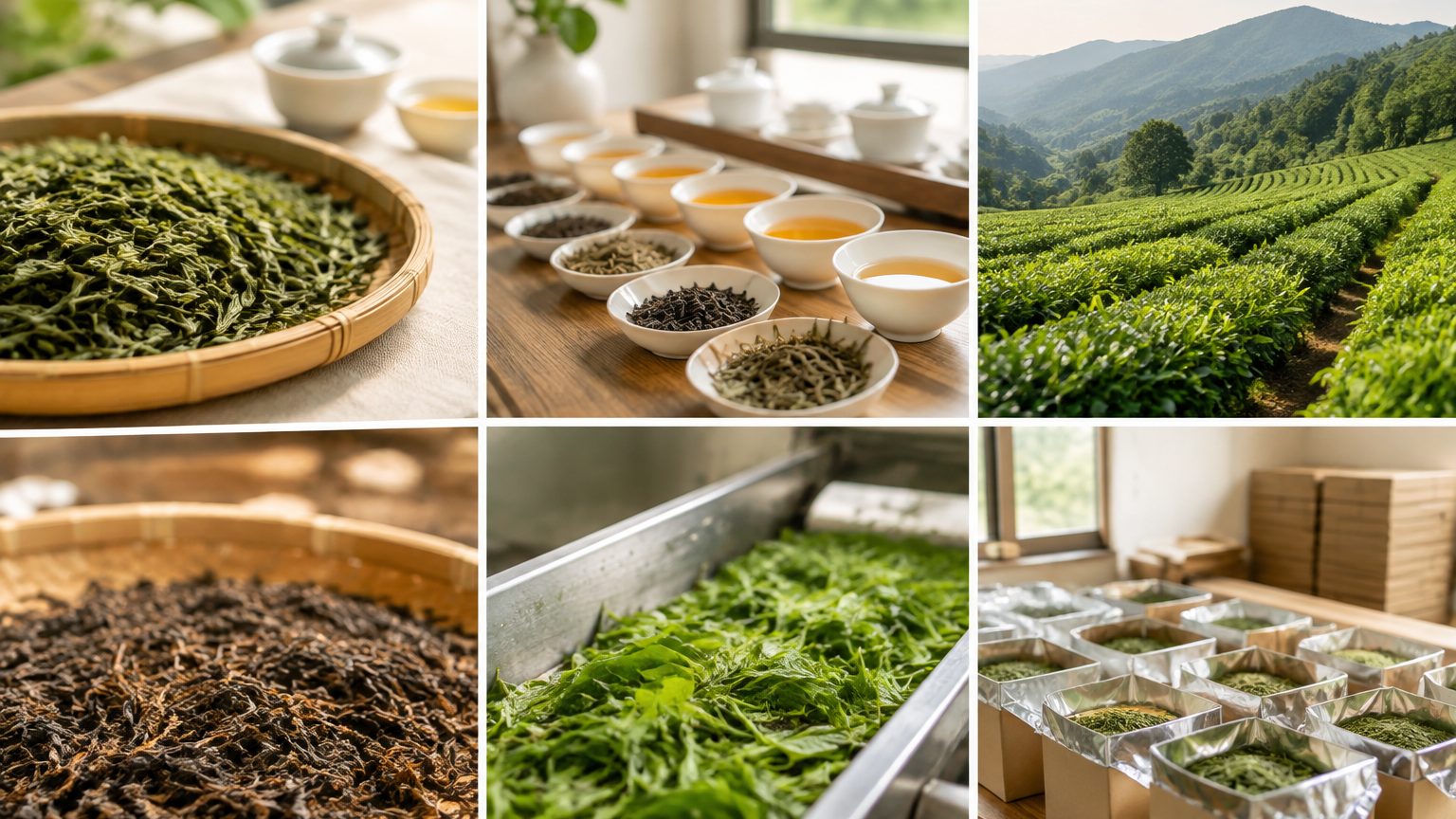
Rolling is the step where withered or fixed leaf is pressed, folded and twisted, breaking cell walls so that water can pull flavor out quickly and evenly, while the leaf takes on a durable commercial form. Shaping is the same job taken further - the repeated hot wrapping and kneading that turns oolong into tight semi-balls, the pan-pressing that flattens longjing into its spear profile, the crushing-tearing-curling of CTC that turns leaf into a granule built for tea bags and milk tea. A buyer who ignores shape is missing half the spec: the same cultivar rolled as a strip and as a pearl brews differently, packs differently, breaks differently in freight, and sells to different customers.
Why leaf gets rolled at all
Two reasons, and they pull in opposite directions. First, extraction: unbroken leaf gives a pale, slow cup because intact cells release their contents grudgingly. Rolling ruptures enough structure that a brew reaches strength in a useful time. Second, endurance: the tighter and more intact the rolled piece, the slower it gives itself up, and the more infusions it survives. Strip-style rock teas and tightly balled tieguanyin are built for repeated short infusions; CTC granule is built to deliver everything in one three-to-five minute pull. Neither is better - they are answers to different questions - and the shape a maker chooses tells you what kind of service the tea is designed for.
The shape families buyers meet
| Shape | How it is made | Typical lines | What it means for you |
|---|---|---|---|
| Flat spear | Pan-pressing through a heated wok sequence after spreading | Longjing | Delicate cup; breaks easily in freight, wants rigid packing |
| Curled spiral | Hand-rolled curling, fired gently | Biluochun | Fast extraction from small pieces; dose carefully |
| Twisted strip | Rolling and drying without re-kneading | Wuyi rock teas, keemun, dianhong | Slow open, many infusions, forgiving in thermos service |
| Tight semi-ball | Repeated hot wrapping and kneading after fixing | Tieguanyin | High dose per vessel, wakes over several infusions; ships well |
| Natural bud | No rolling - withered and dried intact | Silver needle | Gentle handling, showpiece retail look, light touch brewing |
| Crushed granule | Crush, tear, curl through rotors | CTC black | One strong pull, bag-friendly, the milk-tea workhorse |
Puer cakes belong in this list too: shaping by press rather than by roll, with steamed leaf compressed into a disc, rested dry and wrapped in paper. The press pressure and cake thickness change how the leaf loosens over years, which is why storage-minded buyers ask about both.
Shape drives brewing behavior
Put the families side by side on a brew sheet and the pattern is obvious. Dense shapes want heat and time to open: tieguanyin is dosed at around 7 grams in a 110 milliliter gaiwan with water at 95 to 100 degrees Celsius and quick successive pours, and it is still giving flavor six infusions later. Flat and curled greens extract fast, so they run cooler and gentler - longjing around 3 grams in 150 milliliters at 80 to 85 degrees for two to three minutes. Granules extract almost immediately and completely: CTC at 2 to 3 grams in 200 milliliters of boiling water for three to five minutes stands up to milk and sugar. When a cafe complains that a tea is weak or bitter, the shape-versus-recipe mismatch is the first thing a sourcing desk checks. Service format shifts the equation again: iced pulls extract differently than hot, milk and sweetness mask thinness but never harshness, and a shape that shines in a gaiwan can taste lost in a 500 milliliter cup. This is why the desk asks for your service format, not just your flavor brief, before proposing a line.
Rolling decisions echo through grading
Rolling is also where breakage is born. Every handling pass after rolling - firing, sorting, blending, packing - can degrade shape, and the sorted fractions become the grade ladder: intact pieces at the top, broken grades in the middle, small particles at the bottom. That ladder is set in motion here, which is why the shaping step deserves as much supplier scrutiny as withering. A maker who rolls wet, fires hot and handles roughly produces the same nominal style with visibly poorer leaf integrity - and your retail wall will show it.
What a buyer can control
More than the word shaping suggests. You can specify the style family and, within it, trade-recognized variants - clean-aroma tieguanyin is rolled lighter than the traditional roasted style, for instance. You can set leaf integrity expectations for the grade you are paying for, and reject lots where the whole-leaf fraction has crumbled. You can match shape to format deliberately: tight balls and strips for loose-leaf programs, granules for pyramid bags filled at 2 to 3 grams, cakes by weight convention for puer. And you can require that shaping-sensitive teas ship in protective packing - rigid tins or lined cartons rather than loose sacks - because transit vibration is quietly a rolling-undoing process. The desk confirms all of these in writing per program. Shape also sells. On a retail wall the eye buys first - flat spears standing in a glass jar, silver buds in a round tin - and the display should match the tea's form. The corollary is an honesty rule worth stating to suppliers: leaf broken for bags should not be re-dressed as whole leaf for the wall. The tray shows the truth, and customers notice.
Questions that catch shaping problems early
- Ask to see the dry leaf against a reference at the same grade - intact pieces, uniform size, minimal crumbs.
- Ask how many handling passes the tea takes between rolling and packing.
- Brew the sample at your service parameters, not the supplier's - the mismatch is where complaints start.
- For oolongs, ask whether the lot was shaped before or after the roast decision.
- For bags, confirm the fill weight suits the particle size, or the cup will run thin.
Shaping sits in the middle of the chain: withering and oxidation set the flavor direction covered in the desk's processing guide, and the sorting pass that follows decides what grade names you can print - see the note on sieving and grading. Line-level specs for the shapes above live on the product pages, and the gongfu brewing frame behind the numbers above is walked through step by step in the tieguanyin brewing note on this blog. To test a shape change for your format - strips to pearls, or loose leaf to pyramid bags - describe the switch on the quote form and the desk will return sample options with a written plan.