
Why CTC exists, and when it is the right answer
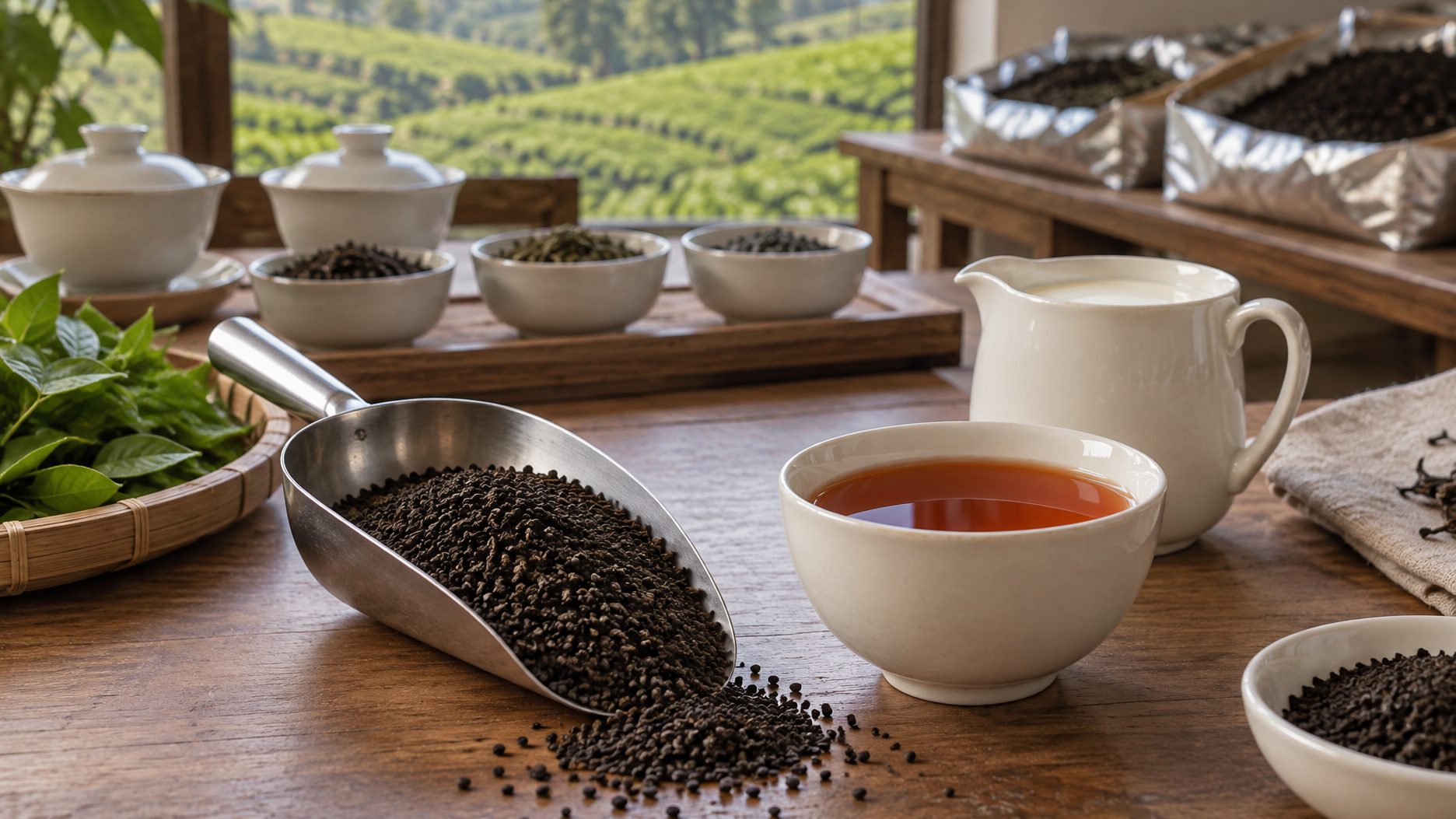
CTC is not a lesser black tea; it is a differently purposed one. The machine cycle - crush, tear, curl - macerates withered leaf and rolls it into small dense granules, bursting the cell structure so extraction runs fast and complete. The result is exactly what dairy-based drinks need: high-strength liquor, deep red color that survives dilution, and a brisk astringency that reads as tea through milk and sugar instead of disappearing into them. Whole-leaf black teas make prettier dry leaf and gentler cups; they routinely make weaker iced milk drinks. If your product is a bubble tea, an iced milk tea or a breakfast service pot, CTC is usually the honest engineering choice, and the desk treats it as a performance spec - measured against your drink build, not against leaf aesthetics. The CTC primer unpacks the process for teams writing specs.
Bubble tea base economics
The bubble tea segment keeps compounding - industry reports estimate it at roughly 3.3 billion US dollars in 2025 with the category's strongest growth rate in tea (Grand View Research, 2025) - and every cup sold begins with extraction cost. CTC wins that math three ways: it extracts fully at standard brew parameters, so grams per liter are predictable; it tolerates batch brewing, holding and dilution better than delicate leaf; and its grade structure lets a program tune strength and cost independently. The practical frame buyers should think in is cost per extracted liter at required strength, not price per kilo - a cheaper granule that under-extracts or muddies in milk costs more per cup. The desk quotes programs on that basis, with brew trials against the client's own milk, sugar and ice build, and the base selection guide walks the full decision.
The cupping sheet, adapted for a milk base
| Factor | What the reference shows |
|---|---|
| Dry leaf | Uniform dark granules, few stems or fiber, no dust fines |
| Liquor | Red, bright, opaque-free; holds color with ice |
| Aroma | Clean black tea, slight malt; no stale or papery note |
| Taste | Strong, brisk, structured; stands up to milk without turning bitter |
| In milk test | Tea flavor leads; no gray or dull color; no thin middle |
The last row is the acceptance test for this line: the desk runs every candidate through the client's own drink build - dairy or non-dairy, sugar level, ice ratio - and locks the lot that passes as the golden sample. Consistency, not novelty, is the product here: a bubble tea brand's customer expects the same cup in every store, which is why blend locks and batch retention matter more than any single season's harvest.
Brew parameters for batch and store service
Reference brew: 2-3 g per 200 ml at 100°C for 3-5 minutes. For store service that usually translates to a batch brew - a fixed weight of granules, fixed water, fixed time, then hold and chill - and the desk helps write that recipe so grams, minutes and yield are locked on paper, not reinvented per store. Over-extraction shows up as bitterness that milk will not hide, under-extraction as a thin cup the syrup buries; both are calibration failures, not material failures, and both are fixed by the recipe card. For iced programs, brewing slightly stronger to compensate for ice dilution is standard practice, and the same golden sample supports hot, iced and shaken builds with adjusted ratios. Brewing math across menu items sits in the ratio guide.
Materials, blends and where they come from
The line draws on Yunnan material and compliantly imported origins - Assam-style and Ceylon-style granules among them - blended to the approved profile. Each base brings something: Yunnan material tends toward depth and color; Assam-style granules toward malt and punch; Ceylon-style toward brightness and a cleaner finish that some fruit-forward menus prefer. The blend is where consistency lives: harvest to harvest, the desk adjusts component shares against the golden sample, keeps retained samples per batch, and requires written approval before any substitution - a swap without approval is a claim, not a delivery. For programs comparing milk-tea bases, the Assam versus Ceylon comparison and the Dianhong line cover the whole-leaf alternatives.
Private label, bags and compliance
CTC packs into every foodservice and retail format: bulk cartons and foil liners for stores, pre-portioned packs for chain consistency, and private-label flat or pyramid bags where the granule's fast infusion is an advantage. Label and document work - destination-market food labeling, HS 0902 classification, lab panels per batch - runs through the certifications and private label programs, with MOQ ranges on the MOQ and lead time page, confirmed in writing per program. Shelf stability is a strength here: fully oxidized granules keep well, so stock planning is calmer than for green or high-fragrance lines.
What to check before bulk
- Milk test in your own build: tea flavor leads, color holds, no thin middle.
- Granule uniformity: fines and stem content against the reference.
- Batch brew trial at the recipe card parameters; note yield and hold behavior.
- Blend composition and origin shares stated on the lot sheet.
- Retained sample policy and written-approval rule for substitutions.
- Lab panel per batch for the destination market.
Send the drink build - milk type, sugar, ice, desired strength - to the desk, and samples arrive matched to the application. Programs that also serve hot tea lists usually add Keemun for the pot-tea side of the menu.