
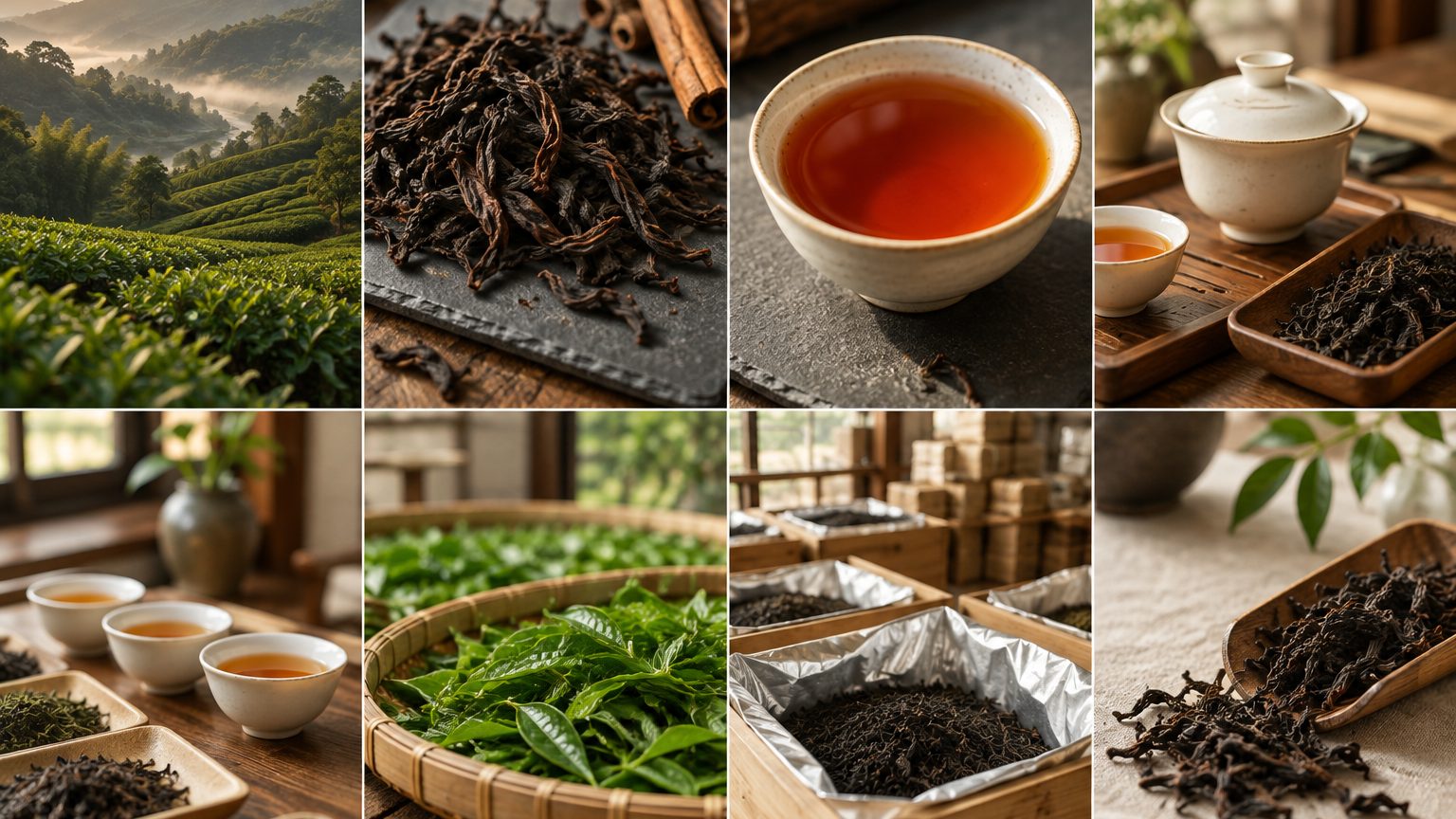
Why Rougui reads as spice, not flowers
Every Wuyi cultivar has a signature, and Rougui's is unmistakable: cassia, the warm bark-spice note that gives the tea its name - the characters mean cassia. Where Da Hong Pao leads with fruit-over-floral depth, Rougui leads with that aromatic spice, sharp at first infusion, softening into sweetness as the session runs. The rest of the architecture is classic rock tea: a mineral core from the cliff-side gardens, a roast that wraps the aromatics in toast, and a finish that returns after swallowing. Buyers who know Tieguanyin's orchid or Dancong's honey florals should expect something drier and more angular here - that angularity is the point, and it is why tea houses program it as the connoisseur's pick beside the friendlier Da Hong Pao.
Terroir: why the cliffs matter
Wuyi's gardens sit in a folded landscape of weathered volcanic rock, streams and narrow valleys; the core rock zones - the famous valleys and cliffs inside the scenic area - give the most pronounced mineral character, and teas from them are called zheng yan, true rock. Outer zones and neighboring areas grow the same cultivar with more garden and less cliff in the cup, at plainly lower prices. None of this is mystique: thin rocky soils, drainage and slope aspect change what the leaf carries into processing. The desk states origin plainly on every lot sheet - core rock, outer Wuyi, or outside - and prices follow that statement, because a buyer who pays core prices for outer leaf has been failed. The origin network covers Wuyi directly and reference samples anchor each tier.
Processing and roast levels
Rougui follows the full yancha chain: withering, overnight shaking and bruising for partial oxidation, fixing, rolling into strips, then charcoal roasting in passes. Roast level is the lever that changes the tea most. Light roasts let the cassia aroma stay high and bright but demand careful storage and an early drinking window; medium roasts round the spice into fruit and toast, the safest commercial profile; full roasts go dark and bittersweet, built for long rest and long shelf life. Fresh off the fire, any roast tastes of fire; the desk holds stock through the settling period so lots arrive drinking, not smoking. Roast level and roast date are stated on the lot record, and the trade-offs are the same ones described for charcoal roasting generally.
The cupping sheet and brew parameters
| Factor | What the reference shows |
|---|---|
| Dry leaf | Dark twisted strips, roast bloom, uniform cut |
| Liquor | Orange-red, bright, with depth |
| Aroma | Cassia spice front, toast and fruit behind |
| Taste | Mineral core, spiced sweetness, dry elegant finish |
| Wet leaf | Red-brown, pliable strips, even oxidation |
Gongfu discipline suits it: 7 g in a 110 ml gaiwan at 95-100°C, quick pours, six or more infusions. The spice keeps its identity through milk-free service and through a long meal - sommelier-friendly behavior for restaurant lists. For retail packs, the desk prints the same parameters and recommends letting the tea rest after arrival in market; freshly shipped lots often taste tighter than the reference until they settle a few weeks. Programs serving pots rather than gongfu take a slightly lower ratio and a three-minute steep, trading some of the mid-palate structure for a rounder single cup - a fair trade the desk can spec on request.
Grades, price logic and honest sourcing
Rougui's recent fame moved its price faster than any other Wuyi line: core-rock single-lot teas now sit at the top of the market, while well-made blends of core and outer material carry the profile at working prices, and outer-zone lots serve entry programs honestly. The desk's grading is transparent on all three tiers - the lot sheet says which tier, the reference sample shows what that tier cups like, and the written offer binds both. This matters more for Rougui than for most lines because the gap between tiers is wide and the dry leaf gives little away; only the cup separates them. Buyers should plan the tier to the channel: tea houses justify core lots, retail private label usually sits a tier down, and foodservice takes outer material where the spice still reads. The MOQ and lead time page carries the reference ranges, confirmed in writing per program.
Who buys it and how it ships
Tea houses and specialty retail lead; corporate gifting takes gift-box programs where a recognizable, prestigious name matters. The dry leaf is sturdy - dark, fully roasted strips tolerate freight better than green teas - and shelf life is long, so Rougui suits mixed containers and slower sell-through without the anxiety of a spring green. Packing runs from bulk foil-lined cartons to retail pouches and gift boxes under the packaging options program, with destination-market labels handled per order. For programs pairing rock teas, the desk suggests Rougui and Shui Xian as the spice-and-orchid pairing that shows the range's two poles.
What to check before bulk
- Origin tier stated on the lot sheet: core rock, outer Wuyi or outside.
- Roast level and roast date; rest time since firing.
- Cassia aroma present and clean - not replaced by pure char.
- Cup at 7 g / 110 ml against the reference; mineral core, sweet return.
- Lab panel per batch; certificates and documents per program.
Tell the desk the channel and roast preference, and sample Rougui beside Da Hong Pao and Fenghuang Dancong to place the spice against honey florals.