
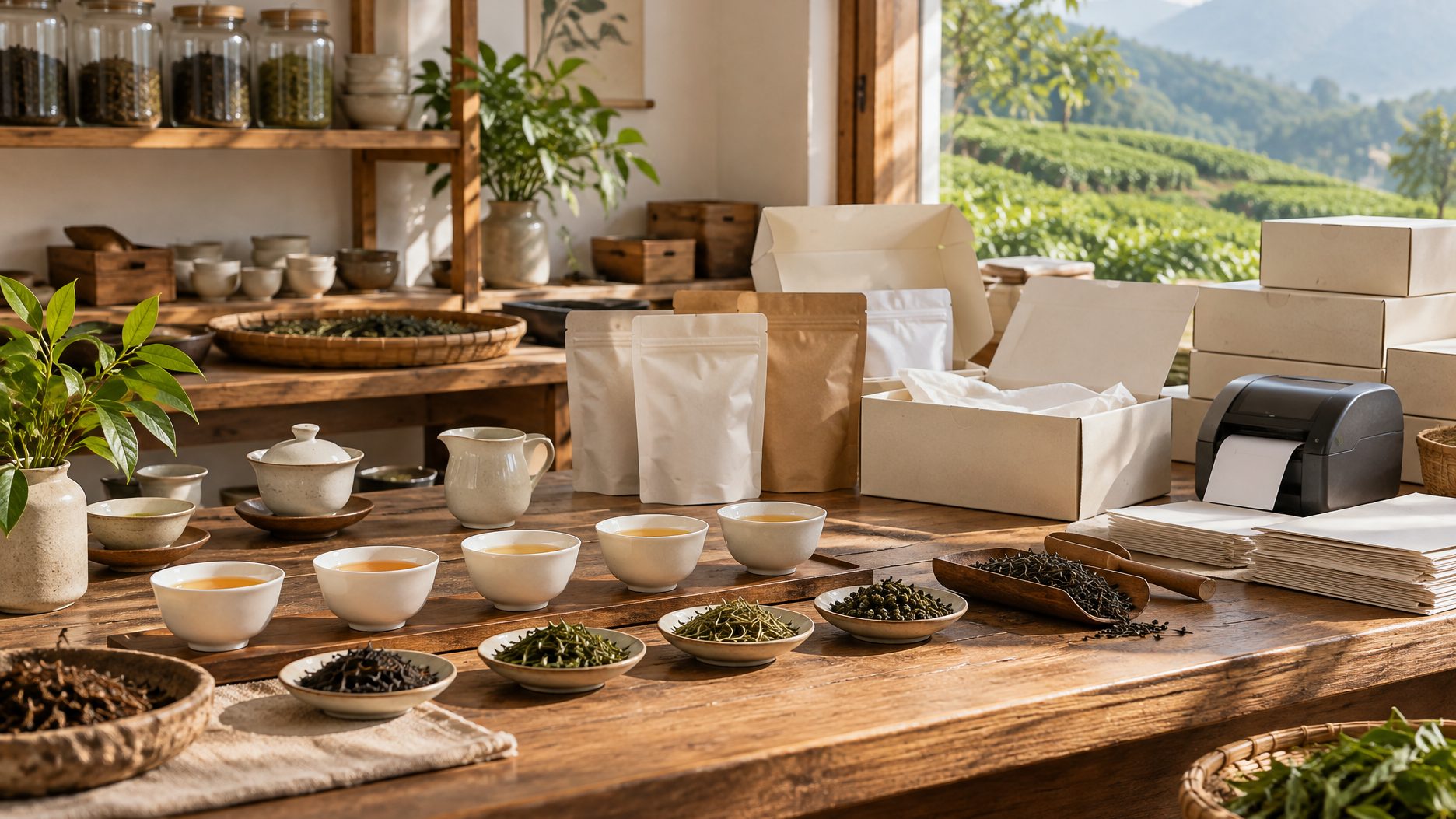

One desk, five buying shapes
The same catalog of 39 lines sells into five very different operations. A bubble tea brand buys a base by the tonne and lives or dies by blend consistency. A hotel buys tea as a costed item per room night and needs packs the night desk can open without training. A retail importer buys breadth and paperwork. An online seller buys packaging and repeatability, because the review section is the audit. A corporate buyer buys a date, a budget tier and a box that represents the company. The desk's job is to hold one catalog steady while the buying logic changes underneath it - same leaves, different specs. This page is the map; each channel has a program page behind it with the depth, and any of the five can start at the quote form.
The audience map
The matrix below is the shortest honest summary of how the channels differ. Pain points are listed in the order buyers raise them, the lines are the ones most often specified for that channel, and the last column links the program page with the detail.
| Audience | Core pain points | Lines that fit | Program page |
|---|---|---|---|
| Bubble tea and beverage brands | Blend consistency, strength through milk and ice, cost stability across seasons | CTC black tea, Dianhong, jasmine, matcha powder | Bubble tea brands |
| Hotels, restaurants and cafes | Cost per cup, service convenience, cups that survive a holding pot | English-style CTC, lemon black, barley, roasted Tieguanyin | Hospitality and cafes |
| Retailers and importers | Category breadth, certificates and document packs, label compliance | The full 39-line catalog, hub by hub | Retail and importers |
| E-commerce and D2C sellers | Differentiation, packaging that survives parcels, repeatability behind reviews | Gift boxes, pyramid bags, tea set bundles | E-commerce sellers |
| Corporate gifting buyers | Customization, budget tiers, delivery windows and phased delivery | Organic gift boxes, tea set bundles | Corporate gifting |
Two caveats keep the table honest. First, the line recommendations are starting points, not verdicts - a bubble tea brand that sells fruit-forward drinks may need herbal blends before any black tea, and a boutique hotel may want a gongfu roster instead of bags. Second, the audiences are not sealed rooms: organic retail buyers share the document pack of the retail program, and gifting programs borrow formats from e-commerce. The desk prices each channel's program on its own terms and says so in writing when a line does not fit the channel.
What actually differs between channels
Underneath the five logos sit three variables that decide most of the program. Format: the same Dianhong ships as foil-lined bulk bags to a beverage factory, as pyramid bags to a cafe group, and inside a ribbon box to a gift buyer. Documents: a beverage plant asks for spec sheets and batch lab panels; an EU importer adds MRL work under Regulation (EC) No 396/2005; a corporate buyer asks for organic certificate chains and clean origin records. Calendar: spring green teas have a harvest window that retail and gifting programs must respect, while pu-erh and herbal lines are year-round. The desk plans these variables up front - see MOQ and lead time - because they move the MOQ, the freight mode and the date the carton lands.
The procurement path every channel shares
- Brief: market, channel, cup profile, format, quantity - the five facts that shape the shortlist.
- Samples: in-stock teas dispatch in a typical 3-7 working days; custom blends need 7-15, both reference ranges.
- Cup and adjust: you taste against your own reference; the desk cups the same lots on the five factors - dry leaf, liquor, aroma, taste, wet leaf.
- Golden sample: the approved sample is sealed and both sides keep a copy; the seal becomes the spec.
- Bulk against the golden sample, with inspection before packing and third-party lab panels per batch.
- Freight and documents: courier for samples, air or sea for bulk, paperwork issued in your name.
The path is the same whether the carton ends up behind a bar, on a shelf or on a conference table. What changes per channel is what gets locked hardest: beverage programs lock the blend, hospitality programs lock the brew card, retail programs lock the documents, e-commerce locks the pack, gifting locks the date. Substitutions against a sealed golden sample require written approval - a swap without one is a claim, not a delivery.
Reference ranges you can plan against
| Program shape | Typical MOQ reference | Typical lead time reference |
|---|---|---|
| Bulk loose leaf, house blend | 50-100 kg per line | Samples 3-7 working days in stock; bulk 10-15 working days |
| Private label packed | About 100-300 kg or 5,000-20,000 bags per line | 20-35 days for standard packing |
| Pyramid bag filling | Around 100,000 bags per fill run | Inside the private label window; longer for new blends |
| Gift boxes, custom print | 500-1,000 boxes | 35-60 days where new packaging is cut |
| Tea set bundles | 300-500 sets | Confirmed per program; seasonal demand peaks apply |
Every figure above is a typical reference range from standing trade practice, not an offer. Binding numbers - quantity, packing, dates, terms - arrive in a written offer per program, which is also where phased delivery and mixed lines are worked out. Nothing on this site is priced, deliberately: tea moves with harvest outturn and a printed number goes stale in weeks.
Documents by channel
A short orientation before the program pages. Beverage and hospitality buyers should expect spec sheets, ingredient and allergen information, packing dates on lot records, and third-party lab panels per batch issued in the buyer's name. Retail importers add destination-market work - FDA food facility registration for the United States, MRL compliance for the EU, the positive list framework for Japan - plus labels made to the destination market's food labeling rules and HS 0902 classification agreed with the broker. E-commerce and gifting buyers add artwork and certificate chains for any organic claim, since organic wording follows the certificate, not the brochure. The certifications page lists what can be evidenced and how it is verified per program.
Pick your program
If the map is clear, the five program pages carry the depth, and their cards sit directly below this body: bubble tea brands, hospitality and cafes, retailers and importers, e-commerce sellers, and corporate gifting. Each covers pain points, lines and formats, the documents that channel needs, the sample-to-bulk path, and the reference ranges it plans against. If none fits cleanly - a tea house building a gongfu list, a wellness channel with organic requirements - describe the program to the desk anyway; the brief is read by a person who answers in writing, usually within two working days.