
What the blend is
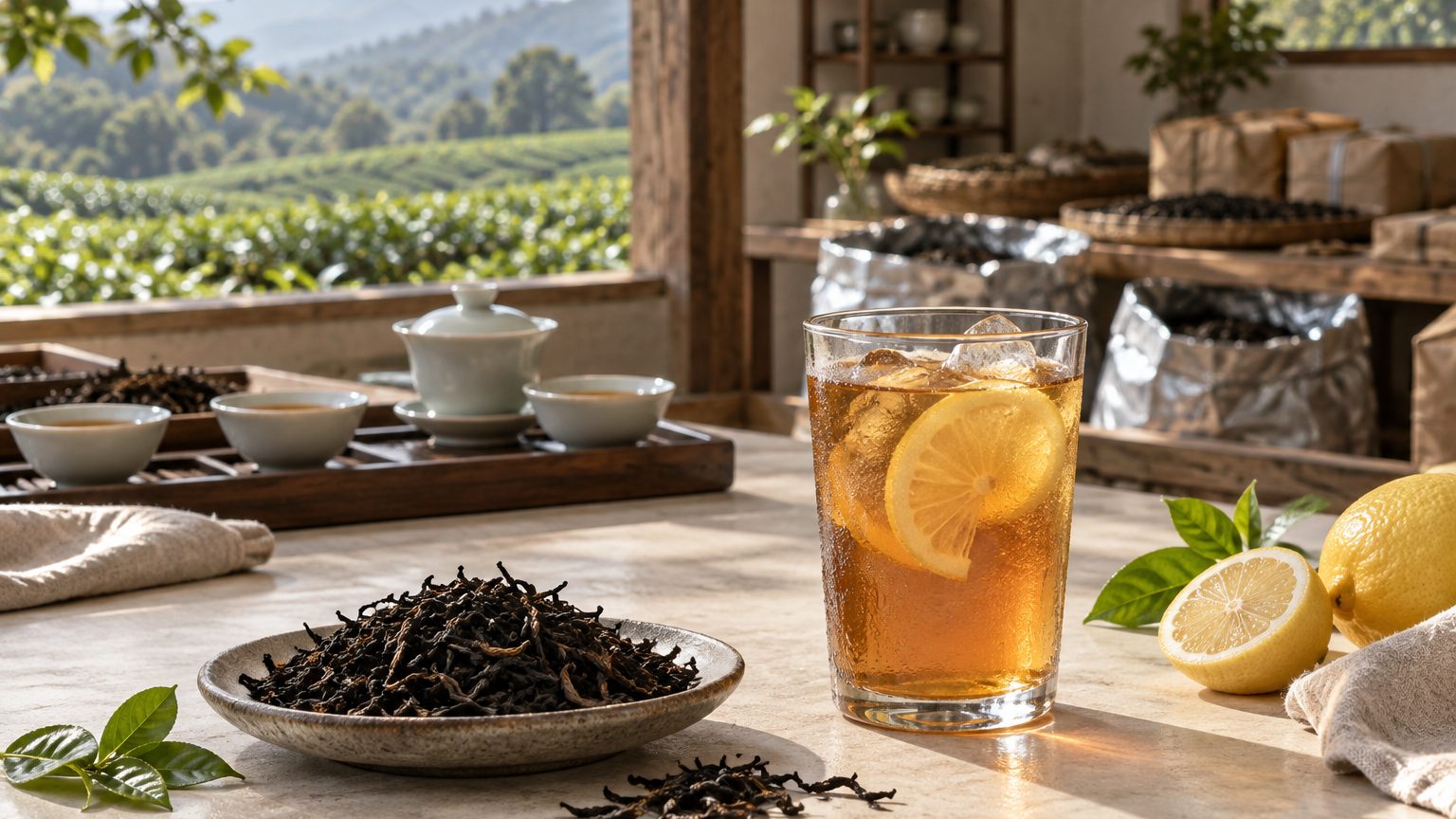
Lemon black tea is a flavored blend: a black tea base carrying lemon, either as dried peel mixed into the leaf, as a natural lemon flavor applied in the scenting drum, or - in most programs - as both. The blend is finished food manufacturing, done at packing facilities under the same batch discipline as any other program: a written recipe, a golden sample, incoming lots cupped against it. The category background - how flavored and scented teas are actually made, and where the label lines fall - is in the flavored tea explainer. What the rest of this page covers is the part buyers actually decide: the base, the lemon, the format.
Base tea first: the decision that drives everything
The lemon gets the menu attention; the base decides whether the blend is any good. A base needs enough body to stay present under citrus and enough cleanliness not to fight it. Candidates from the desk's own range: Chinese strip blacks for a rounder, honeyed cup; CTC for fast, hard extraction at bag doses; imported Assam or Ceylon when the recipe wants their specific malt or brightness. Base choice also drives the label - an origin-named base appears in the ingredient declaration, a generic blend does not - and the cost structure of the whole program. The desk's habit is to build the blend around two or three base candidates and let side-by-side cupping with the actual lemon load settle it; that is standard work under the blending program.
Lemon peel, natural flavor, and what the label says
Peel brings texture you can see - the flecks that make a pack look like what it claims - and a soft, zesty edge. Natural flavor brings uniformity: the same lemon note in month one and month twelve, regardless of how the peel harvest behaved. Most retail programs combine the two and get the best of each. The flavoring is applied after the base tea is finished, in controlled rounds, so the base's own character stays intact underneath. On labels, wording follows the destination market - what counts as natural flavor, how flavorings are declared, what the ingredient list must show - and the desk produces labels to the market's rules per program rather than reusing one global copy. Claims a market does not allow simply do not go on the pack.
The cupping sheet
| Factor | What a sound lot shows |
|---|---|
| Dry leaf | Black tea base with visible lemon peel flecks |
| Liquor | Bright red, clear |
| Aroma | Fresh lemon up front, tea underneath |
| Taste | Lemon zest, tea body behind it, clean finish |
| Wet leaf | Base leaf with peel fragments, no oily residue |
The balance on this sheet is the whole spec: lemon that leads and tea that supports, or the drink turns into flavored water. Every batch is cupped against the golden sample on exactly that axis before it ships.
Brew parameters: hot service and cold brew
| Parameter | Reference |
|---|---|
| Water temperature | 100°C |
| Infusion | About 3 minutes hot |
| Cold brew | Cold water, longer steep - gentler extraction, rounder cup |
| Iced service | Brew strong, pour over ice; holds clarity well |
The line is genuinely two-sided: hot lemon tea for winter menus, cold brew and iced for the rest of the year. Cold extraction pulls less bitterness, which suits the blend particularly well - the method and ratios are in the cold brew guide, and the iced-menu specifics, including a recipe that holds flavor in foodservice, are in the iced lemon black tea note.
Programs and formats
E-commerce sellers treat the line as a repeat-purchase flavored SKU and a natural seasonal hero; the merchandising angles are on the e-commerce program page. Cafes and hotels run it iced by the glass and hot by the pot from the same blend. Pyramid bags are the format that travels best into offices and foodservice - a 2-3 g single-serve that brews fast and looks the part; filled bags run as their own packing program under pyramid tea bags, with MOQ tiers of their own. Gift programs pair the blend with summery pack design rather than teaware.
Flavor consistency, packing and buyer checks
The risk that owns this line is drift: a new peel lot, a new flavor batch, a base substitution - any of them shifts the balance customers got used to. The countermeasures are procedural, not heroic: the flavor and base specified by lot in the recipe, the golden sample as the binding reference, per-batch cupping on the lemon-to-tea axis, and written approval for any substitution. Packing is about barriers - lemon aroma is volatile in both directions, so foil liners seal flavor in and odors out, and retail formats keep that barrier through to the shelf. Buyer checks: cup hot and cold against the golden sample, verify peel share and flavor batch on the record, check the label copy against destination-market rules, and confirm the document set before bulk. The quote form starts that file with a sample plan.