
The review section is the audit
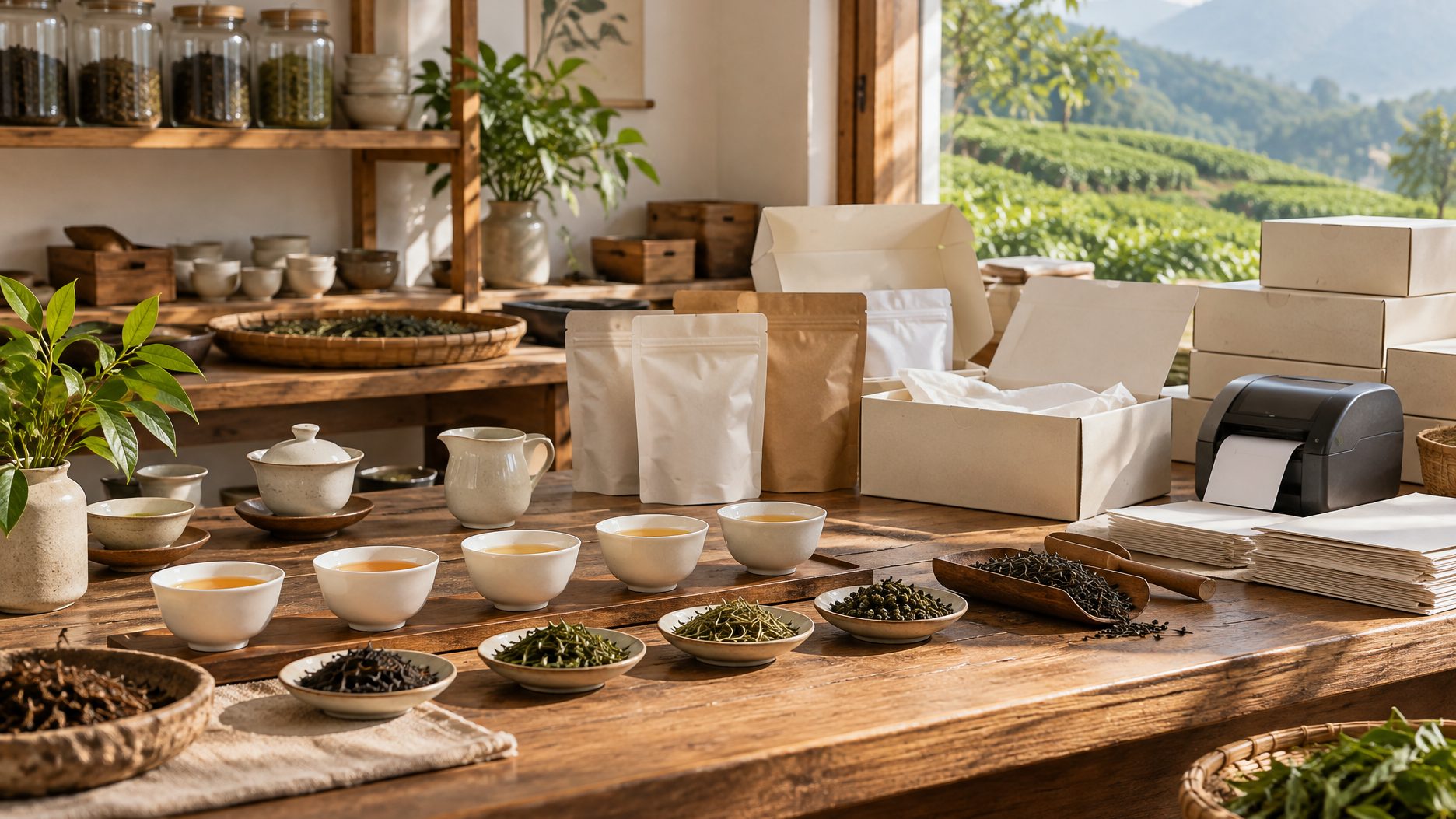
An online tea seller has no shelf, no barista and no sommelier between the product and the verdict - just the review that lands after the third reorder. That inverts the usual sourcing priority: differentiation gets the attention, but repeatability pays the bills. A blend that drifts between lots reads as a downgrade even when each lot is individually fine, and the review section keeps the memory forever. So this program is built around a locked spec: golden samples per SKU, batch retention, cupping against the seal before anything ships, and written approval for any component substitution. The pack is the other half of the product - it has to survive the parcel network, photograph honestly, and arrive looking like the listing promised.
Three formats that carry D2C
| Format | Why it works online | Reference MOQ |
|---|---|---|
| Gift box | The unboxing is the marketing; tiered by content and certification | 500-1,000 boxes |
| Pyramid bags | The subscription workhorse: consistent dosing, clean brewing, low mess | Around 100,000 bags per fill run |
| Tea set bundle | Lifts average order value; a gaiwan plus tea teaches the brewing ritual | 300-500 sets |
Bundles are where these combine: a starter set with a pot and two teas, a tasting flight of mini-tins, a seasonal box with an insert card. The desk quotes bundles as one program with one golden sample per SKU inside, which is what keeps a subscription honest month over month - e-commerce bundles that repeat covers the mechanics. Sellers with their own filling line can run the same SKUs from empty pyramid bags with tags instead of filled stock.
Packaging decisions that decide margins
Online, the pack does three jobs at once: it protects the tea through last-mile parcel abuse, it presents like the listing photos, and it carries the claims. Foil-lined pouches with one-way valves, nitrogen flushing for aroma-critical lines, and oxygen-barrier thinking for greens are the standard toolkit - the mechanics are on packaging options and the failure modes in oxygen barrier packaging. Claims are the discipline point: health wording stays inside what the market's labeling rules allow, caffeine statements use widely published typical values, and organic wording appears only on certified material with the chain verified. A listing that outruns its paperwork becomes a refund queue; the line drawing is in health claims on tea labels.
Compliance for online sellers
Selling direct does not exempt anyone from the destination market's rules; it just removes the importer who used to notice them first. Labels are produced to the market's food labeling requirements - ingredients, net weight, origin, nutrition where required - with artwork handled through the private label program. Batch lab panels are issued in your name, which is the first thing a marketplace or a regulator asks to see. US-bound programs sit under FDA food facility registration; EU programs plan MRL work under Regulation (EC) No 396/2005 as amended. Bag materials come as food-grade PET nylon or PLA with material statements on request, and PLA claims, where made, follow the material report - the trade-offs are in PLA versus nylon material facts.
From first carton to reorders
The path runs brief to samples to golden sample to bulk - the same spine as every program here. Sample dispatch is typically 3-7 working days for in-stock teas and 7-15 for custom blends; bulk runs 10-15 working days for in-stock lines, 20-35 days for standard private label, and 35-60 days where new packaging tools are cut - reference ranges confirmed in writing per order on MOQ and lead time. Direct-to-fulfillment shipping is arranged as part of the program: cartons can land at your 3PL with the pack plan already applied, and split deliveries are quoted in the offer. An illustrative case, generic on purpose: a subscription brand rebuilds its monthly box around one sealed golden sample per SKU and a fixed pack spec; cancellation reasons shift from quality complaints to schedule, which is the cheaper problem to have.
Planning around peaks
Two calendars matter online. The gifting calendar stacks demand into the fourth quarter, and packaging lead times stretch exactly then - new-print boxes need the long end of the 35-60 day reference window, so gift programs are reverse-planned from the first ship date, not from the order. The harvest calendar matters for freshness-led SKUs: spring greens peak within months of picking, so listings that promise the season should buy against the harvest window and say so on the page - spring harvest timing explains the windows. The desk holds reserve stock for programs that sell year-round and says plainly when a SKU's season is over, per the buying calendar. To start, send the listing plan to the desk; the shortlist comes back in writing with the ranges attached.