
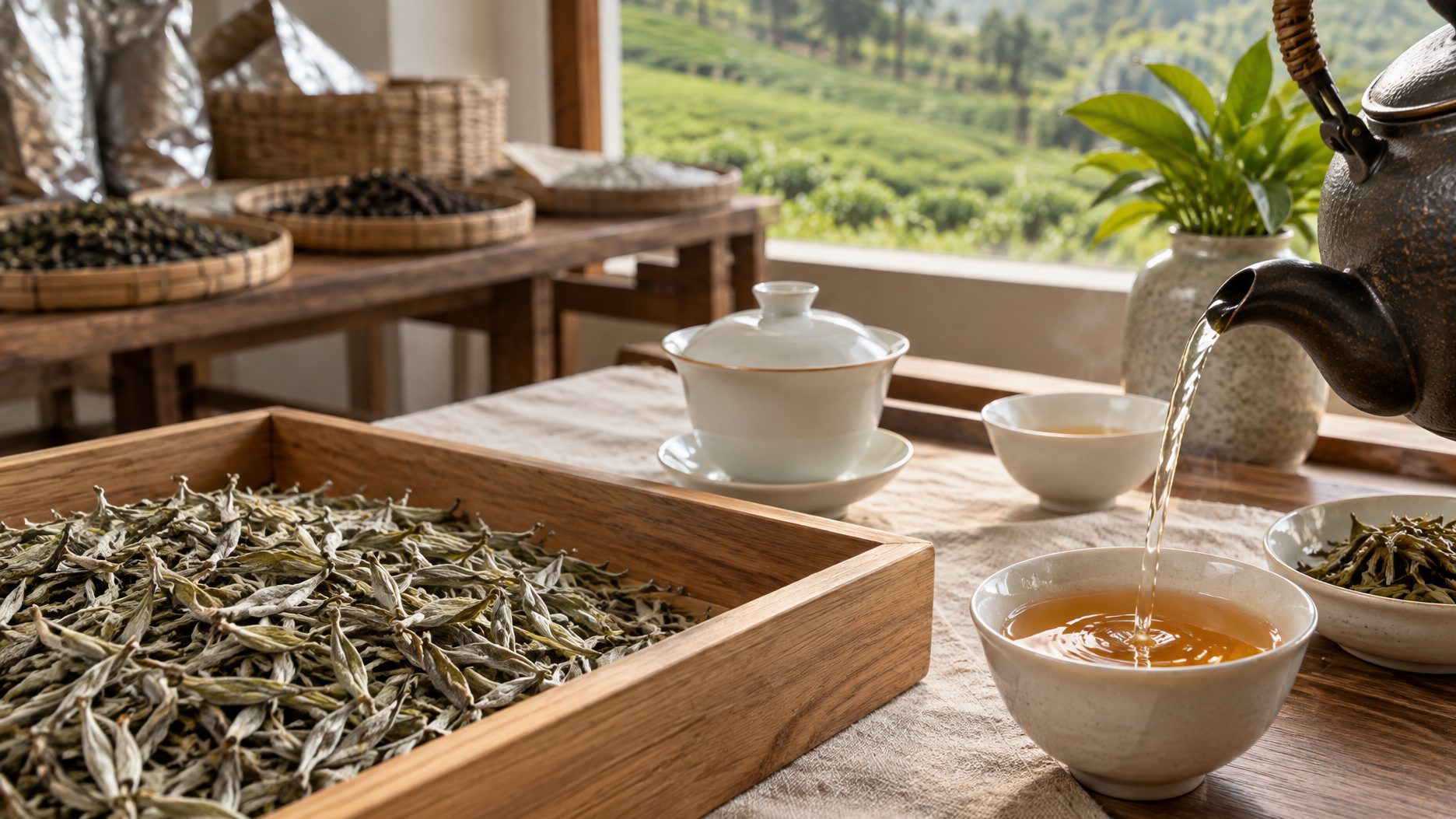
What minimal processing means in the cup
White tea processing is subtraction. Picked leaf is withered slowly - spread thin in sun or indoors depending on the day and the maker - then dried. There is no fixing step and no rolling, so enzymatic activity never fully stops: a slight, slow oxidation continues on its own and is accepted as part of the style. In the cup that means pale straw-to-apricot liquor, downy and floral sweetness, and almost none of the bitterness edge other categories carry. It also means quality cannot be engineered back in: clean, patient withering produces the downy aroma buyers pay for, and a rushed or humid wither produces stewed, smoky or musty notes that no later step can remove. Every lot sheet here states withering conditions and packing date, because in this category the process notes are the product.
The four lines compared
| Line | Picking standard | Liquor | Character | Best use |
|---|---|---|---|---|
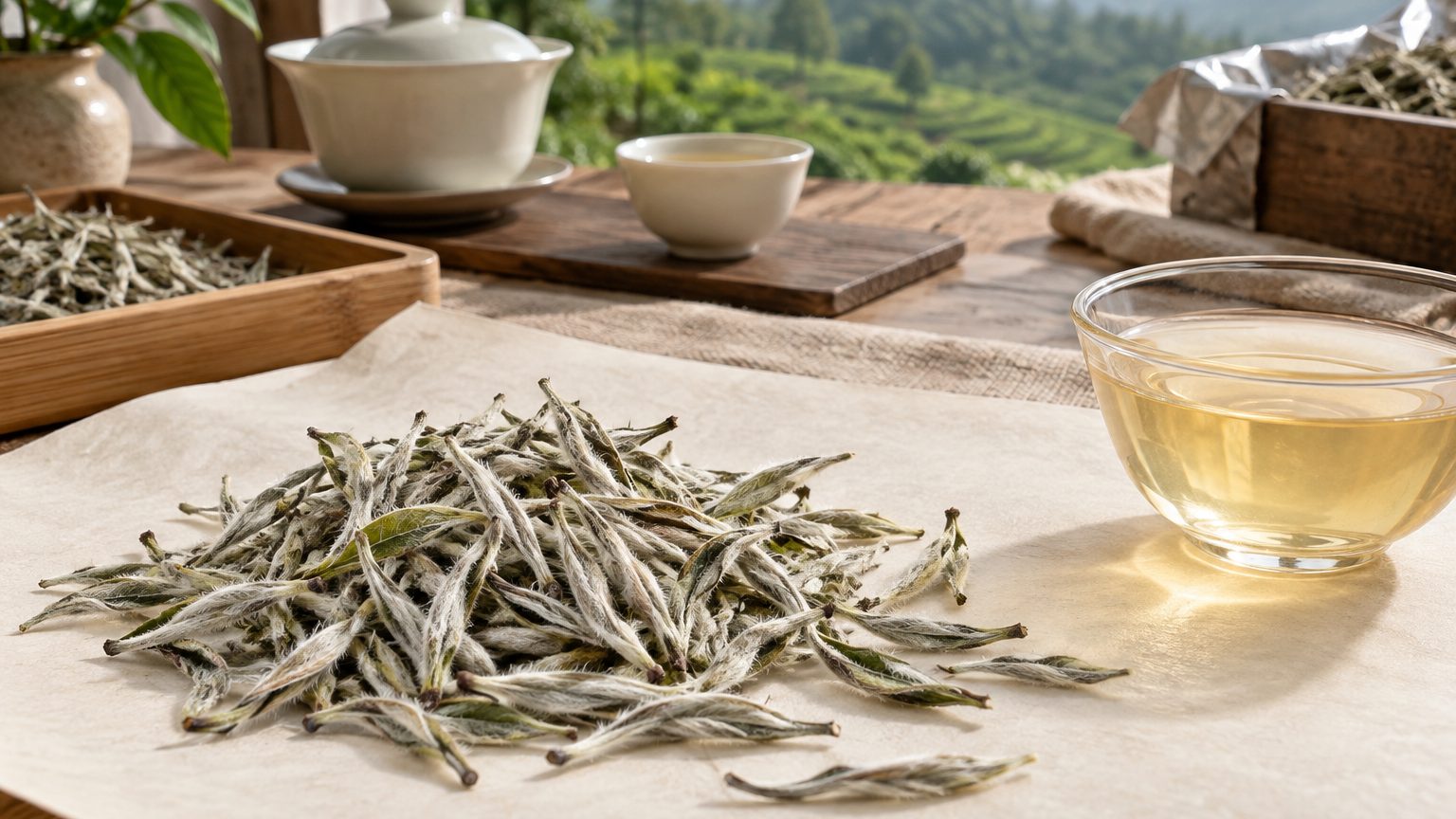
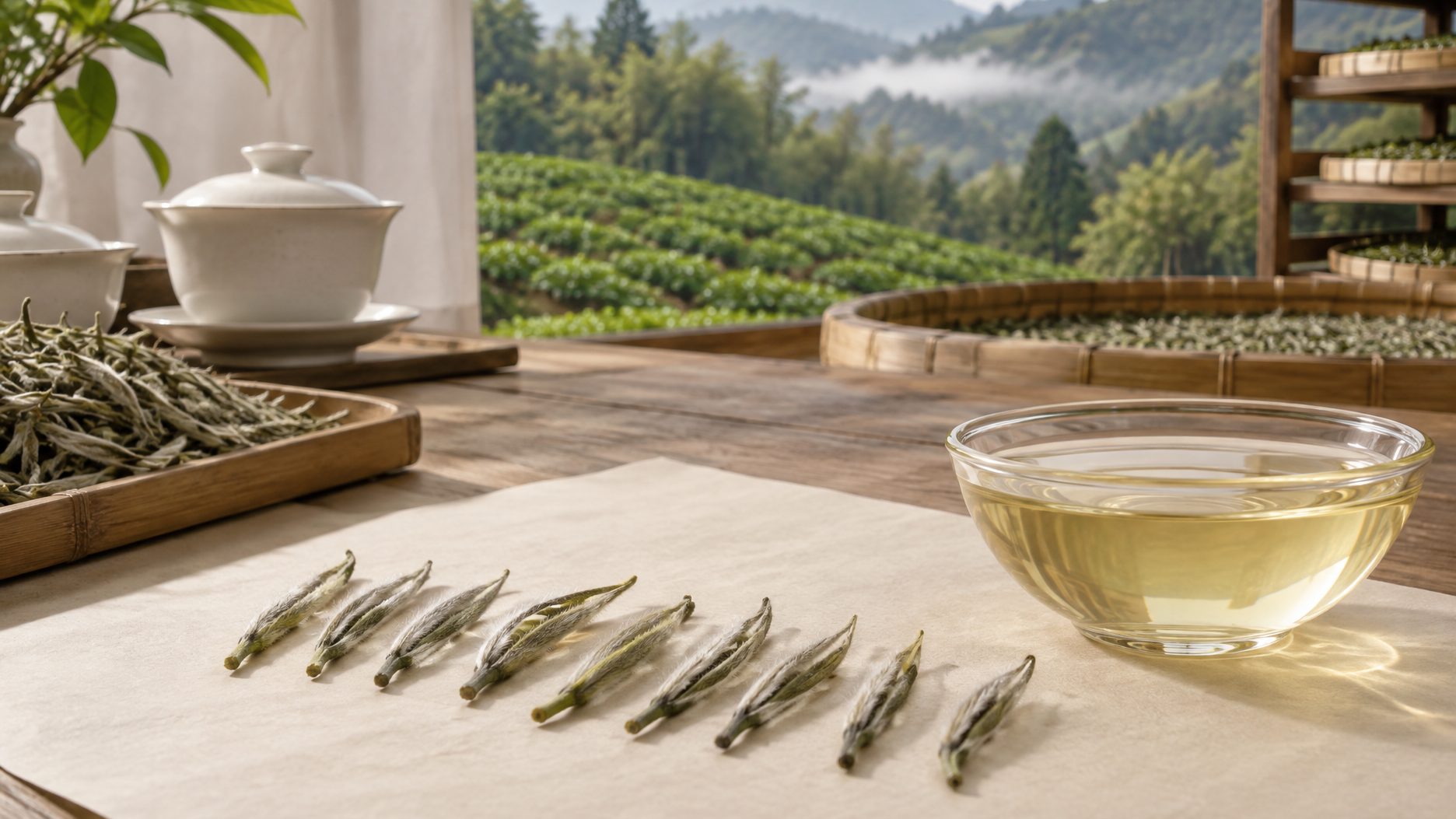
| Silver Needle | Unopened buds only | Pale apricot | Downy, sweet, delicate | Premium retail, gifting |
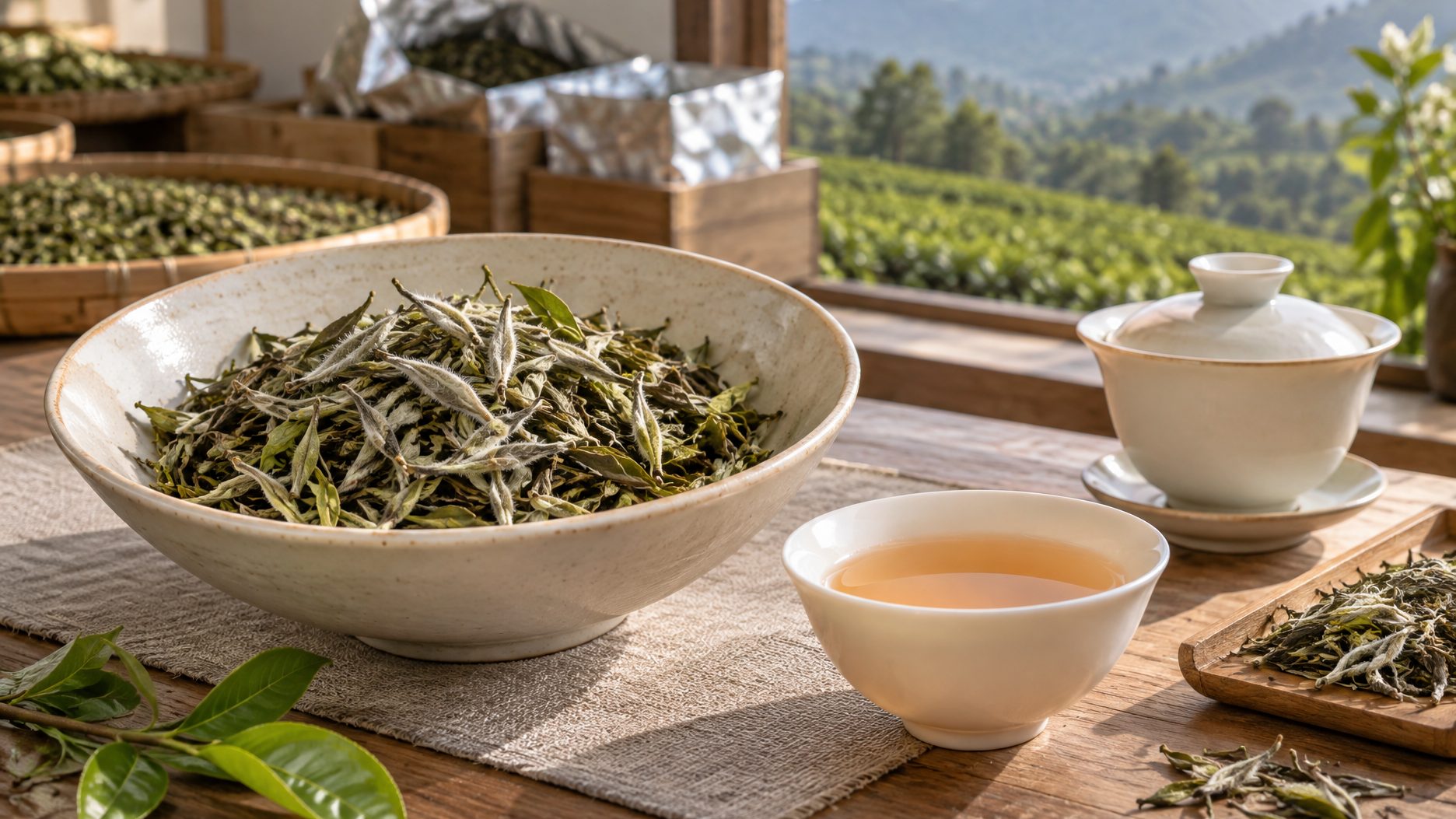
| White Peony | One bud, one to two leaves | Apricot yellow | Floral with downy depth | Everyday premium, cafe pots |
| Gongmei | Group cultivar, bud with two to three leaves | Orange-yellow | Round and sweet; deepens when aged | Retail, foodservice pots |
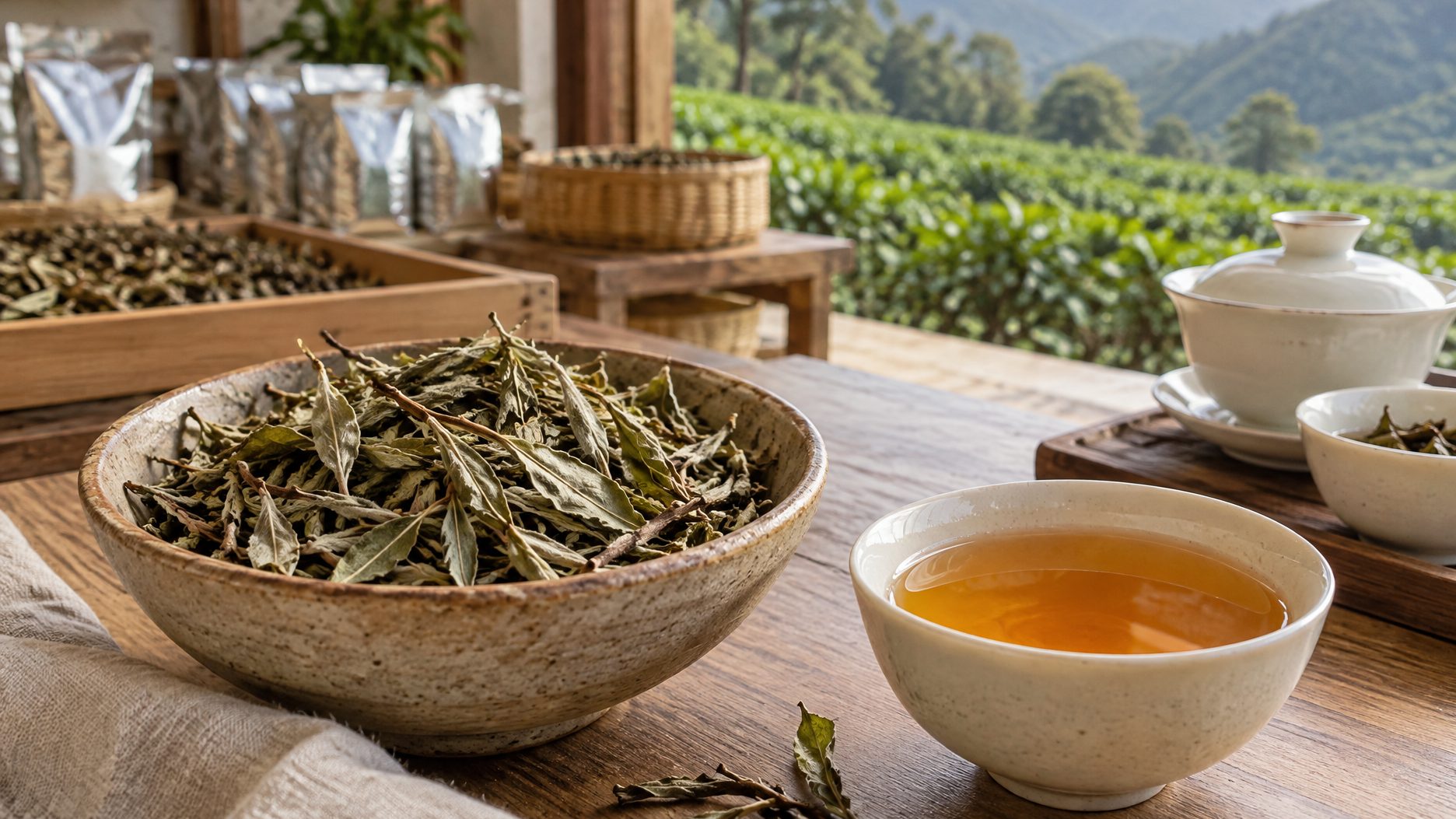
| Shoumei | Mostly leaf with prominent stems | Orange-red when aged | Date and palm-leaf notes | Aged lots, boiled service |
The four lines are one family at four points of a picking ladder, from all-bud to mostly-leaf material out of Fuding and Zhenghe in Fujian, with Gongmei also coming from Jianyang. Bud-only material yields little per garden, which is why Silver Needle anchors the top of a range; each step down adds leaf, body and volume at a friendlier level without leaving the category's quiet character.
Building a white tea range
A working retail range usually takes three of the four: Silver Needle as the hero pack, White Peony as the daily drinker that keeps customers returning, and Shoumei as the aged or boiled option that differentiates the shelf. Gongmei slots between Peony and Shoumei where a rounder, sweeter cup is needed at foodservice volume. The head-to-head between the two name lines - bud versus leaf, and what it does to both cup and cost - is laid out in this comparison. What the range should avoid is presenting four near-identical packs; the lines earn their slots by tasting and brewing differently, and the desk will say when a fourth line adds nothing to a channel.
Aging white tea: a product decision, not an accident
Part of this category is sold aged on purpose, and the desk treats aging as a program, not a warehouse coincidence. Shoumei is the classic candidate: over years its liquor deepens toward orange-red and the cup gains date and dried-fruit sweetness with a soft herbal finish, which is why aged lots anchor boiled-service menus and quiet-luxury retail. Gongmei ages along a similar path. Silver Needle is usually kept fresh, where its downy delicacy is the point. Whichever way a program goes, the age claim is stated on the lot record and storage history travels with it: dry, odor-free conditions away from light decide whether aging builds character or just collects dust. What changes year by year, and how to store for it, is covered in the aging guide.
Spring harvest and the sourcing calendar
White tea is a spring crop with essentially one main season, which concentrates the year's buying into a few weeks. Withering weather is the variable a buyer cannot order: a warm dry stretch produces the clean downy aroma that defines the category, while a damp season forces slower indoor work and tighter supply. The practical rhythm is to cup samples as the season lands, lock the reference, then take bulk within weeks and store it sealed and cool for the year. MOQ follows the desk's standing reference range for bulk loose leaf - 50-100 kg per line as the typical example - confirmed in writing per program, with aged lots quoted against available stock. The calendar mechanics are on the MOQ and lead time page.
Where white tea sells
Premium retail and gifting are the natural home: Silver Needle's visible buds and quiet story need no explaining at a gift counter. Cafes pour White Peony by the pot, where its floral cup survives an afternoon on the menu. Aged Shoumei suits tea houses and boiled service, a cup that holds from a morning boil through an afternoon top-up. E-commerce does well with clear age statements and honest brewing guidance, since white tea rewards exactly the slow, gentle brewing that instruction cards can teach. For channels that ask about caffeine, the honest line is that white tea is often cited as gentler, but bud ratio and brewing time move the number more than the category name does.
What buyers check before bulk
- Harvest year and any age claim, stated on the lot record.
- Withering cleanliness: no stewed, smoky or musty off-notes in the cup.
- Downy content and intact buds on Silver Needle; even leaf on Shoumei.
- Moisture and packing integrity - foil liners, sound cartons.
- Lab panel per batch to your market's scope, issued in your name.
Open the line pages for cupping sheets and brew parameters, or send the market and profile you need to the desk for a written sample plan.