
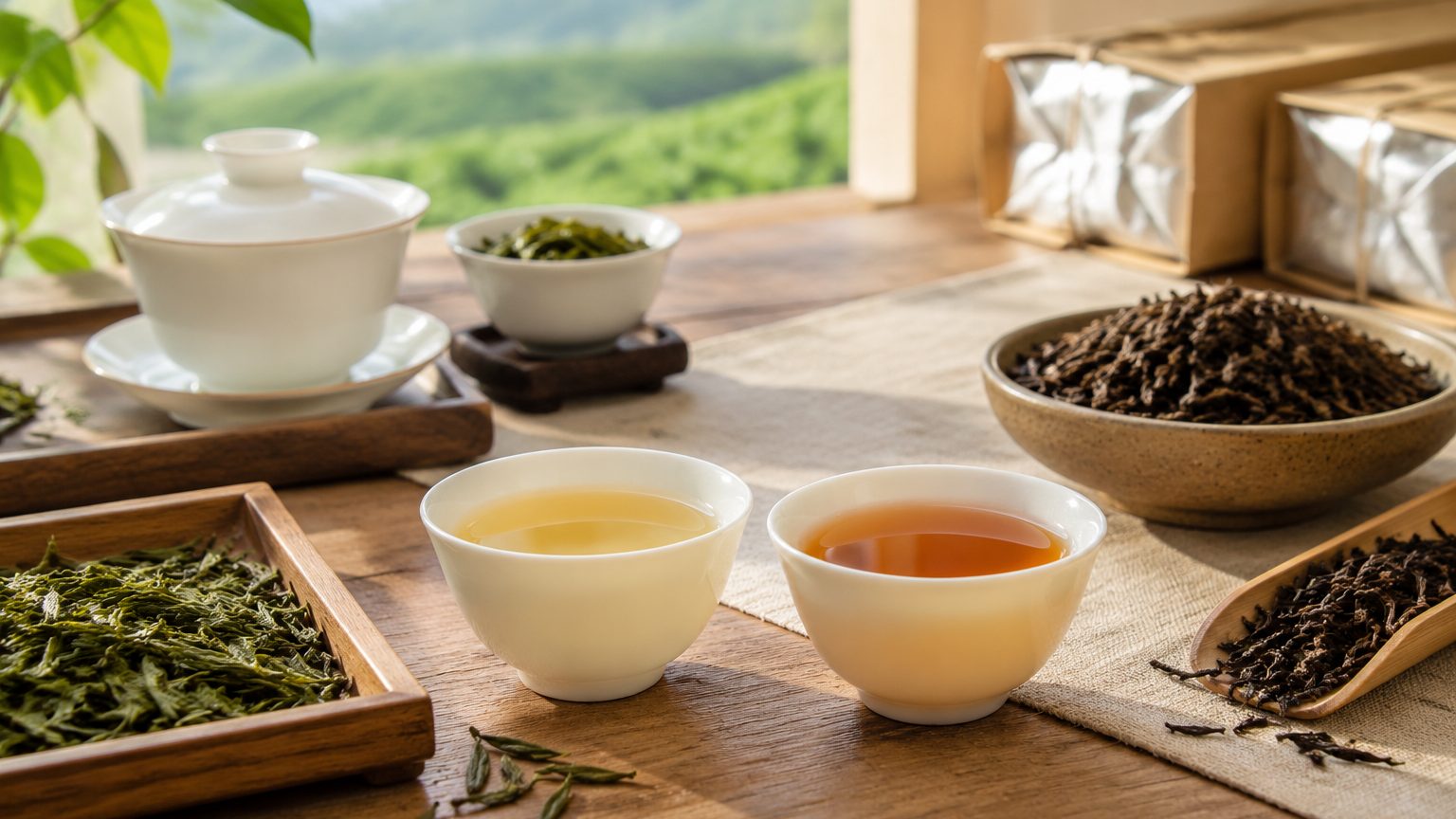
The short answer
Shade is the whole story. Sencha grows in full sun and is steamed, rolled and dried into the fresh, brisk reference cup of Japanese green tea - yellow-green liquor, a marine-savory note, a light astringent edge. Gyokuro is covered for roughly twenty days before picking, a method the trade calls covered cultivation, and the shaded leaf shifts its chemistry toward the savory amino compounds: the cup turns deep green and brothy, with the nori-like aroma and thick umami the style is known for. The two even brew differently - gyokuro at 50-60°C in very little water, sencha at 70-80°C at a standard ratio - the widest gap anywhere in the green tea family. One is a tasting-room experience; the other is a daily habit. Programs with ambition stock both and let the contrast do the teaching.
Twenty days under cover
About twenty days before harvest, gyokuro fields are covered with screens or shelves that cut the sunlight reaching the leaf. Blocked from business as usual, the plant slows the conversion of its savory amino compounds into the bitterer fractions that sun-grown leaf accumulates, so the shaded leaf keeps more of what tastes like broth and sweetness. That is the widely published account of what covering does, and the cup confirms it: where sencha leads with freshness and a clean edge, gyokuro leads with a thick, savory texture that lingers. Once the covering period ends, processing rejoins the sencha path - steaming, rolling, drying - which is why the two are best understood as one method with a switch thrown early. Matcha's raw material is shaded the same way before steaming and milling, which the culinary matcha line covers from the powder side, so a buyer who understands gyokuro is already halfway to understanding why matcha prices as it does. The gyokuro line page and the sencha line page carry the per-line sheets behind this section.
Cup by cup
| Aspect | Sencha | Gyokuro |
|---|---|---|
| Pre-harvest | Full sun | About 20 days covered |
| Liquor | Yellow-green | Deep green |
| Aroma | Fresh, marine | Nori-like; the trade's covered aroma |
| Taste | Fresh, brisk, light edge | Thick umami, savory-sweet |
| Districts | Shizuoka, Kagoshima and others | Uji and other named districts |
| Dose and water | 3 g / 150 ml | 4 g / 100 ml |
| Water temperature | 70-80°C | 50-60°C |
Tasted in sequence, the pair makes the lesson obvious. Sencha snaps: freshness first, the sea note underneath, an edge that fades cleanly. Gyokuro surrounds: a low, textured savory wave with sweetness arriving from underneath. Staff who taste them back to back can explain the difference to a customer in one sentence, which is most of the selling work done.
Brewing: the widest gap in green tea
Sencha brews like a disciplined green: standard ratio, water below the boil, a short steep watched by the clock. Gyokuro brews like a concentrate: 4 grams into only 100 ml, water at 50-60°C, and patience - the cool water protects the amino-driven sweetness, while hotter water would drag the bitter fraction forward and flatten everything the shading paid for. The difference has operational weight. Sencha scales to any kettle and any venue; gyokuro wants temperature control and small vessels, and it shows best in seated, unhurried service. The water temperature note places both frames on the full green ladder. Venues without temperature-controlled kettles should decide how - or whether - they will serve gyokuro before it reaches the menu, because an uncontrolled brew wastes the most expensive leaf on the shelf, and no amount of storytelling recovers a stewed cup. A thermometer in the water for the first week of staff training settles the habit faster than any instruction card, and costs less than a single wasted pot of shaded leaf.
Which shelf each belongs on
Sencha is the daily driver of a Japanese program: cafe pots, retail staples, office service where the frame can be held, and the reference point every other steamed green gets measured against. It carries volume and it teaches the style. Gyokuro is the apex product: tea houses pour it in small cups as theater, gifting programs use it when the box must say something, and tasting flights use it to show what shading does to the same leaf. On a retail wall the two stack rather than compete - sencha anchors the middle shelf, gyokuro crowns it, and genmaicha holds the comfort seat below with the rice-and-leaf comparison covering that pairing. Subscriptions sequence them deliberately: sencha in the early months to establish the style, gyokuro as the highlight month that renews the commitment. Arranged this way, the whole family stacks in one rail, from pan-fired mainland lines through the steamed Japanese style.
Why gyokuro costs more
The premium has visible causes, not mystical ones. Covering demands structure and labor: screens or shelves built, maintained and timed to the calendar three weeks before anyone earns anything. Shaded leaf grows more slowly, so the same field yields less material across the covering window. The districts with the deepest reputation - Uji foremost - carry their own premium, and the delicate handling the leaf needs after picking adds cost at every step. None of this makes gyokuro a better daily cup; it makes gyokuro a different product, priced for the occasions it serves. Compare quotes within the line - district, covering period and season stated - rather than against sencha, and treat reference order sizes and lead windows on the MOQ and lead time page as starting frames to be confirmed in writing per program.
Choose gyokuro if, choose sencha if
Choose gyokuro if the program needs an apex: seated service and tasting menus, premium gifting, a connoisseur shelf that needs a name with weight, and a team that can control water temperature as a matter of routine. Choose sencha if the program needs a foundation: volume pours, everyday retail, subscriptions and any venue that wants the Japanese steamed style on the menu without rewriting its kettle workflow. Programs with room carry both and let them mark two different moments - the daily cup and the occasion above it. To hear the contrast in your own glassware, request both lines through the quote form, brew each at its own frame with a thermometer in the water, and note which cup your team serves identically on the tenth pour of a busy shift - that answer usually decides the opening quantities.