
The short answer
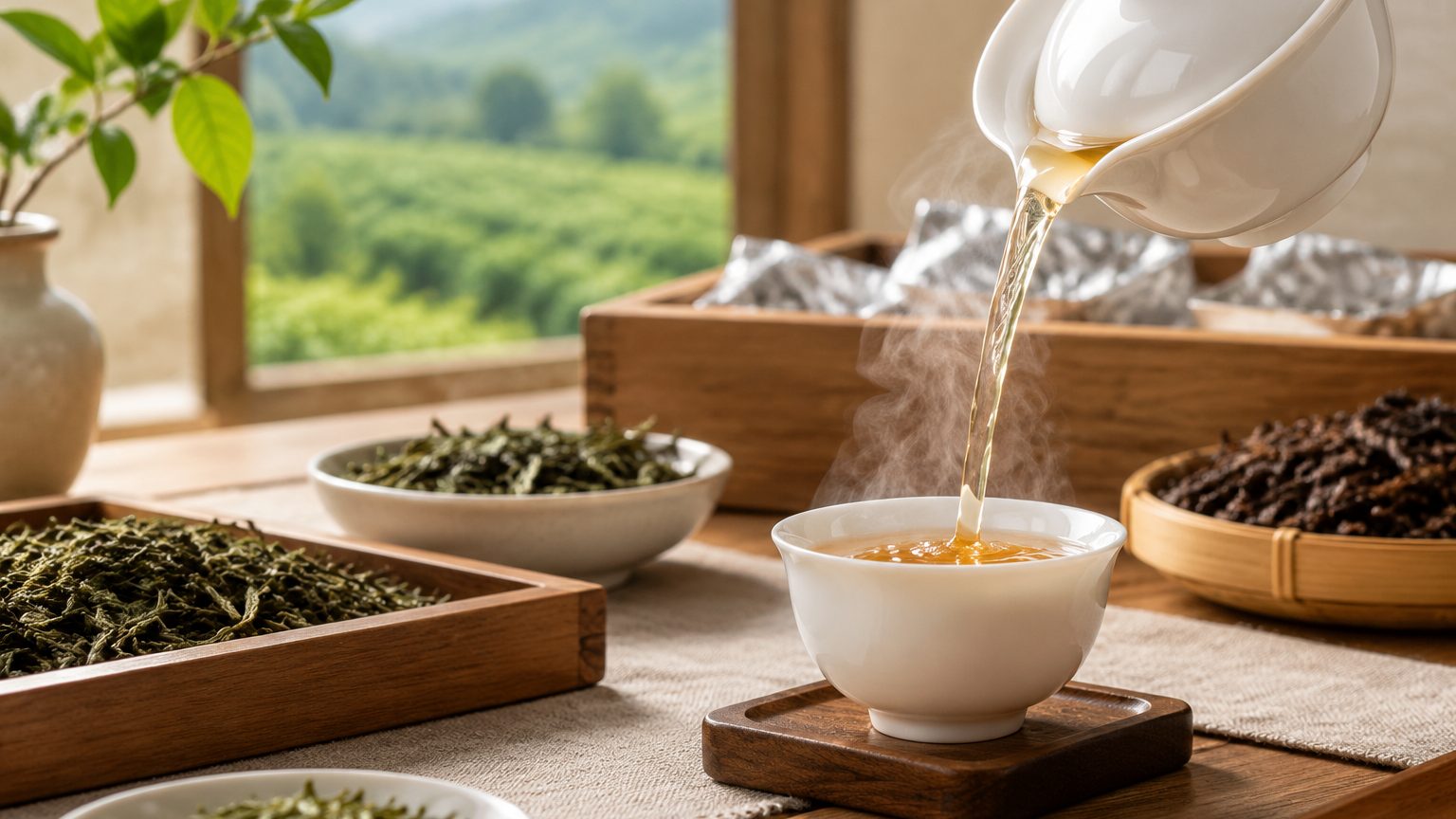
Gongfu brewing means a high leaf rate in a small vessel, water at or near a boil, and short infusions repeated many times. The working frames run around 7 grams of leaf per 110 ml for rolled and rock oolongs, 5-7 grams per 110 ml for ripe puer with a quick first rinse, and 3-5 grams per 110 ml at slightly cooler water for delicate whole-leaf blacks - each a trade reference point that shifts with the lot, confirmed on the brew sheet rather than assumed. The method exists for teas that repay it: styles whose flavor unfolds across six or more infusions, where each round is a snapshot of the leaf at a different stage. For a menu, that multi-round arc is the product - and the arithmetic and the training around it are what make it sellable.
The minimal kit
The equipment list is shorter than the ceremony suggests. A gaiwan - a lidded porcelain bowl - is the core tool: the lid holds back leaf while pouring and doubles as an aroma check. A pitcher, so every round is decanted fully and evenly mixed before it is shared. A strainer, because leaf fines in the cup read as carelessness. A scale reading to a tenth of a gram, a timer, and small cups. A heat-safe tray completes it. That is the whole station, and it is exactly what the desk's tea set bundle assembles from ceramics partners for hospitality programs. Clay pots and tasting cups earn their place in a dedicated tea room; a cafe running gongfu as a menu format needs the six tools above and nothing else. Anything more is decoration that has to be cleaned.
Water and space are the last two entries on the real list. The station wants a kettle that reaches a full boil quickly and holds it, filtered water as a standing assumption, and about half a square meter of heat-safe surface where pouring is unhurried - gongfu squeezed onto a busy espresso corner fails for logistics before it fails for skill. The economics of the kit are friendly: the vessels cost a fraction of what the leaf they serve costs over a season, and the same set that runs a cafe session runs one at home, which is why retail programs bundle the two and why the bundle earns its shelf space. Ask for the bundle specified with the program and the desk will match vessels to the teas on the list rather than to a catalog default.
Parameters that travel
| Tea | Leaf per 110 ml | Water | First round |
|---|---|---|---|
| Tieguanyin | 7 g | 95-100°C | Fast decant |
| Rock oolong (Da Hong Pao, Rougui, Shui Xian) | 7 g | 95-100°C | Fast decant |
| Phoenix Dancong | 7-8 g | 95-100°C | Fast decant |
| Ripe puer | 5-7 g | 100°C | Quick rinse, then decant |
| Jinjunmei | 3-5 g | 90-95°C | Short pour |
Those frames are reference points per lot and style, tuned by cupping and written on the brew sheet; the pattern to internalize is small vessel, generous leaf, full decant. Greens and most flavored teas rarely justify the format - their character arrives in one extraction - which is why gongfu service concentrates on oolong, puer and a few whole-leaf blacks.
Counting cost per session, not per cup
The first reaction to a 7-gram dose is that gongfu is expensive tea service. The arithmetic says otherwise, provided the math is done in the right unit. A session, not a cup, is what the leaf is bought for: seven grams steeped through six or more rounds delivers the same number of drinking cups as roughly a gram per cup, and the later rounds are not leftovers - for many oolongs they are the reason the leaf was bought. The working calculation for any multi-infusion program is effective leaf per drunk cup, which is session grams divided by usable rounds, and it is the figure that should sit next to the price on the program's internal sheet; the strength and cup-cost note runs the same arithmetic for bag and mug service. What ruins the math is a session cut short - four rounds poured and the leaf retired while flavor remains. Train staff to take a session to its honest end, stretching rounds as the liquor thins, and the format's cost per cup lands where it should. Menu phrasing helps the math along: sell sessions and flights rather than cups, so what the customer orders matches how the leaf is actually consumed.
Training the method into the team
Gongfu fails as a menu format in one specific way: it is done beautifully once by an enthusiast and then slowly degraded by everyone else. The defense is the same discipline as any other station. Recipe cards per tea with dose, water, and round timings. Doses weighed, never scooped. The full decant as a drilled habit - liquor leaves the leaf every round, or the session turns stewed by round three. A reference session brewed from the approved sample, so new staff taste what the goal actually is. A thirty-second table script, because the ritual sells better when the server can narrate it: what the tea is, why the small pot, how many rounds to expect. And a weekly calibration where the team tastes the current output against the reference. None of this is specialized knowledge; it is station discipline applied to a format that looks like art from the outside. The Tieguanyin brewing note shows what a finished parameter sheet looks like for one line.
When gongfu is the wrong tool
Be honest about the edges of the format. It is slow: a six-round session takes twenty minutes of attention, which a self-serve counter or a peak-hour rush cannot give. It is sit-down service: the rounds assume a customer at a table, not a lid on a paper cup. And it is fragile in holding: no gongfu round survives ten minutes in a thermos with dignity. The right deployment is as a feature - a tasting flight, an afternoon oolong service, a scheduled session on weekends - while the volume menu runs mug and bag formats built for speed. Programs the desk works with typically run both side by side: gongfu as the reason people sit down, batch formats as the reason the line keeps moving. Send the format plan through the quote form and the samples will be cupped at the frames the format actually uses, per lot and confirmed in writing.