
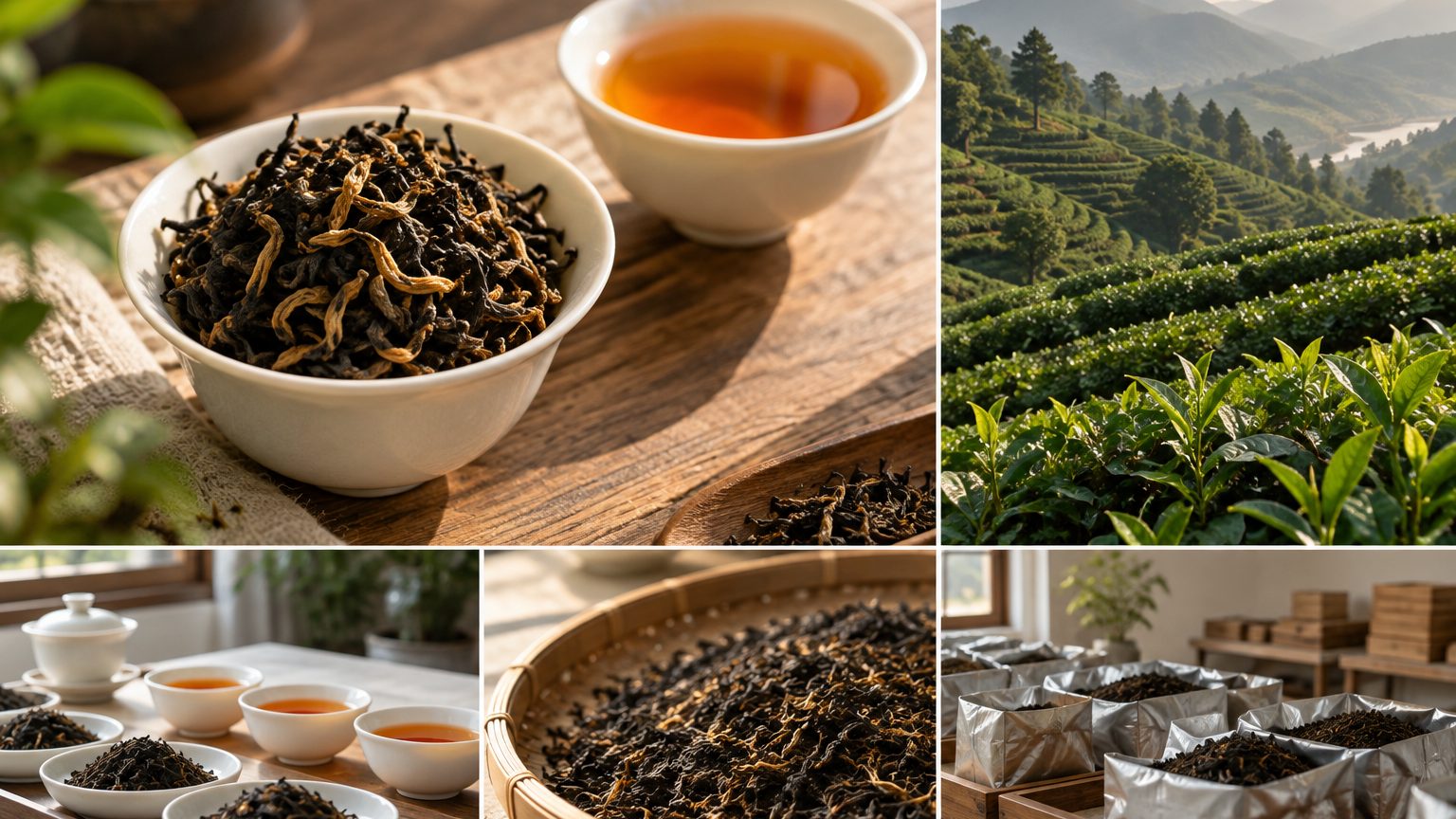
What Jinjunmei is, and why buds are the whole story
Jinjunmei is a black tea with an unusually strict picking standard: the bud alone, nothing else. The making is done by hand at small volume, and no smoke ever touches the leaf. It grew out of the Lapsang Souchong tradition as an unsmoked answer to the same terroir, and in a short span it reset what many buyers expect from a Chinese black tea - golden liquor, honey and floral aromatics, sweetness that needs no sugar. The picking standard explains the cup. Buds carry the fine down that turns the liquor golden, and the sweetness in the cup is the bud's own character, not a processing trick. That is also why the line cannot be scaled casually: every kilogram of finished tea is thousands of individual picks, and the desk says so up front rather than promising bud-only volume that the hills did not make.
Terroir: the Tongmu hills
The tea comes from the same narrow valley system that produces lapsang: steep, misty, cool, with slow growth that concentrates flavor into small material. The high humidity and wide day-night temperature swing suit bud development, and the valley's tea culture - generations of smallholder makers - is what makes hand finishing at this scale possible at all. Lots are traceable to the area and to the maker, and the desk's file for each program carries the origin record. How that network is organized, and what happens when a lot disappoints, is covered on the origin network page.
Processing: handwork, patience, no smoke
The sequence is the classic black tea one - withering, rolling, full oxidation, drying - executed at bud scale. Withering is the long step and the delicate one: buds are laid thin and turned by hand until they lose just enough moisture to roll without breaking. Oxidation is watched by feel and smell rather than clock, and drying locks the golden color. Nothing is rushed, which is why the finished leaf shows whole, unbroken buds rather than the torn edges of machine handling. When buyers ask why the line prices above leaf-grade blacks, the honest answer is picking and handwork intensity, not marketing - and the cup usually settles the argument before the invoice does.
The cupping sheet
| Factor | What a sound lot shows |
|---|---|
| Dry leaf | Slender buds, golden-black, tight and even |
| Liquor | Golden, bright, clear |
| Aroma | Honey with floral and ripe fruit notes |
| Taste | Sweet entry, honeyed body, clean finish |
| Wet leaf | Whole buds, red-brown, glossy |
The first check costs nothing: open the bag and look. True bud-only material shows slender buds with golden down and almost no leaf; a leaf-and-bud mix sold as jinjunmei shows flat leaves within the first handful. The desk sends the dry leaf and the cup together precisely so the two can be cross-checked on arrival.
Brew parameters
| Parameter | Reference |
|---|---|
| Leaf to water | 3-5 g / 110 ml gaiwan |
| Water temperature | 90-95°C - below the boil |
| Infusion | Short repeated rounds in gongfu service |
| Teapot variant | Same ratio scaled up, about 3 minutes |
The temperature matters more than with leafy blacks: boiling water scalds bud material and flattens the honey note into sharpness. The parameters print on the lot sheet, and for retail packs the desk recommends the same figures on-pack so the customer's first brew matches the sample that won the program.
Season: a spring-defined program
Bud-only picking ties the line tightly to the spring window. Buds are ready for a short period, the best material moves fast, and finished lots reach the desk weeks after picking - so programs that need jinjunmei at retail scale plan backwards from the harvest, not forwards from a purchase order. The practical rhythm: reserve volumes or set the reference before spring, cup the new lots as they land, lock the golden sample, then release bulk against it. The buying calendar logic is explained under MOQ and lead time and the harvest mechanics in the spring harvest timing guide. Buyers who skip the reservation step usually meet the season's other buyers first.
Who buys it, how it packs
Tea houses use it as the pour-and-narrate black. Premium retail shelves it as the range's top black, often in small pouches where the golden buds are visible through a window. Corporate gift programs pair it with teaware in a carton that reads as considered rather than expensive-for-its-own-sake. E-commerce sellers use it as the hero review-magnet SKU. Packing follows the retail logic on the private label page - foil-lined, nitrogen option for long shelf slots, artwork and destination-market labels handled per program. Buyer checks are the desk's standing five: dry leaf against sheet, cup against golden sample, moisture, per-batch lab panel, pack integrity - with documents issued in your name through quality control.
If the profile is clear, send it to the desk; if the season timing is the open question, say so and the desk will answer with the calendar, not a guess.