
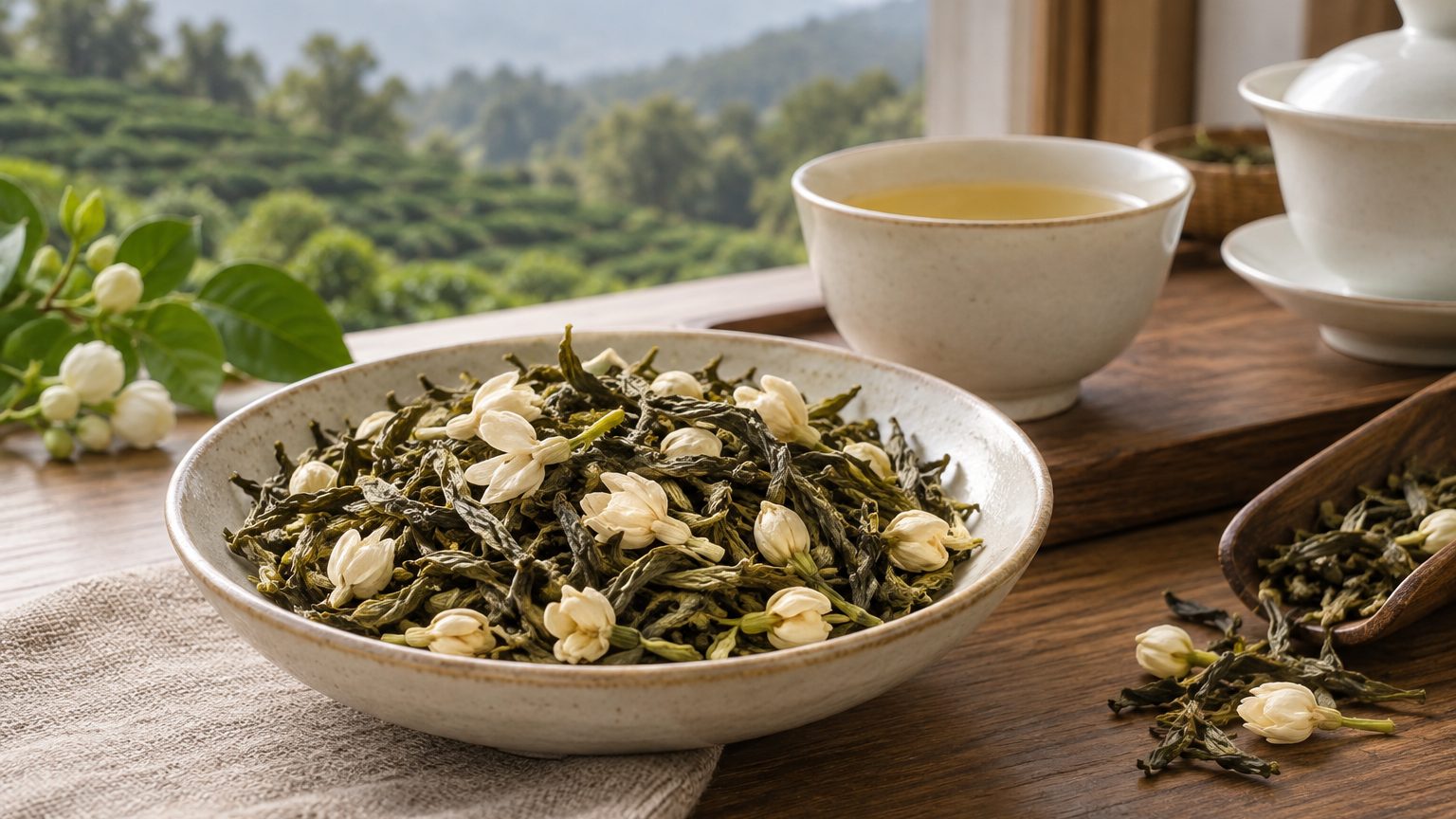
What jasmine tea actually is
Jasmine tea is not a botanical blend; it is a true tea - a green base - that has been scented with fresh jasmine blossoms, so it sits inside the green tea category for sourcing purposes even though the scenting step gives it a supply chain of its own. The flowers are picked in summer heat when their aroma releases, layered with the tea, absorbed, then removed, and the layering repeats for as many rounds as the grade calls for. Nothing but tea and flowers goes into a properly made lot, which is why the perfume reads natural in the cup and why the trade treats scenting skill as a craft in its own right. The desk runs it as its own program because the extra step adds suppliers, season timing and QC that plain green tea never needs.
How scenting works, round by round
The base tea - usually a baked green - is made in spring and held until jasmine season. Fresh flowers are picked at midday as buds and open in the evening, releasing perfume; they are layered into the tea overnight, the leaf absorbs the aroma, and the spent flowers are picked out by morning. The cycle repeats for the number of rounds the grade calls for - traditionally six to nine rounds for good commercial lots, fewer for standard ones. The last round uses the highest share of fresh flowers, and spent blossoms are typically sieved out so the pack holds leaf, not dead petals. The scenting rounds guide walks the full sequence; if you are new to the category, the what is jasmine tea primer covers the basics.
The cupping sheet and brew reference
| Factor | Reference profile |
|---|---|
| Dry leaf | Twisted dark-green strips, faintly sweet on the nose |
| Liquor | Apricot yellow, bright |
| Aroma | Fresh, lively jasmine - a living flower note, never soapy |
| Taste | Soft, sweet, floral over a clean green base |
| Wet leaf | Brown-green leaves, pliable, still perfumed |
| Brew parameter | Reference |
|---|---|
| Ratio | 3 g per 150 ml |
| Water temperature | 85°C |
| Steep time | 2-3 minutes |
At 85 degrees the floral lifts without the base turning sharp. The line is stable enough to print on a menu or a pack and to hand to a barista as-is.
Grades: the base and the round count
Two levers set grade. The first is the base: a finer green base gives a cleaner, sweeter floor under the flowers, while a plainer base lets the jasmine dominate - right for milk applications, thin for sipping. The second is the round count: more rounds mean deeper, longer-lasting scent, and the difference shows months later on shelf, not just at first sniff. Formats follow the base grade: whole twisted leaf for retail pouches, finer cut material for pyramid bags, where fast infusion matters more than leaf aesthetics. The desk recommends a round count against your channel rather than defaulting to the highest number, since rounds cost real money - the right buy is usually the most economical lot that still reads fresh in month nine, and only a cupping of retained samples can prove it.
Who buys jasmine tea
Jasmine is the green tea that drinks well beyond green tea drinkers. Beverage brands take it as a milk-tea base: it survives dairy and sweetness better than most greens, which is why it is a standing recommendation for bubble tea programs. Hotels and cafes use it as the floral option on an otherwise black-and-green list. E-commerce sellers find it the easiest premium Chinese tea to move without a tea background, because the name sells itself; the retention questions are covered in the aroma loss guide. Corporate gift buyers like the neutral symbolism - flowers, not politics - across markets, and tea houses pour it for customers who want fragrance without ceremony.
Keeping the aroma alive to the shelf
Scent is volatile, and packing decides how much of it survives to month twelve. Bulk moves in foil-lined bags inside cartons; retail formats use multi-layer pouches or tins with tight seals, and nitrogen flush is available where shelf-life targets demand it. The desk cups retained samples at set intervals, so a program can see - not guess - how the scent is holding. Labels and artwork run through packaging options, with MOQs confirmed in writing per program on the MOQ and lead time page. Seasonality matters twice here: the base is a spring product, the flowers are a summer crop, and a lot record should state both dates.
What buyers check before ordering
- Sniff the dry leaf warm: fresh flower, never soapy or cosmetic.
- Cup at 85°C: the floral should sit over a clean green base, not float on a harsh one.
- Ask for the round count and base grade in writing on the lot record.
- Check for spent blossoms in the pack - a marking of lazy finishing.
- Lab panel per batch, scoped to your destination market.
Send the brief with your application - sipping or milk-based - since the right base differs, and samples of two round counts will settle the question in one cupping.