
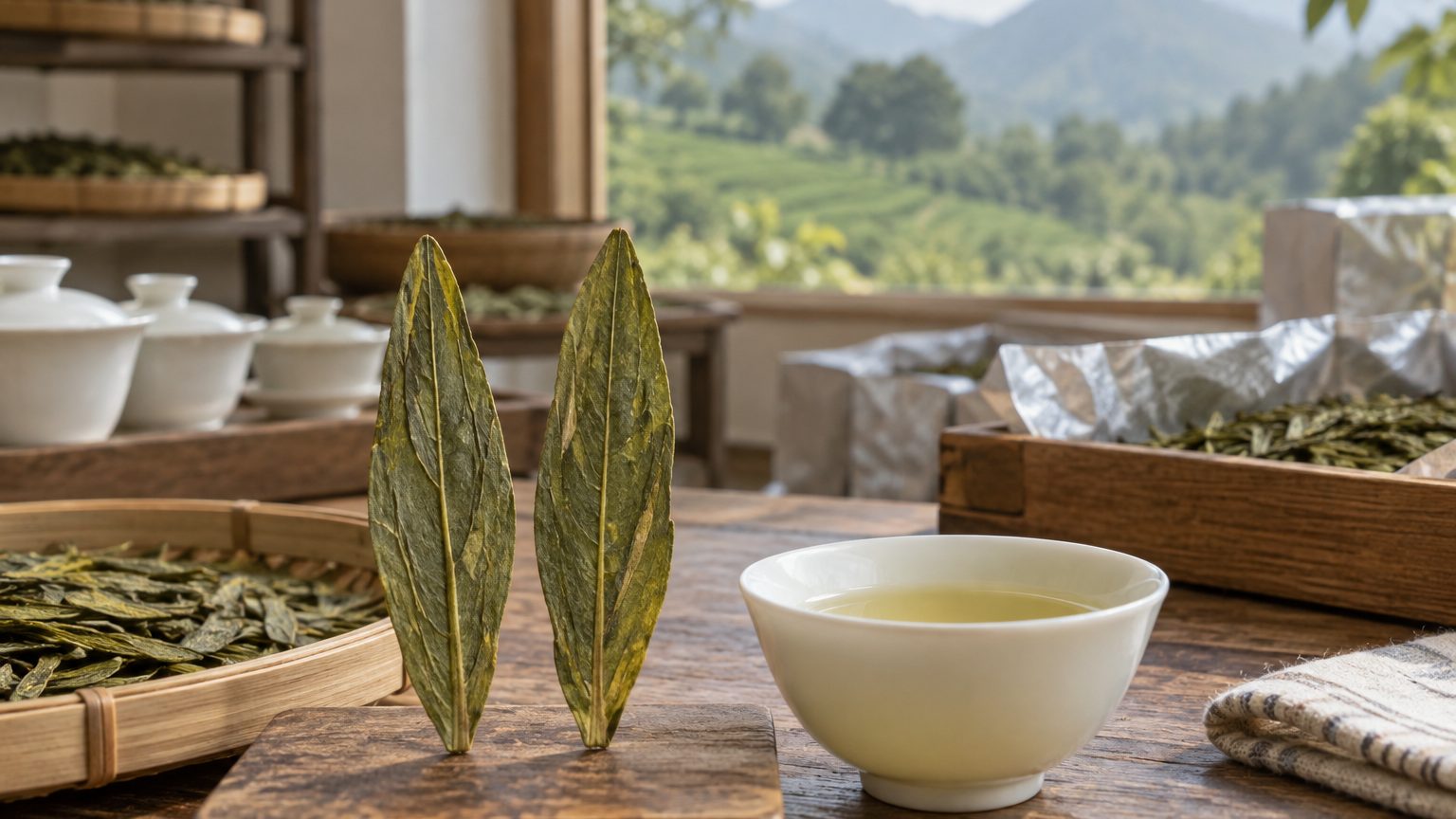
A cultivar and a shape you cannot fake
Houkui comes from Taiping county - today the Huangshan district of Anhui - and it is tied to a local cultivar, the Shida tea tree, whose unusually large leaves make the style possible. The picking standard is strict: two leaves held to one bud, and the made tea is pressed flat and straight, so a single leaf can run the length of a hand. That shape is the authenticity check: properly pressed Houkui keeps its rails even after brewing, while substitutes from ordinary cultivars and machine flattening break apart and curl in the cup. The desk states cultivar and pressing method on the lot record, because in Houkui more than most teas the look is the certificate - and because spring, with its short picking window, decides what the whole year will taste like.
How the flat leaf is made
After picking, the leaf is spread briefly, then fixed - gently, so the green holds without the leaf going limp - and then comes the defining step: while still warm and pliable, each shoot is pressed flat, traditionally between mesh, and dried in a way that locks the flat plane in place. Partner facilities run the same logic with temperature-controlled pressing and drying. What matters to a buyer is consistency across the lot: leaf size spread, pressing uniformity, color retention. Those are exactly what the five-factor cupping screens, alongside the shaping defects described in the processing guide that tell you a lot was rushed somewhere between the wok and the drier. The pressing window runs through spring; later pickings give longer but coarser leaves, so programs that want the show glass should place the spring order early rather than chase material after the season closes.
The cupping sheet and brew reference
| Factor | Reference profile |
|---|---|
| Dry leaf | Flat, straight, broad two-leaves-one-bud shoots, deep jade green |
| Liquor | Tender green, clear |
| Aroma | Orchid fragrance, fresh and high |
| Taste | Crisp, clean, gently sweet, refreshing finish |
| Wet leaf | Large flat leaves that hold their shape, buds intact |
| Brew parameter | Reference |
|---|---|
| Ratio | 3-5 g per 150 ml |
| Water temperature | 85°C |
| Steep time | 2-3 minutes |
Use 3 g for a clean daily pot; up to 5 g for the show glass, where the broad leaves stand in the water and do the selling themselves.
Grades and what varies
The market grades Houkui on leaf size, straightness and color retention. The famous show-grade material - long, uniform, vivid green - is bought to be seen and carries the tightest availability; practical grades trade some length and uniformity for steadier supply and a friendlier cup price, and most retail programs land there. Because the leaf is pressed rather than rolled, Houkui brews lighter than curled greens at the same weight, which surprises buyers who dose by spoon; the brew table above uses the trade range instead. The desk cups show-grade and practical lots side by side so the program chooses with both eyes open - a decision about what the shelf needs to show, not about which tea is better.
Where Houkui sells
Houkui is a specialist's line and performs best where the story gets told. Specialty retail and tea shops use the flat leaves as a display piece - the retail tea wall planning guide treats it exactly that way, as the range's one tea that stops browsers - and importers building a complete Anhui assortment take it beside Maofeng. E-commerce programs use photographs of the glass brewing as the marketing itself. It is not a milk-tea base and the desk says so plainly: the leaf is too precious and the cup too delicate for extraction-heavy formats, so beverage accounts are pointed elsewhere rather than sold a mismatch.
Packing and private label
Flat, whole leaves need rigid protection: soft pouches crush them, so retail runs in tins or reinforced boxes, and bulk cartons are packed to avoid stacking pressure. Foil liners, tight seals and a nitrogen option follow the same freshness logic as other greens, and spring stock should be sized to the season - later pickings do not carry the same cup. Artwork and label compliance run through packaging options; MOQs for both bulk and retail formats follow the standing reference ranges, confirmed in writing per program.
What buyers check before ordering
- Straightness and size spread on the dry leaf - rails even, breaks few.
- Cultivar and origin named on the lot record.
- Cup at 85°C: orchid aroma present, crispness without bitterness, leaves holding shape after infusion.
- Color retention: dull or yellowing leaf means age or poor storage.
- Lab panel per batch, scoped to destination market.
The quote form takes the intended shelf and format in one line; samples follow with both grades cupped side by side.