
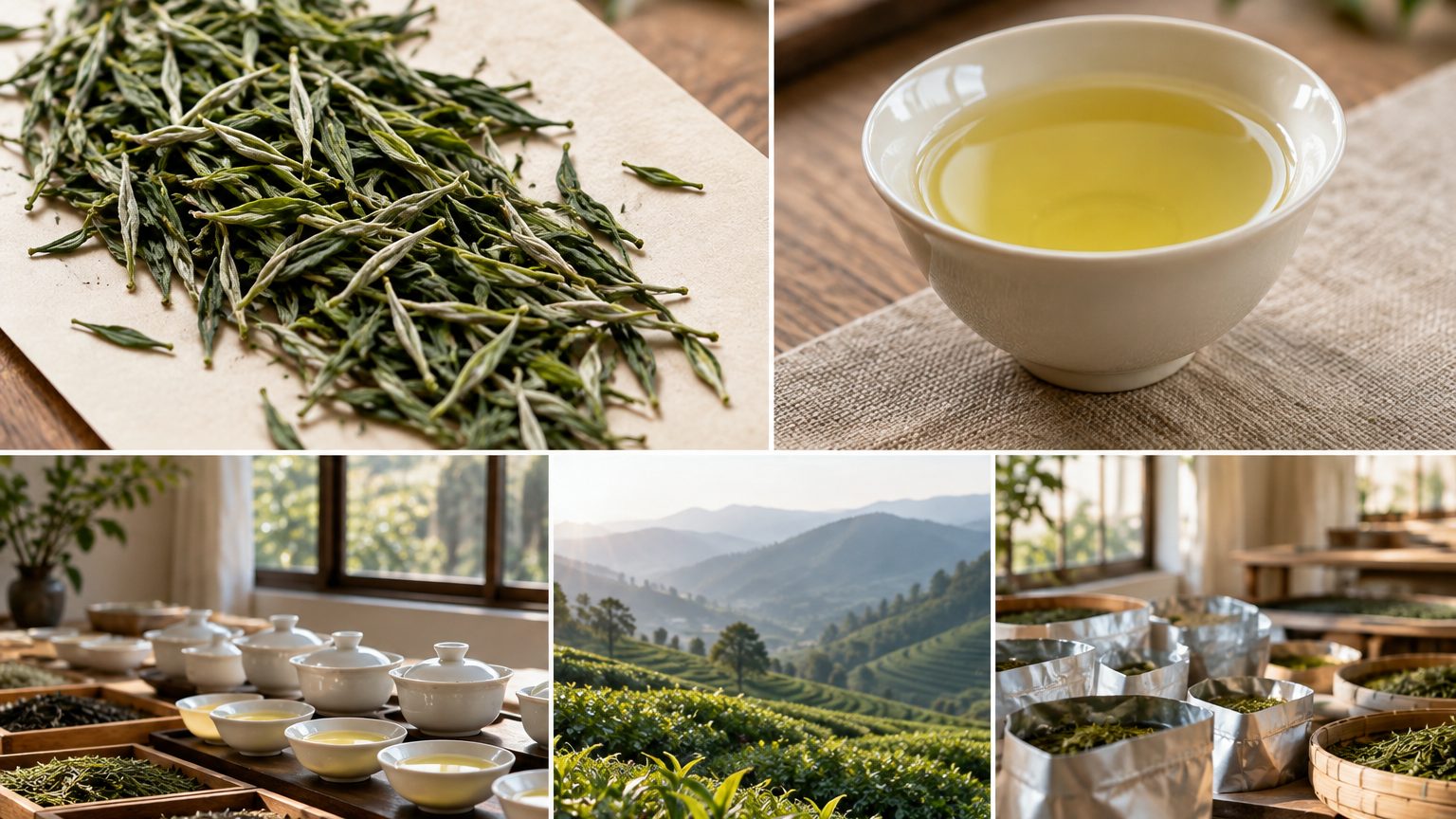
A mountain terroir that does the work
The name means fur peak, after the white down on the buds and the peak-like curl of the leaf. Gardens sit on the slopes of Huangshan in southern Anhui, where fog, high humidity and wide day-night temperature swings slow the leaf's growth and concentrate aroma. The district grows other famous teas - Taiping Houkui among them - but Maofeng is the volume name with the wider reach, made across spring from the first tender pickings onward. For buyers this terroir-to-name match matters: tea sold as Huangshan Maofeng carries a documented origin story, and the desk's lot records keep the district on paper rather than letting it drift into a generic green with a mountain label. Season sets the quality ceiling as usual: the first pickings through April carry the finest down and the clearest fragrance, while later lots trade some of that perfume for volume - which is why every lot is dated and programs are planned around the spring window.
Baked, not pan-fired: why it matters
Maofeng is a baked strip green rather than a pan-fired one. After picking - bud and one leaf for the better grades - the leaf is lightly fixed, shaped into loose, slightly curled strips and finished with gentle baking instead of hard wok work. The gentler finish is the whole point: the cup keeps a fresh, tender character with a clear orchid fragrance and a sweet, low-bitterness body that stands up to repeated brewing and to less-than-perfect water. For a menu that cannot hand-temper every pot, that forgiveness is a feature, not a compromise; the variables that matter most are set out in the green tea water temperature guide, and they are narrower for Maofeng than for most greens.
The cupping sheet and brew reference
| Factor | Reference profile |
|---|---|
| Dry leaf | Loose curled strips, bud-heavy, silvery down on top grades |
| Liquor | Tender yellow-green, bright |
| Aroma | Fresh orchid over a clean green base |
| Taste | Softly sweet, smooth, low bitterness |
| Wet leaf | Whole bud-and-leaf sets, soft green, even |
| Brew parameter | Reference |
|---|---|
| Ratio | 3 g per 150 ml |
| Water temperature | 85°C |
| Steep time | 2-3 minutes |
The cup holds across a slightly wider temperature band than pan-fired greens, which is why it survives cafe kettles and hotel urns better than its more famous neighbors.
Grades from bud-heavy to workhorse
Grades move on bud share and picking fineness. Top lots are nearly all bud, heavily furred and uniform; mid grades balance bud and leaf and are where most retail and cafe programs land; estate-standard material serves high-volume pots and blending. Because baking is gentler than pan-firing, grade differences show more in the texture and length of the cup than in sharpness. The desk cups candidates on the five factors, states picking standard on the lot record, and prices each grade as its own program - so a buyer can take a bud-heavy hero and a mid-grade workhorse under one label without cross-subsidizing blind. All of it slots into the green tea range as the gentle middle between flat and steamed styles.
Where Maofeng fits a range
Cafes and hotel programs are the natural home: Maofeng pours a clean pot by the liter, forgives kettle drift, and reads premium without needing ceremony - see how it slots into a hospitality tea program. Retail shelves use it as the everyday Huangshan name under the heroes; e-commerce bundles pair it with a pan-fired green so customers can taste the baking difference; corporate gifting takes the bud-heavy grades in tins. The cafe menu design guide shows where a gentle green earns its slot between a black and an oolong: usually as the option that pleases a table without a lecture.
Packing and private label
Maofeng travels better than the flat greens - the strip leaf resists crushing - but freshness rules still apply: foil-lined bulk bags, sealed retail pouches or tins, nitrogen flush where the shelf-life goal demands it. Label compliance and artwork run through packaging options; private label MOQs follow the standing reference ranges, confirmed in writing per program. A practical sizing note for foodservice: a 500 g foil bag matches roughly a week of pots in a mid-volume cafe, which keeps rotation honest and the cup where it should be.
What buyers check before bulk
- Down and strip integrity on the dry leaf - intact bud sets, little breakage.
- Cup at 85°C against reference: orchid note present, sweetness forward, no baked dullness.
- Origin on the lot record: Huangshan district stated, not inferred.
- Packing dates and seal quality on arrival.
- Lab panel per batch, scoped to destination market.
Send the profile to the desk; samples of two or three grades usually settle the format question in one cupping round.