
The short answer
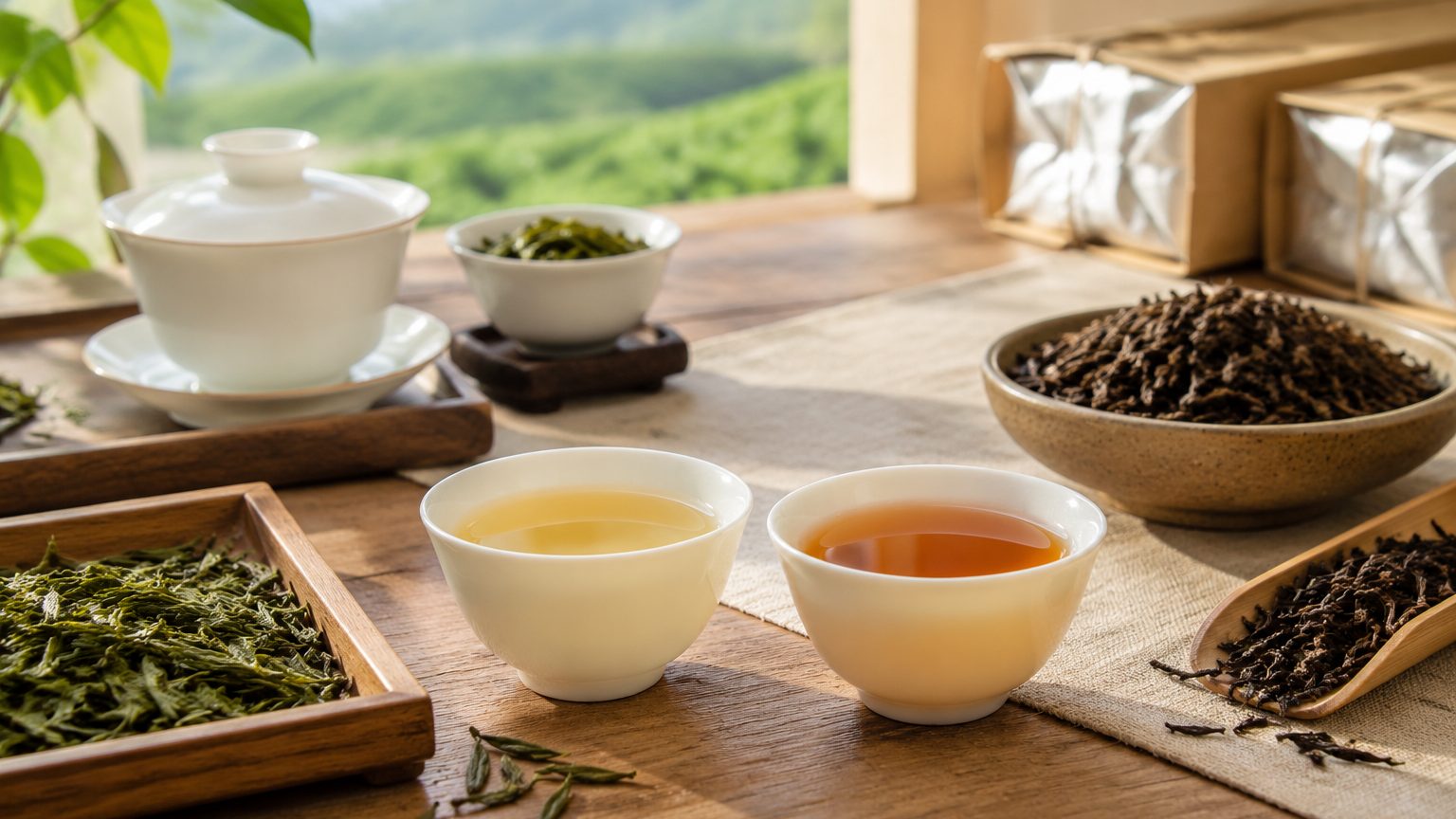
Both are Fujian oolongs, both are brewed gongfu-style at about 7 grams per 110 ml with water just off the boil, and both give six or more short infusions. Past that, they answer different briefs. Tieguanyin, from Anxi county, is rolled into tight granules and sold in clean-aroma and roasted styles; its golden cup is famous for an orchid fragrance and the lingering finish the trade calls guanyin rhyme. Da Hong Pao, from the Wuyi mountains, is a strip-style rock tea finished over charcoal to a medium-full fire; its orange-red cup is prized for mineral depth carried on floral aroma - what menus shorten to rock bone and flower. Stock Tieguanyin for approachable aroma at volume. Stock Da Hong Pao for depth, theater and the connoisseur end of the shelf.
One rolled, one roasted: the processing fork
Tieguanyin's craft happens early and in motion: the leaf is sun-withered, then rocked and tossed repeatedly so the edges bruise and partial oxidation begins, then fixed and wrapped and rolled until each batch forms dense pellets that hold their aroma until hot water opens them. The clean-aroma style stops near there; the roasted style adds a baking pass that deepens the color and steadies the leaf for storage and travel. Da Hong Pao keeps the strip shape of the leaf and pushes the finish far harder: repeated charcoal-roasting passes over embers build the caramel-to-mineral depth that defines Wuyi rock tea, and the charcoal roasting note follows that fire end to end. The practical consequence for buyers: judge a Tieguanyin lot on freshness and fragrance retention, but judge a Da Hong Pao lot on the quality and recency of its roast - ask for the roasting date on rock tea as routinely as you ask the harvest season on Anxi material.
Cup by cup
| Aspect | Tieguanyin | Da Hong Pao |
|---|---|---|
| Home | Anxi county, Fujian | Wuyi mountains, Fujian |
| Shape | Tight rolled granules | Twisted strips |
| Finish | None, or a light roast | Medium-full charcoal roast |
| Liquor | Golden | Orange-red |
| Signature | Orchid fragrance, guanyin rhyme | Rock character with floral aroma |
| Best trait | Approachable, repeatable aroma | Depth and staying power |
The tempos differ as much as the flavors. Tieguanyin lifts first - fragrance arrives with the first decant and the finish stays clean - while Da Hong Pao arrives in the middle of the palate and stays long after the cup is down. Neither tempo is superior; they suit different moments on the same menu, which is why many programs carry one of each rather than choosing.
Brewing: same numbers, different shows
The frame is identical for both: about 7 grams in a 110 ml gaiwan, water at 95-100°C, a fast first decant, then rounds that stretch a few seconds each time the liquor thins. What differs is the arc inside that frame. Tieguanyin peaks early - rounds two to four are the fragrance showcase - and an overlong first pour costs it more than it costs a rock tea. Da Hong Pao builds: the early rounds carry roast, the middle rounds open the fruit and mineral depth, and the late rounds turn sweet. Both roasted forms tolerate thermos holding far better than the clean-aroma style, which loses its top notes in holding and belongs where the cup is poured and drunk within minutes. The full routine is in the Tieguanyin brewing note, and training staff on it is covered by the gongfu basics note.
Who buys which oolong
Tieguanyin is the volume oolong. Consumer recognition is broad, the golden fragrant cup needs little explanation on a menu, and the rolled format portions and ships cleanly - all of which suits retail shelves, subscription boxes, office programs and hospitality service that wants a named oolong without a lecture. Clean-aroma lots lead on fragrance; roasted lots lead on resilience, and a catalog can carry both ends of that pole. Da Hong Pao is the occasion oolong: tea houses pour it in seated service, premium gifting leans on the cliffs-and-charcoal story, and connoisseur retail uses it to anchor the category. It asks more of the buyer - roast dates, rest time after firing - and rewards more on the shelf. Run together, the pair splits naturally: Tieguanyin as the everyday pour, Da Hong Pao as the weekend one, with the oolong category page holding the wider rail of Anxi, Wuyi and Chaozhou styles between them. Poured one after the other, the two also anchor a tasting flight without needing a third tea.
Why the price ladders differ
Each line climbs its own ladder, and the rungs are not the same. Tieguanyin's ladder runs on style first - clean-aroma versus roasted - then season, since spring lots lean toward body and autumn lots toward aroma, then the specificity of the village origin, then the roasting labor behind the roasted styles. Da Hong Pao's ladder runs hardest on origin specificity: material from the Wuyi core prices far above outer-zone leaf sold under the same name, and a quotation should state which zone it describes. After origin come roast depth and the skill behind it, then leaf grade. Because the ladders weight different things, quotes must be compared within a line and a tier, never across the two - a core-zone rock tea and a clean-aroma Anxi lot can share a shelf and never share a benchmark. Reference order sizes and lead windows sit on the MOQ and lead time page, with terms confirmed in writing per program.
Choose Tieguanyin if, choose Da Hong Pao if
Choose Tieguanyin if you need oolong that works at volume: broad recognition, a fragrance-led golden cup that beginners and regulars both accept, roasted and clean-aroma styles to split the menu, and clean logistics from the rolled format. Choose Da Hong Pao if you need oolong that carries an occasion: seated service, premium gifting, a connoisseur shelf, and customers who ask what rock character means - then stay for the answer. Many programs stock both and never let them compete, presenting one as the daily oolong and the other as the seated one. To test the pairing on your own menu, request both through the quote form, cup them back to back at your own ratios, and see which cup your team can serve with confidence on a busy day - that one usually earns the bigger opening order.