
The short answer
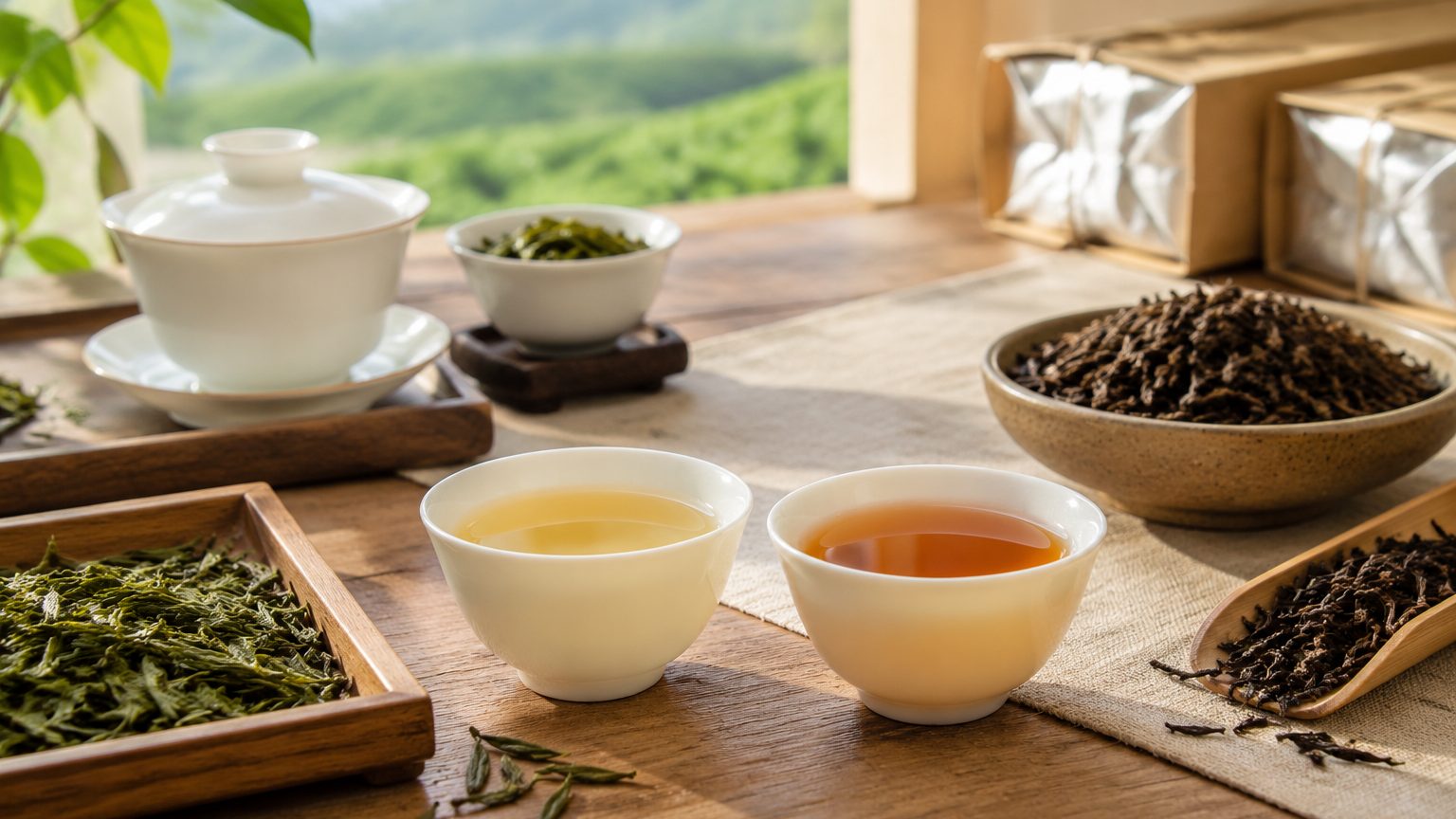
Keemun, from Qimen county in Anhui, is a strip-style gongfu black tea famous for its perfume - the sweet floral-fruit character the trade simply calls Keemun aroma - over a bright red, sweetly rounded cup. Dianhong, from Fengqing and other Yunnan areas, is a large-leaf black sold in strip and golden-tip grades: deep red liquor, honey-sugar richness and real strength. Serve Keemun when the cup should be elegant on its own; serve Dianhong when the cup must stand up to milk, food or a long morning. Both brew at high temperature from the same simple ratio, and both reward buyers who compare like grades with like rather than comparing names. The reputations travel differently too: Keemun's rests on an aroma recognized wherever black tea is drunk, Dianhong's on strength and the golden flush of its top grades.
Two provinces, two black tea traditions
Keemun's craft shows in precision: fine strip leaf, fully oxidized in the orthodox style, giving a bright red liquor and an aroma distinctive enough to carry the county's name - the Keemun line page carries the grade detail. Dianhong's craft starts in the field: Yunnan's large-leaf variety supplies the natural heft, and processing divides into plain strips and the golden-tip grades where bud content shows as a flush of gold through the dry leaf - the Dianhong line page shows both builds. Neither tea is smoked. That character belongs to classic lapsang souchong from Fujian's Tongmu district, yet customers sometimes expect smoke from Chinese black tea generally, so it is worth a quiet line on the menu saying otherwise. Neighbors matter on the shelf too: Fujian's golden-bud jinjunmei sits at the luxury end of the same orthodox family and prices above both for different reasons, which the jinjunmei page explains.
Cup by cup
| Aspect | Keemun | Dianhong |
|---|---|---|
| Home | Qimen county, Anhui | Fengqing and other Yunnan areas |
| Leaf | Fine strip, orthodox craft | Large-leaf variety; strip or golden-tip |
| Liquor | Bright red | Deep red, rich |
| Aroma and taste | Sweet floral-fruit perfume; sweetly rounded | Honey-sugar richness; strong body |
| With milk | Perfume thins under heavy dairy | Cuts through cleanly |
| Menu read | Elegant, perfumed | Hearty, strengthening |
Taste them without milk and the contrast narrows to a point: Keemun draws attention to its top notes and finishes politely, while Dianhong spreads into weight and lingers. Add milk and the roles flip - Keemun's perfume recedes, Dianhong holds its line. Neither is a lesser version of the other; they are different instruments. That one exercise, run with your own dairy at your own ratio, settles the choice for most programs faster than any spec sheet.
Brewing frames side by side
| Parameter | Keemun | Dianhong |
|---|---|---|
| Leaf and water | 3 g / 150 ml | 3 g / 150 ml |
| Water temperature | 95°C | 95-100°C |
| Service style | Straight cups; light milk at most | Straight or fully milky service |
| Batch brewing | Scales as-is; watch over-steeping | Scales as-is; strength holds in holding |
Both take near-boiling water without complaint; the ratio and temperature frames print onto a station card unchanged. The operational difference is sensitivity: an over-long steep pushes astringency forward, and where Dianhong's body absorbs the extra edge, Keemun's perfume disappears under it - so Keemun stations need the timer more than Dianhong stations do. Ratios, hold times and the batch math for both sit in the black tea brewing ratio note.
Where each sells
Keemun earns its place where the cup is presented on its own: afternoon tea service, quality retail shelves, restaurant pairings where a perfumed black lifts a dessert course - the pairing logic runs through the dessert pairing note - and gift caddies aimed at customers who already know the name's weight. Dianhong earns its place where the cup must work: breakfast service, milk-forward menus, and bubble tea backbars that want a Chinese-origin strength option beside the Assam and CTC standards. Golden-tip grades add a gifting lane of their own, since the gold flush photographs beautifully through a clear caddy. Retailers with room run a two-chair Chinese black rail: Keemun as the connoisseur's afternoon pour, Dianhong as the working strength, with jinjunmei above and the smoked classic below if the wall wants the full family - the black tea category page shows the whole rail at once.
Price ladders without the numbers
Each ladder weighs different things. Keemun climbs on aroma grade, county-level origin and season, because the perfume is the product and anything that dulls it moves the lot down. Dianhong climbs on bud share: golden-tip content drives the appearance tiers and the gifting prices, while plainer strip grades compete on strength per unit of leaf, which is what high-volume buyers actually consume. Neither ladder translates across, so compare quotes within a line and a tier and ask precisely what a grade name describes - season, county or district, bud share, and whether the leaf is single-origin or blended. Reference order sizes and lead windows sit on the MOQ and lead time page, and final terms are confirmed in writing per program. On private label work the two also photograph differently: Keemun's dark, even strip reads classic in a kraft pouch, while golden-tip Dianhong earns clear caddies and window cartons, and packaging should follow the leaf rather than fight it. When the two lines must share a budget, the honest method is the cup: price both to the same serving count, brew side by side, and let the menu position decide which chair each takes.
Choose Keemun if, choose Dianhong if
Choose Keemun if elegance is the brief: straight cups in hotel and restaurant service, retail customers who buy names they recognize, dessert pairings, and gifting where a quiet, perfumed cup reads as taste rather than thrift. Choose Dianhong if strength is the brief: breakfast and milk-forward menus, backbar work that must survive dairy and ice, golden-tip gifting, and any program where the cup has to be Big with a capital letter and still taste of honey rather than tannin. Many programs carry both and let them split the day - Keemun at three in the afternoon, Dianhong at eight in the morning. To test that split on your own menu, request both lines through the quote form, cup them in your water at your ratios, and check which one your team can reproduce identically on the busiest day of the month.