
What makes an oolong an oolong
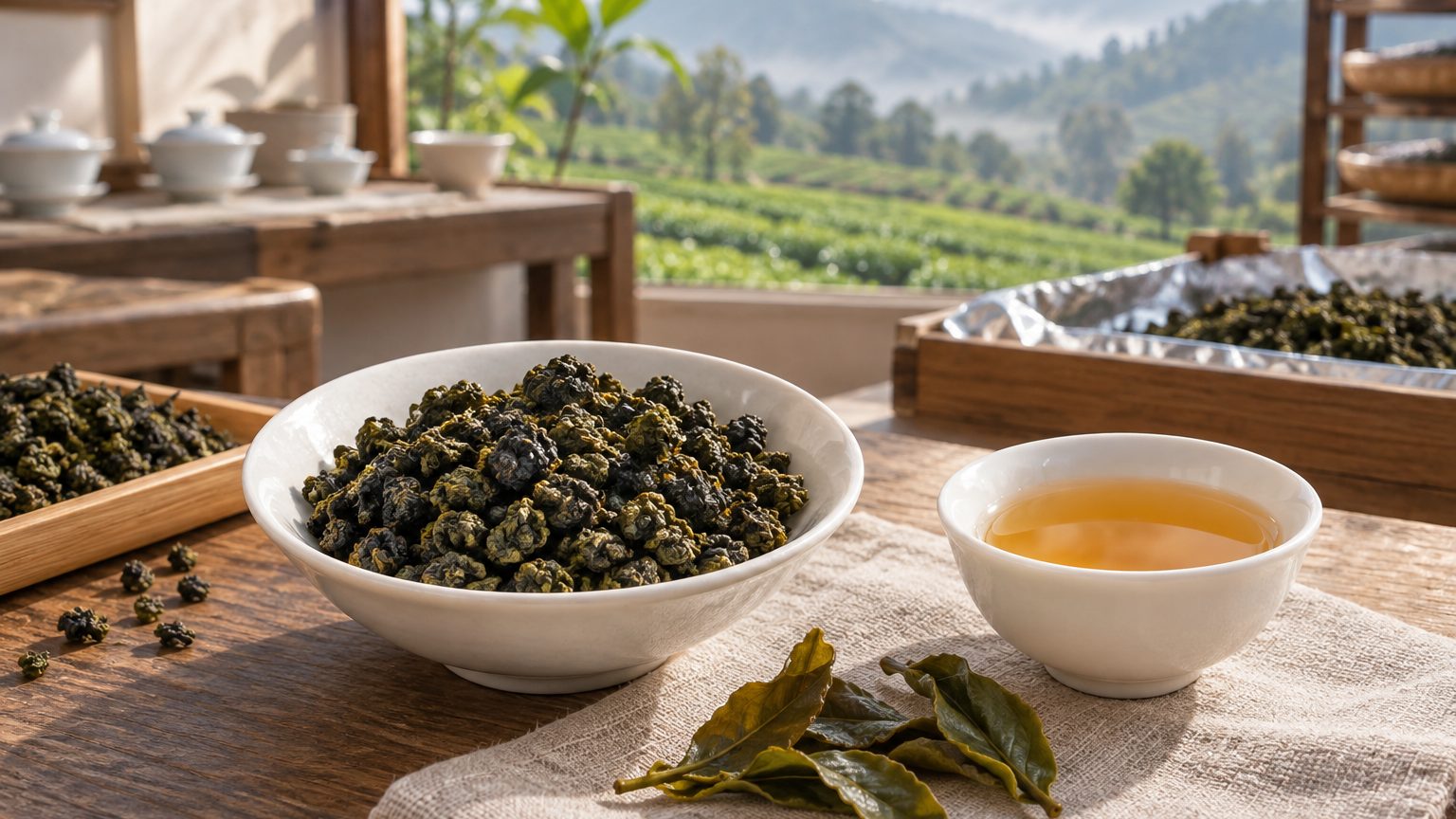
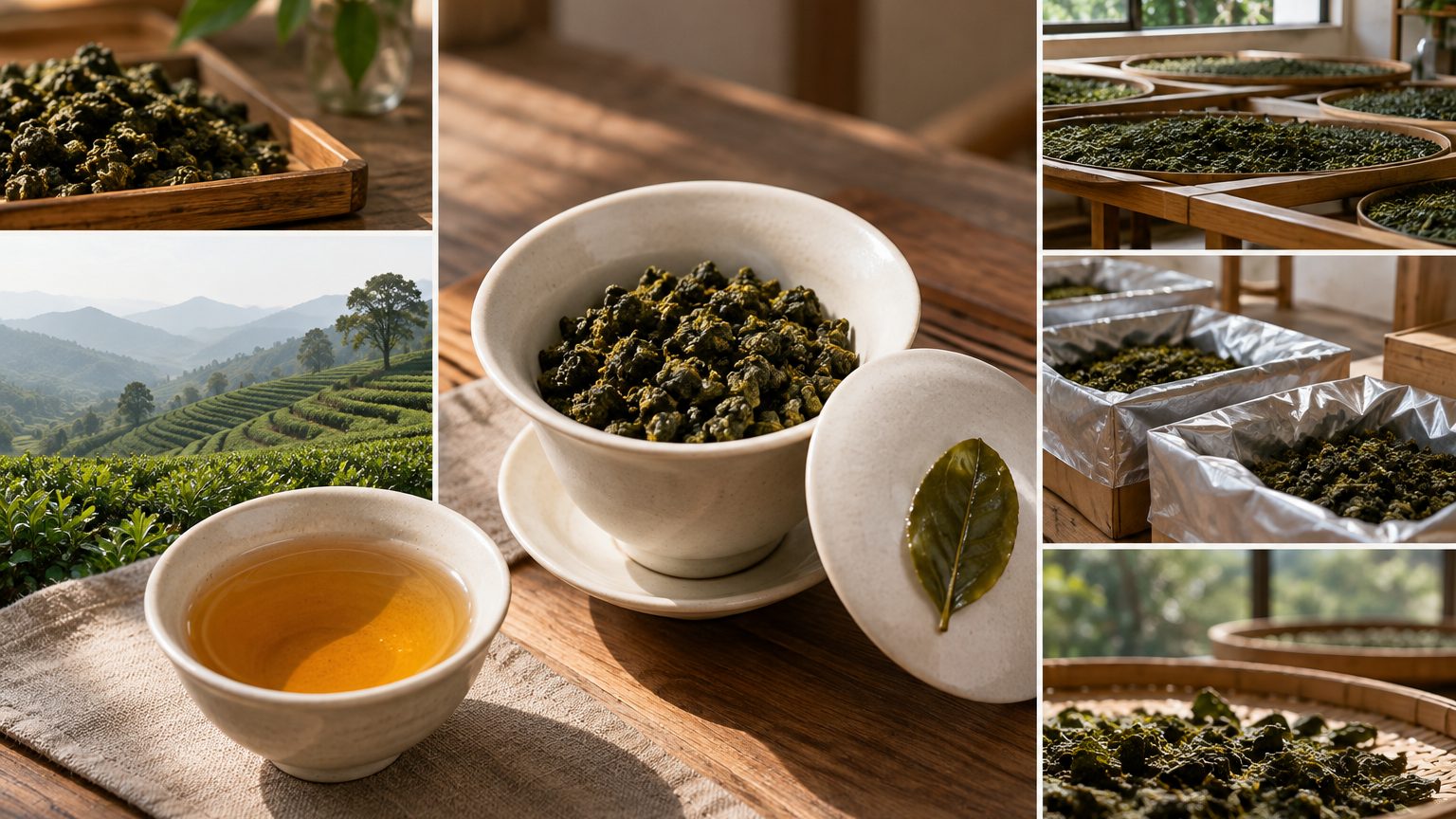
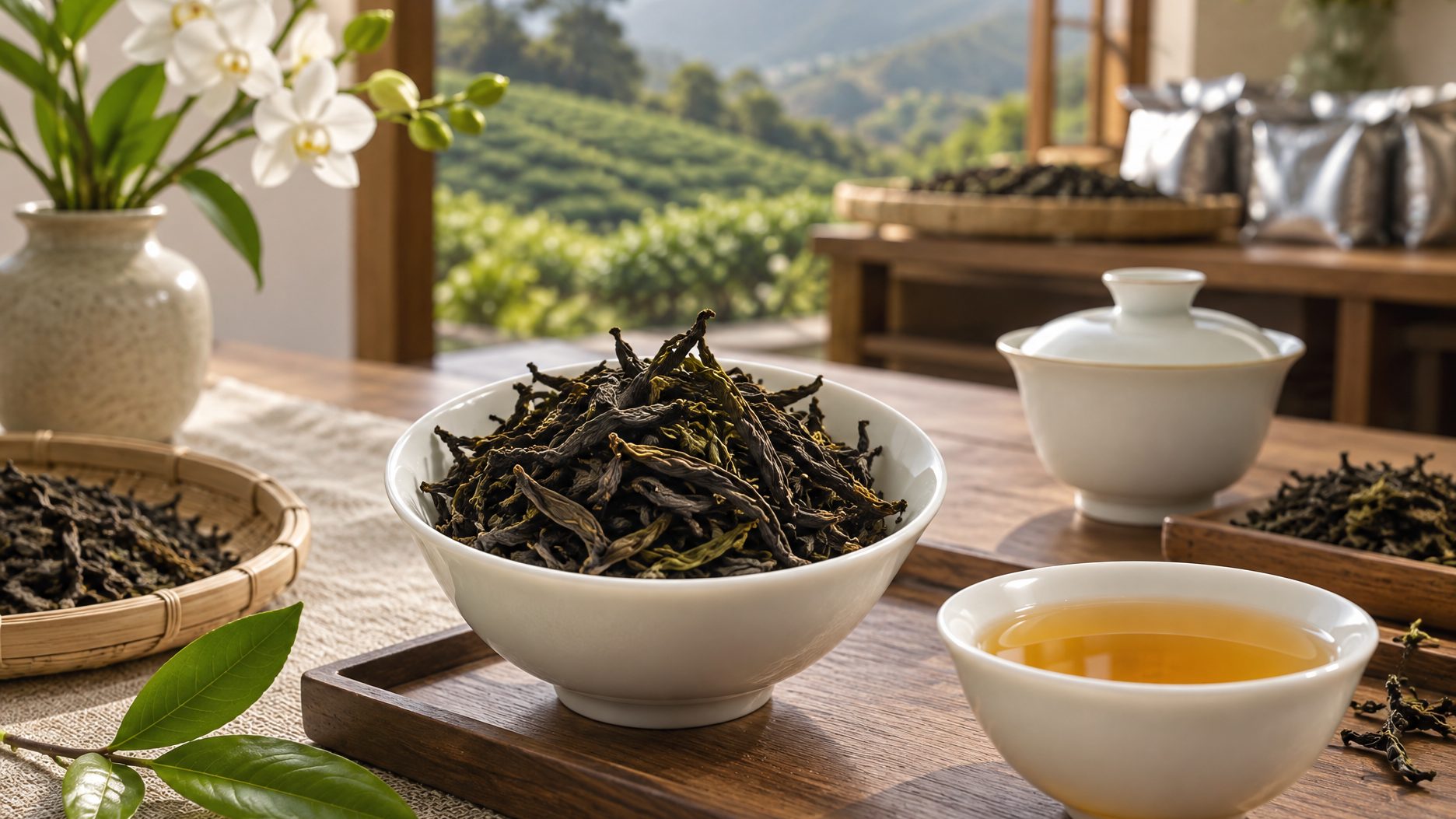
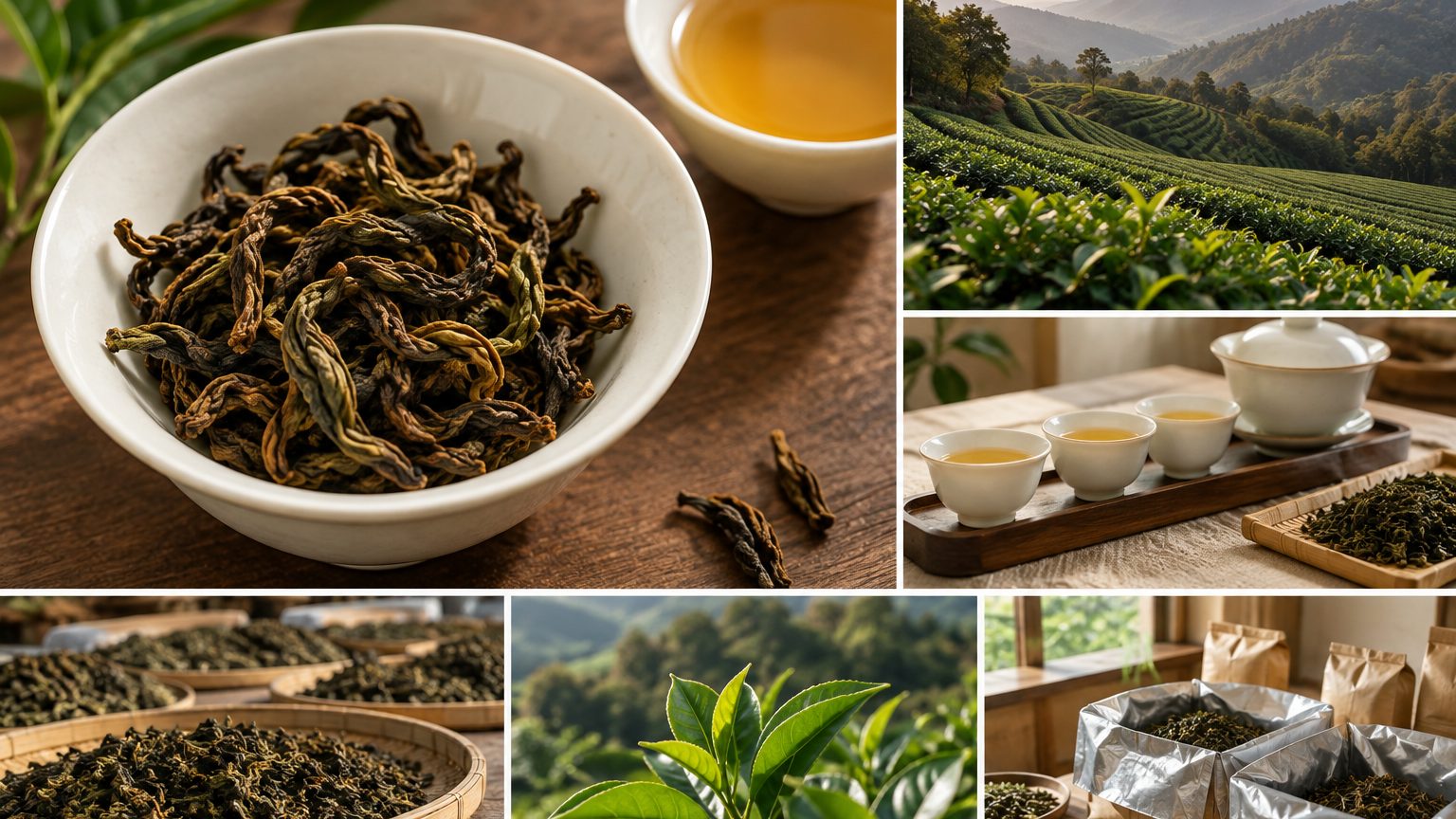
Oolong is defined by a stopping point. Freshly picked leaf is withered, then shaken, tossed or bruised so its edges begin to oxidize; when the maker judges the moment right, the leaf is fixed with heat, shaped and dried. Stop early and the cup stays floral and green-leaning; let oxidation run further and finish over charcoal, and the cup moves toward dried fruit, roast and mineral grip. No other category spans this much range from one process, which is why oolong programs are specified by oxidation level and roast depth, not by the name alone. Shaping splits the category too: Anxi teas are rolled into tight granules that unfurl slowly in the pot, while Wuyi and Chaozhou teas keep a twisted strip form. The difference reaches your pack - granules dose neatly into bags, strips present better in a retail pouch - so it is worth deciding before samples, not after.
The five lines compared
| Line | Style and oxidation | Liquor | Best use |
|---|---|---|---|
| Tieguanyin | Rolled ball, Anxi; clean-aroma or roasted | Golden, bright | Retail private label, hotel lists |
| Da Hong Pao | Strip, Wuyi; medium to heavy charcoal roast | Orange-red | Tea houses, gifting |
| Rougui | Strip, Wuyi zhengyan; spice-forward roast profile | Orange-red | Premium retail, tasting menus |
| Shui Xian | Strip, Wuyi and north Fujian; orchid base, mellow roast | Orange-red | Foodservice, everyday oolong |
| Fenghuang Dancong | Strip, Phoenix Mountain; single-tree, named aroma types | Gold-orange | Specialty retail, gongfu service |
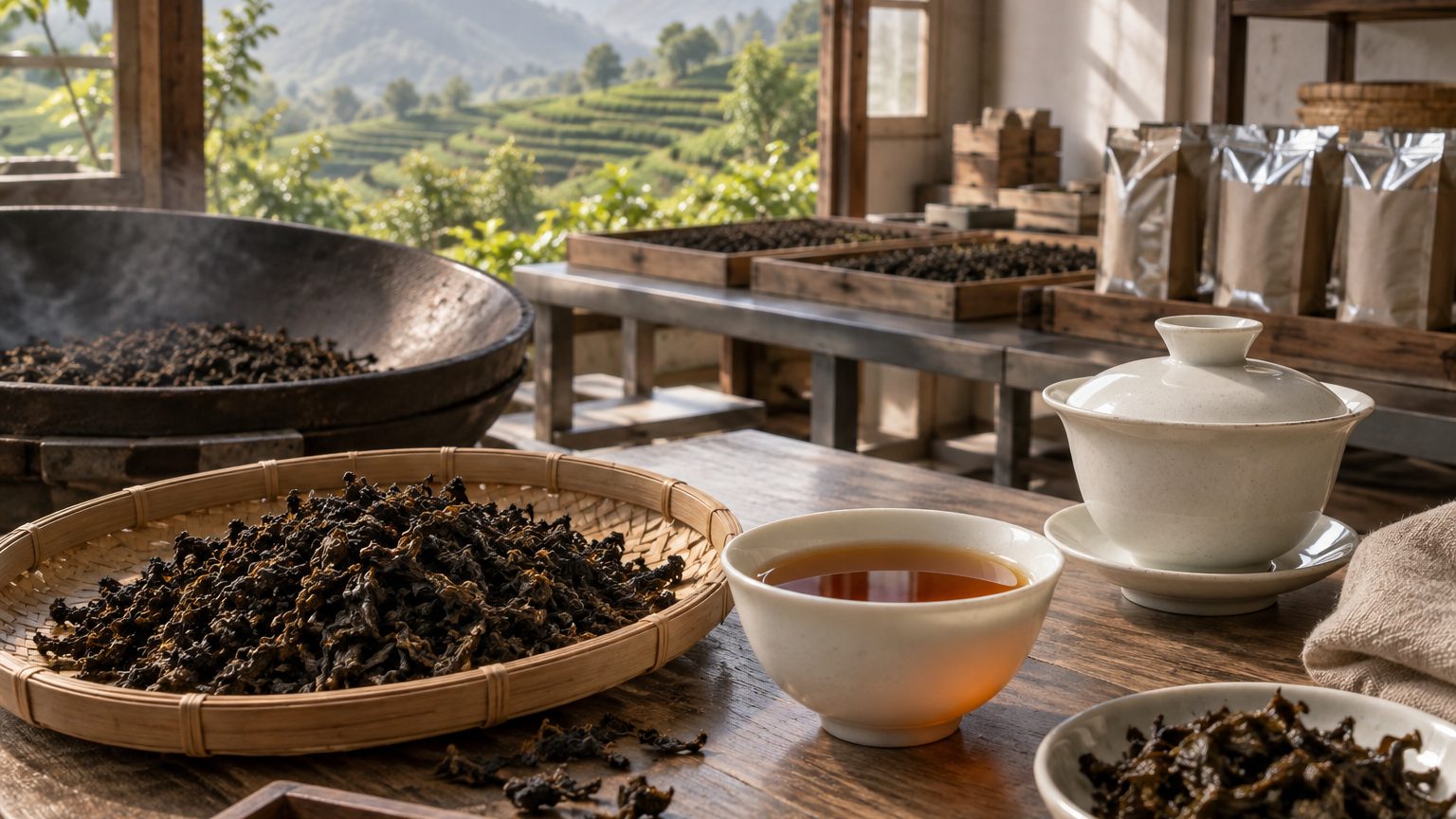
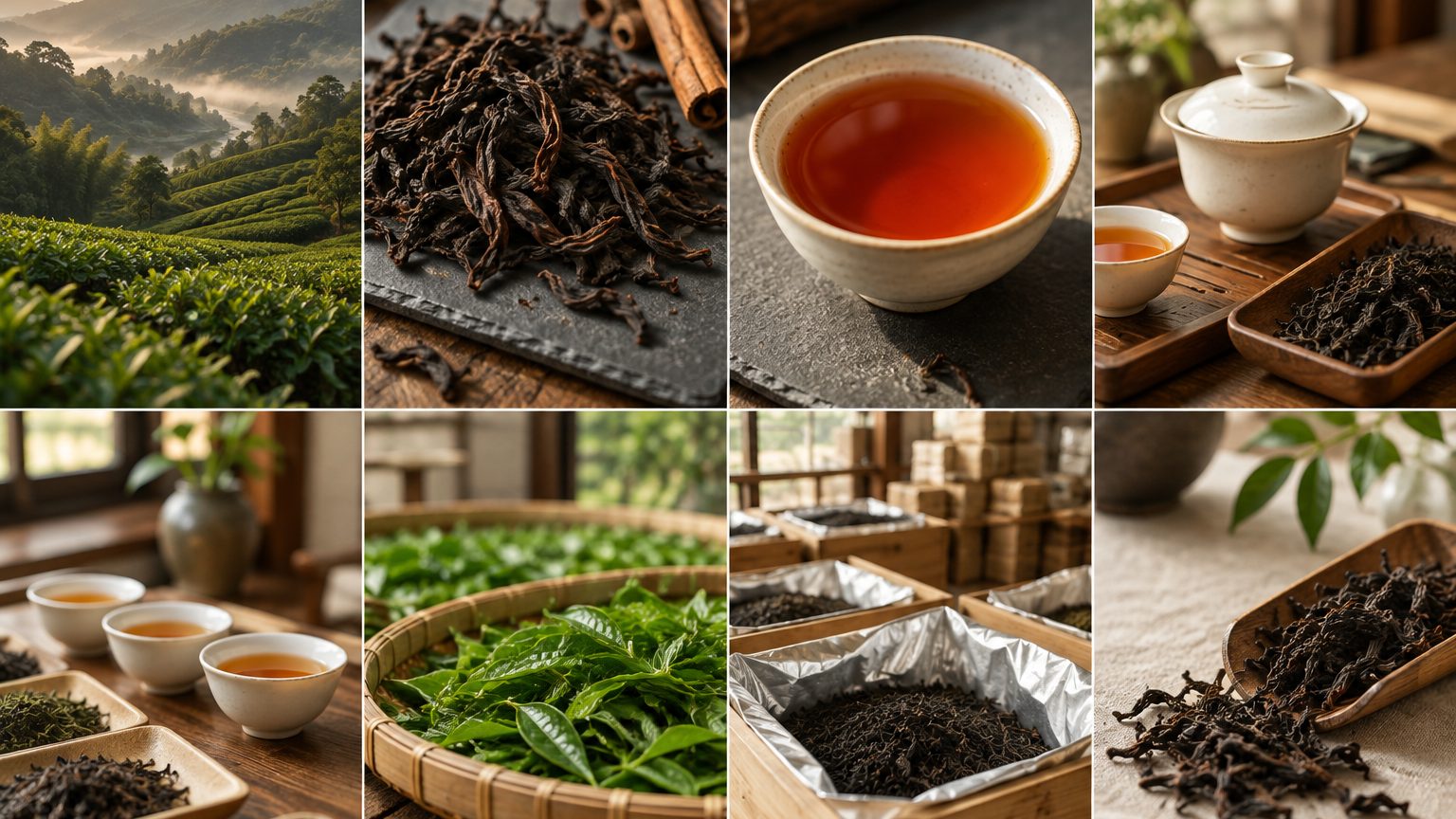
The table compresses a geographic split. Anxi county supplies the rolled, aromatic style most retail customers picture when they hear oolong. The Wuyi belt supplies the roasted strip teas the trade calls rock oolong, where a mineral firmness known as yan yun sits under the roast, and Da Hong Pao, Rougui and Shui Xian differ mainly in cultivar, aroma signature and roast depth. Chaozhou's Phoenix Mountain supplies Dancong: single-tree plucking and finishing, named aroma types such as honey orchid, and a sharp, long fragrance that survives six or more infusions. Three regions mean three calendars and three price logics, so the desk runs them as separate programs even inside one category.
Clean-aroma or roasted: a storage and service trade-off
For Tieguanyin the first program decision is style. Clean-aroma lots keep the leaf's own orchid fragrance over a green-gold cup; they are the recognisable retail face of the category, and they are fragile - the florals fade with heat and air, so lots ship vacuum-packed and want cool storage. Roasted lots add charcoal firing: an amber cup, toast and dried-fruit notes over the orchid, a rounder body that forgives a thermos, a banquet urn or a distracted barista. Rock oolongs arrive already roasted and often rest a few months after firing while the charcoal edge settles - the desk states rest time on the lot record. If your channel is hotels and restaurants, roasted is the default; if it is retail aroma, clean-aroma with the packing discipline to protect it.
Seasons and the sourcing calendar
Anxi harvests spring and autumn: spring lots bring body and depth, autumn lots bring the high, cool aroma many retail buyers prefer, and many programs hold both as two SKUs. Rock oolong runs on a different clock - leaf plucked in spring, charcoal work through the summer, teas reaching the market later in the year. Dancong follows Phoenix Mountain's spring and autumn pickings, with named aroma types changing by lot and season. None of this fits a twelve-month purchasing rhythm, so the desk plans each region backwards from your launch window: samples circulate within weeks of each season, bulk follows, and MOQ follows the standing reference range for bulk loose leaf - 50-100 kg per line as the typical example - confirmed in writing per program. The mechanics sit on the MOQ and lead time page.
Where oolong earns its shelf
Tea houses anchor their lists on Dancong and rock teas, where gongfu service shows what the category does best: many infusions, evolving aroma, a story per lot. Hotels and banquet operations default to roasted styles for the same reason thermoses exist - roasted oolong holds its character in service. Beverage programs use roasted oolong as a milk-tea base where tannin structure has to cut through dairy and ice, and it does so with less astringency than many black teas. Retail walls usually start with a Tieguanyin hero pack and add a Dancong as the conversation piece. If the category is new to your range, the plain-language introduction is in this guide to oolong styles, and the desk will say plainly when oolong is the wrong category for your channel.
What buyers check before bulk
- Cup against the season reference: dry leaf, liquor, aroma, taste, wet leaf.
- Roast date and rest time on rock oolongs, stated on the lot record.
- Vacuum packing and foil liners for clean-aroma lots.
- Lab panel per batch from a third-party laboratory, issued in your name.
- Brew sheet at gongfu ratios for menus and teapot ratios for retail packs.
A sixth check is procedural rather than technical: substitutions. Rolled oolong from a neighboring county can look like Anxi tea in a foil pack, and strip tea from outside the Wuyi belt can carry a roast that hides its origin. The desk's rule is written approval against the golden sample before any lot changes - a swap without one is a claim, not a delivery. That rule, plus dated lots and per-batch panels, is what keeps a second order tasting like the first. Open the line pages above for cupping detail and brew parameters, or send the profile you need - style, market, format, volume - to the desk and receive a sample plan and a written offer.