
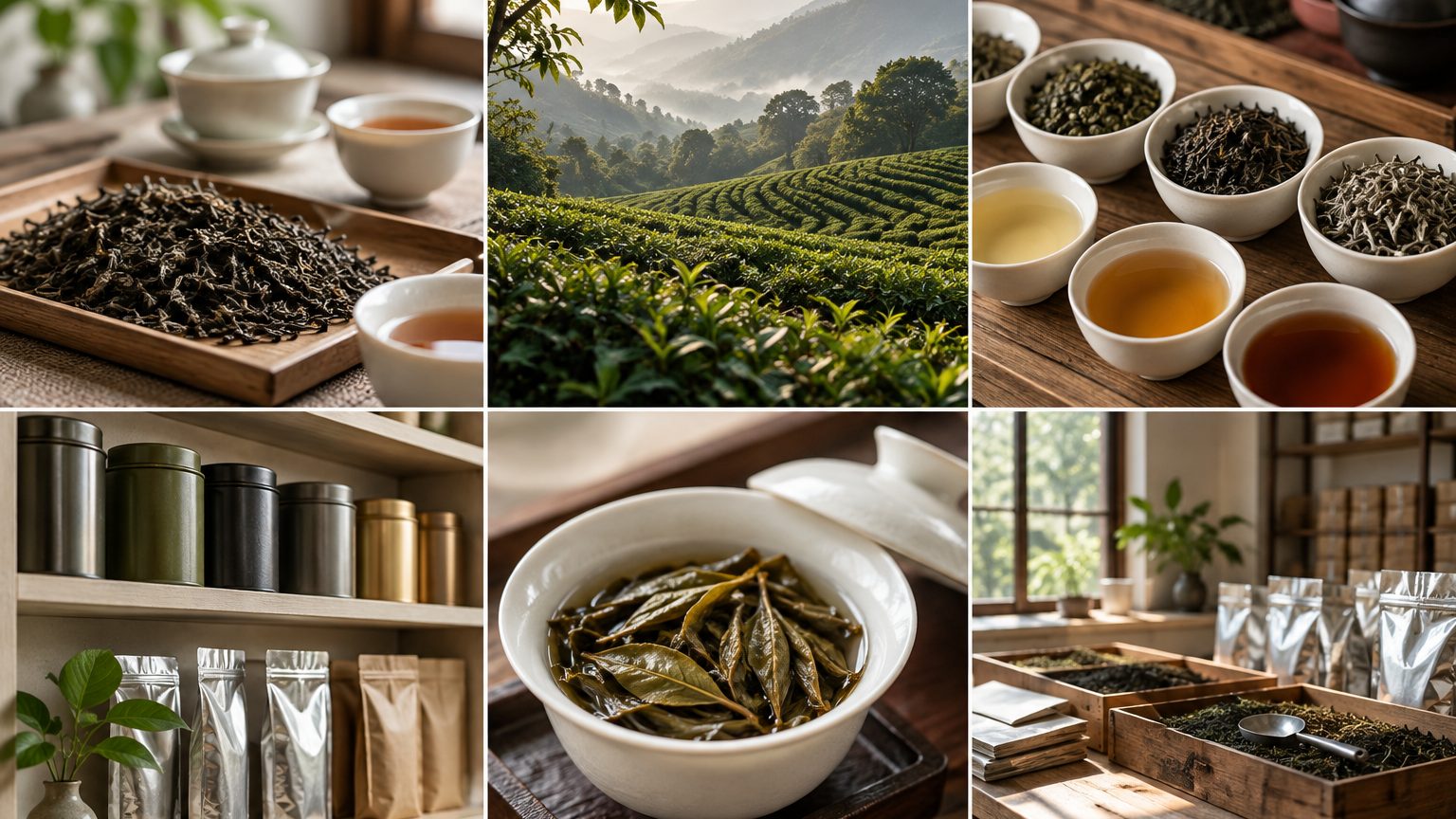
The short answer
A warehouse keeps tea saleable with four habits: keep the air stable and cool, keep it dry, keep odors away, and rotate stock so nothing lingers. Tea is dry, shelf-stable and forgiving of short trips - the damage comes from the slow stuff: months beside a boiler, a season of humid summers, six months stacked next to spices. Heat and odor lead the list of culprits because they act invisibly; the lot looks fine on the pallet while the cup slides. Everything below is written from the receiving side of that experience.
What heat does to stored tea
Warmth accelerates every aging reaction in the leaf at once: volatiles evaporate faster, residual oxidation runs faster, and color dulls faster - so a lot stored warm ages at the speed of several calendar years packed into one. Heat also sets up the second-order problem, condensation: when temperatures swing, moisture condenses on leaf and packaging interiors, and damp tea is a different risk class entirely, moving from staling toward mold. Corners to treat with suspicion are predictable - against south-facing walls, under uninsulated roofs, near loading doors that breathe with the weather, beside anything warm. The fix is not refrigeration; it is stability. A plain room that holds a steady temperature beats a fluctuating one by a wide margin.
Heat also compounds with the other axes, which is why it heads this note. A warm room evaporates volatiles faster; the same room with humidity swings adds condensation cycles; the same room with a skylight adds light damage on top. Warehouses rarely fail on one axis - they stack a warm corner onto a damp week onto a fragrant neighbor, and the lot records the sum. The practical reading for a buyer is that heat is the multiplier to check first: where the building runs cool and steady, the other risks shrink to manageable; where it runs hot, every other rule has to be perfect to compensate.
Odor: the risk buyers underestimate
Tea is porous and hygroscopic - it absorbs volatile compounds from its surroundings, which is exactly how jasmine scenting works, and exactly why it backfires in storage. A case of green tea stored beside fragrant goods comes out smelling of them; sealed foil slows this, paper and thin films hardly slow it at all. The usual offenders are honest goods that simply do not belong nearby: spices, coffee, roasted snacks, cleaning chemicals, fuels, and the cardboard itself when pallets are wrapped hot off a printer. Compressed teas like pu-erh are the most vulnerable of all because there is so much surface held together for so long. Segregation is the only real control - an odor-free zone with its own shelving, and a rule that anything with a smell lives on the other side of the wall.
A working warehouse spec
These are the bands the desk works to when coordinating storage on either side of a shipment; they are trade references, not laboratory constants, and each program confirms its own figures in writing.
| Parameter | Working band | Why |
|---|---|---|
| Temperature | Stable room range, avoiding hot corners and direct sun | Steady beats cool-but-swinging; swings condense moisture |
| Humidity | Dry side of moderate for finished tea; lower for open stock | Leaf equalizes to room air; damp rooms write themselves into the cup |
| Light | Dark racking; no skylight rows for tea | Light degrades color and volatiles through packaging |
| Neighbors | Tea zone separated from all fragrant and chemical goods | Absorbed odors do not wash out |
| Floor and walls | Pallets off concrete, gap to walls | Concrete wicks moisture; walls cycle temperature |
| Rotation | Dated cases, strict first in first out | Age at shipping is the age the customer tastes |
Zoning by category
One room, several micro-climates, and the categories disagree about which one they want. Green tea and jasmine want the coolest, darkest, tightest corner - their whole commercial life is volatile aroma. Roasted oolongs and black teas are tolerant citizens; any stable dry shelf suits them, and a roasted rock oolong often benefits from a rest period after roasting. White teas sit between, happy in the tea zone if the room is steady. Pu-erh needs its own arrangement entirely - breathing paper wrappers, moderate humidity, no foil - and is the strongest argument for separating an aging corner from the finished-tea racks. Herbal and fruit blends flex on climate but not on odor; dried fruit and flowers broadcast and absorb scents equally well. A one-page zone map taped in the aisle prevents most category-crossing mistakes.
Questions for an outsourced warehouse
Many buyers never touch their own stock - a threePL or a bonded store holds it - and the same spec applies, phrased as questions. Which zone would tea occupy, and what sits beside it today? What do the room's temperature and humidity logs look like through last summer - actual records, not assurances? Is anything fragrant, chemical or hot stored in the same aisle, and could tea have dedicated racking? How is stock dated and rotated, and can they show you a pick sequence that proves first in, first out? What happens on arrival: is a sample pulled and held, and who is allowed to open a case? The answers separate partners who already run these habits from partners who will improvise on your inventory. One afternoon spent walking the facility with those five questions beats any amount of contract language, and the pattern of answers - specific and documented, or vague and cheerful - is usually clear within the first ten minutes of the tour.
Receiving, rotation and the checks that catch problems
Good storage practice starts at the dock, not on the shelf.
- Date every case on arrival and place it by date, not by convenience.
- Pull a sample from each arrival and cup it against the sealed reference from the packing table.
- Log the room - a low-cost thermohygrometer per zone is the most affordable quality control in the building.
- Walk the tea zone on a schedule: warm corners, musty smells, crushed cartons, anything damp.
- Cup the oldest stock monthly; act on trend, not on crisis.
That routine converts storage from a hope into a process, and it is the same routine the desk asks of partner warehouses before adding them to the logistics network. Quality control on arrival is documented on the quality control page, and the general handling rules live on the grading and storage page. If you are setting up or auditing a tea warehouse and want a second pair of eyes on the spec, the quote form reaches the desk - storage conditions are part of every program conversation, and so are the timing and reference ranges that decide how long stock actually sits.