
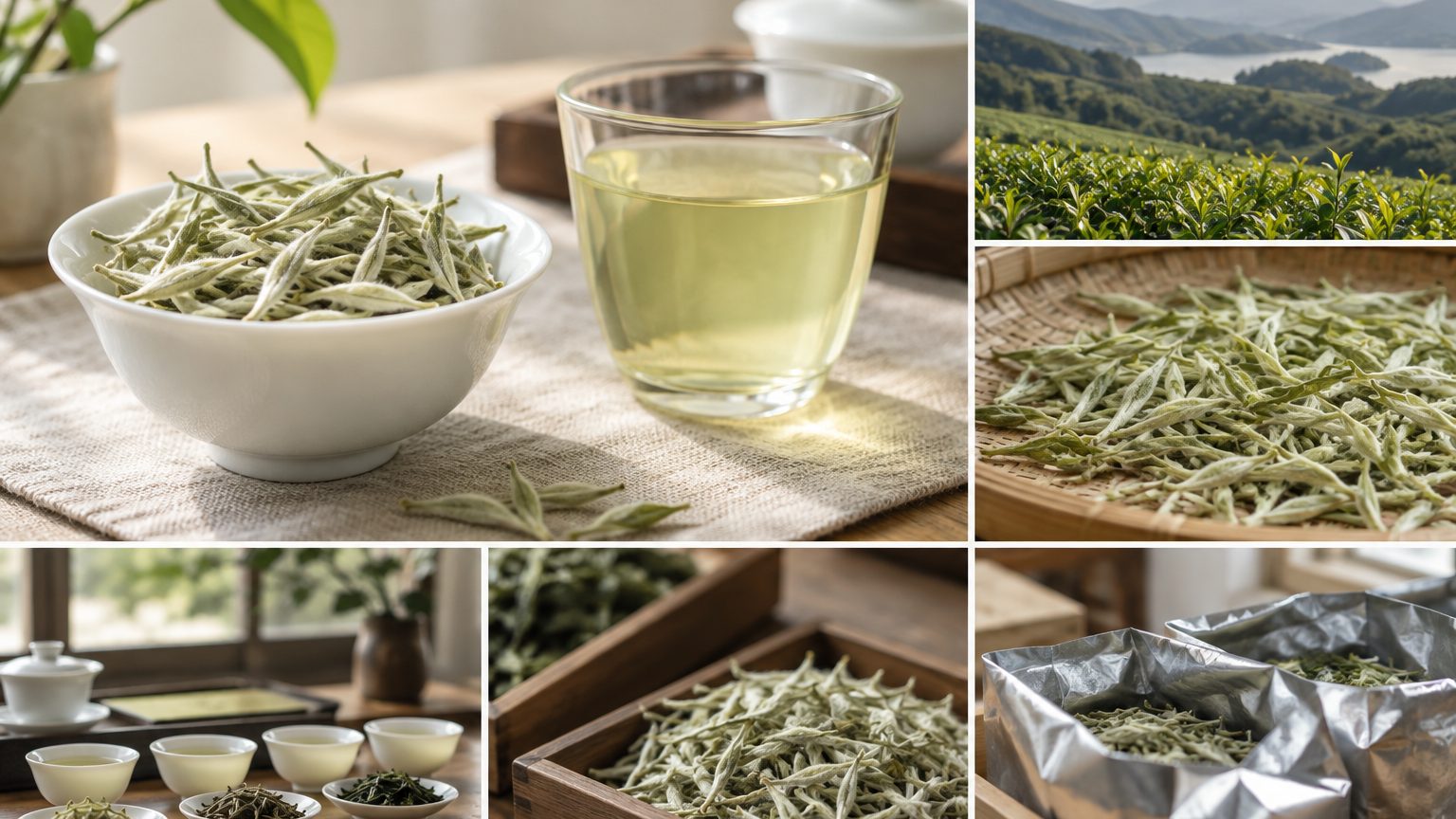
Green tea first: resolving the name
The name is the first question every buyer asks, so it is answered first: Anji white tea is a green tea. The white refers to the leaf, not the process. The cultivar behind it - Bai Ye Yi Hao, White Leaf No.1 - is an albino-type tea tree whose spring leaves emerge pale, almost white with green veins, when temperatures are low. Processed like any green tea - fixed, shaped, dried - the made tea belongs to the green category in every trade and regulatory sense, which is why this page lives on the green tea desk and not the white tea shelf. For label copy the safe line is: green tea, pale cultivar. The Anji white tea primer covers the full story for your product page, and stating it up front avoids customs questions in strict markets later.
Anji county and the pale-leaf window
Anji is a bamboo-covered county in northern Zhejiang, and the cultivar that made it famous was selected there and is now planted more widely. The pale phase runs through the cool weeks of spring: as temperatures climb, the leaves revert to ordinary green and the tea loses the character buyers pay for, so the harvest window is short and timing is everything. Inside that window the leaf accumulates unusually high levels of amino acids, which the trade reads as sweetness and a savory, broth-like freshness - the classic tasting note compares it to clear chicken broth. Lower catechin bitterness completes the profile: this is the green tea for customers who think they dislike green tea, and the reason it converts skeptics at tastings.
The cupping sheet and brew reference
| Factor | Reference profile |
|---|---|
| Dry leaf | Slim, even strips, pale jade to near-white green |
| Liquor | Very pale green-gold, clear and bright |
| Aroma | Fresh, delicate, faintly sweet |
| Taste | Broth-fresh umami, soft, almost no bitterness |
| Wet leaf | Pale, even, tender leaves |
| Brew parameter | Reference |
|---|---|
| Ratio | 3 g per 150 ml |
| Water temperature | 80-85°C |
| Steep time | 2-3 minutes |
Cooler water protects the umami; boiling flattens it. The temperature note is worth a line on your pack, because this is the tea most often ruined by an over-eager kettle. The pale leaf also shows over-steeping faster than darker greens: keep the steep short and the cup stays clear and sweet.
Who buys Anji white tea
It earns premium shelf space with a story and a taste that both survive scrutiny. Premium retail takes it as the connoisseur's green; e-commerce programs use the name confusion as content marketing, since the explanation converts curious browsers; health-leaning channels like that the same cup reads gentle and low in bitterness, with the usual caution that rules on health claims vary by market - the labeling questions are handled under private label. The morning-drinking angle is covered in the green tea morning routine guide. Corporate gift programs like it next to Longjing: two Zhejiang greens, two stories, one region - and the pale leaf looks striking in a glass tin. One planning note for paired programs: the two harvests do not overlap evenly, since Anji's window opens later and closes faster, and the desk accounts for that in a combined sample and shipping calendar.
Season and supply planning
The short pale-leaf window makes supply planning different from other greens. Material is picked in spring, and once the leaf greens, the premium character is gone for the year, so programs that sell year-round must size their spring order to the year's forecast - there is no mid-season top-up with the same cup. The desk plans orders backwards from the window and holds reserve stock cold for repeat programs; the mechanics are on the MOQ and lead time page. Weather moves the window and the outturn each year, which is one more reason offers are written per program instead of published as a list.
Packing and private label
Nothing about the tea forgives rough packing: the pale leaf shows age fast, so foil liners, sealed retail packs and nitrogen flush are standard. Tins suit it, and windowed packs are tempting because the leaf is presentable - but light exposure argues against transparent packs for anything that sits. Labels should carry the green tea classification to avoid compliance questions; artwork runs through packaging options, with MOQs confirmed in writing per program.
What buyers check before bulk
- Leaf color on arrival: pale jade, even - greened leaf means the window was missed.
- Cup at 80-85°C: umami freshness up front, bitterness nearly absent.
- Classification on the lot record and label: green tea, pale cultivar.
- Spring order sized to the year - ask for the reserve plan in writing.
- Lab panel per batch, scoped to destination market.
Send the brief early in the year; the pale-leaf window does not wait for procurement calendars.